
India Steps Up Critical Mineral Push Through Domestic Reforms, Overseas Investments
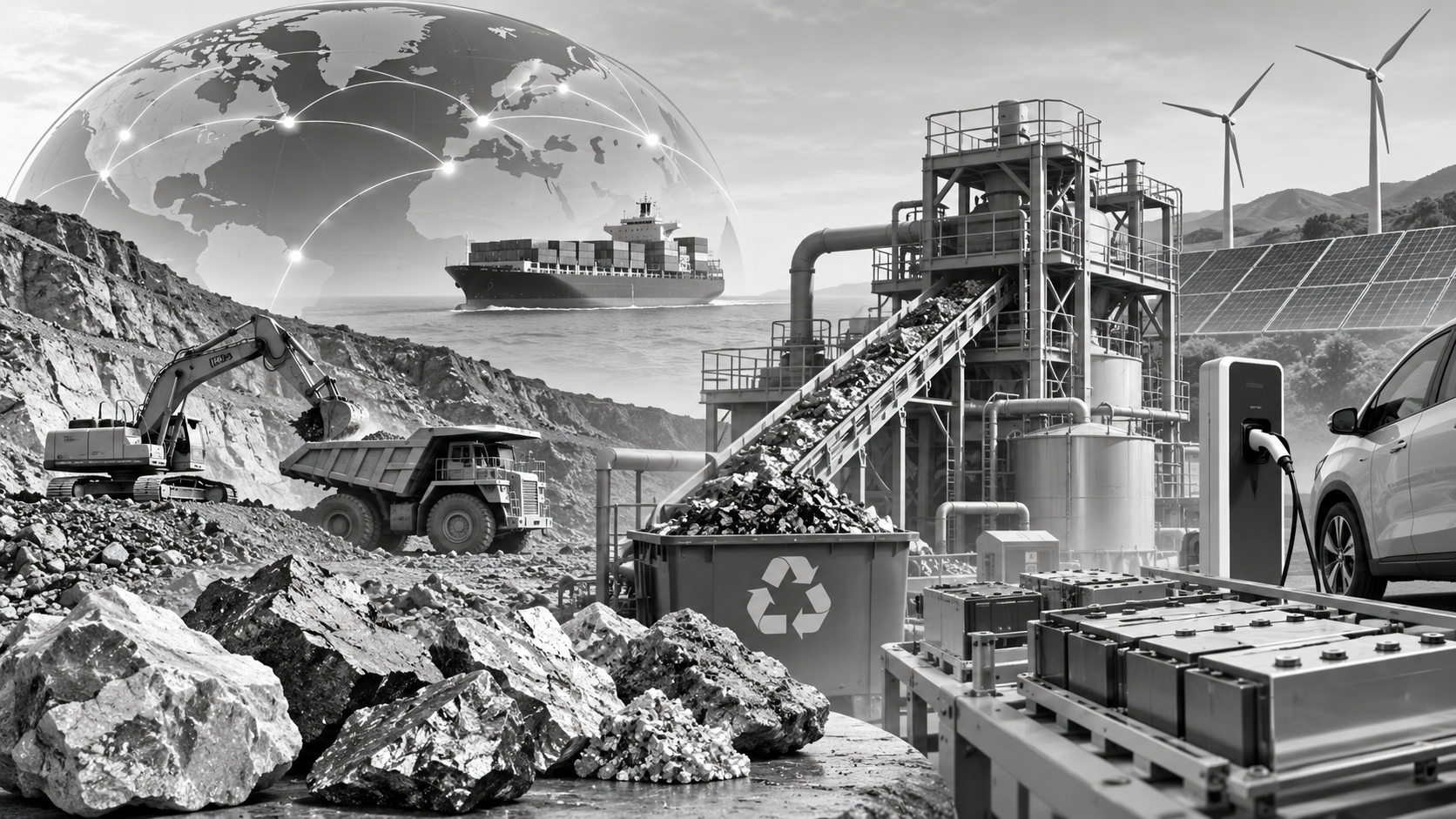
India is stepping up efforts to secure critical mineral supplies through domestic mining reforms, overseas investments and strategic international partnerships, as the government seeks to reduce supply-chain vulnerabilities and strengthen industrial and economic security. Speaking at a Ministry of Mines-FICCI industry interaction, Keshav Chandra, Secretary, Ministry of Mines, outlined initiatives to improve the sector's competitiveness through geological exploration, responsible mining, advanced processing, research, recycling and technology-enabled governance.
Chandra highlighted recent mineral auction reforms, including relaxation of minimum bidder requirements for certain minerals and automatic issuance of Letters of Intent (LoIs). Addressing industry concerns over mineral block development, he encouraged companies to explore critical mineral extraction from industrial waste such as red mud, generated during alumina production.
The interaction also witnessed the launch of a FICCI concept paper titled Enabling Overseas Investment in Critical Minerals: Policy, Financial and Institutional Framework for Securing India's Critical Mineral Supply Chains. The paper proposes a Country-Priority Mineral Matrix to guide overseas investments, a tiered framework for prioritising projects and streamlined approvals to improve project viability. It also emphasises stronger institutional coordination and integration of overseas assets with India's domestic processing and manufacturing capabilities, shifting the focus from memorandums of understanding to actual project delivery.
India's overseas strategy includes engagements through Khanij Bidesh India Limited (KABIL), a joint venture of NALCO, Hindustan Copper and MECL. Its initiatives include lithium exploration in Argentina, where it secured rights over five blocks in Catamarca, and assessments of potential lithium and cobalt projects in Australia. India has also pursued mineral cooperation with Chile.
The push is backed by the National Critical Mineral Mission, approved in January 2025 with an outlay of ₹34,300 crore for 2024–25 to 2030–31. It includes ₹16,300 crore in government expenditure and an expected ₹18,000 crore in investments from PSUs and stakeholders. The mission targets 1,200 exploration projects and overseas asset development.
India's dependence on imported lithium, nickel and cobalt underscores the urgency. The government is also promoting recycling through a ₹1,500-crore incentive scheme, with 58 entities pledging processing capacity of 8.5 lakh tonnes annually. Additionally, ₹500 crore has been allocated for critical mineral processing parks in four states.
FICCI highlighted global vulnerabilities arising from export controls, processing technology restrictions and domestic value-addition requirements in mineral-producing countries. The initiative seeks to diversify supplies, strengthen international partnerships and develop domestic processing capabilities, supporting India's ambitions in electric mobility, renewable energy, batteries and advanced manufacturing.