
India Tightens Coaching Rules: What Students, Parents and Institutes Need to Know
The Centre’s 2024 framework for regulating coaching centres is gradually reshaping an industry criticised for high fees, aggressive marketing, unsafe infrastructure and intense academic pressure. However, implementation remains uneven because education is on the Concurrent List and States and Union Territories must create and enforce their own legal frameworks.
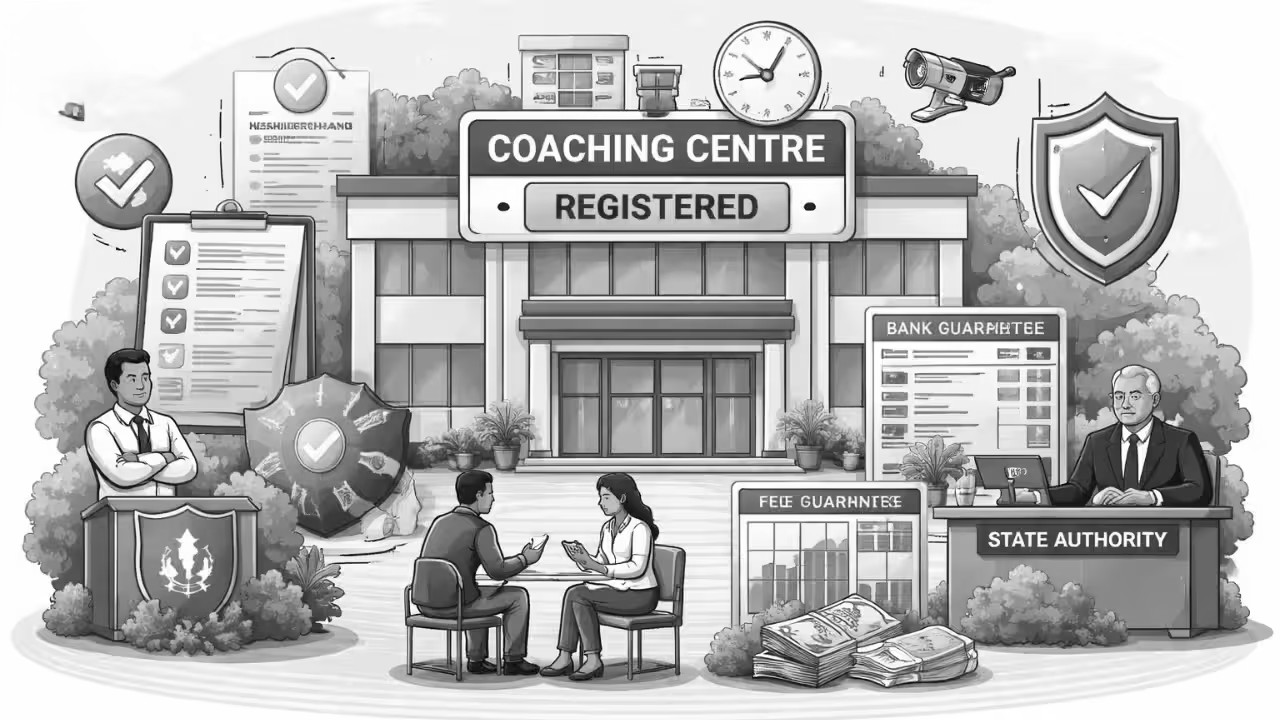
The guidelines call for registration, documentation, infrastructure and safety standards, transparent fees, easy exit and refund policies, record maintenance, grievance mechanisms and a code of conduct. They discourage batch segregation and emphasise students’ mental well-being, including counsellor and psychologist support. Continuous monitoring, penalties, cancellation of registration and appeals are envisaged, making enforcement crucial.
Several states have moved from broad guidelines to legislation or regulations, but compliance remains the bigger test. Recent safety checks show authorities are increasingly scrutinising infrastructure and adherence. Yet inconsistent inspections, limited enforcement capacity and varying state rules can produce a patchwork system rather than a uniform national standard.
For students and parents, fee regulation could improve transparency more than directly cap prices. The framework requires disclosure of charges and refund terms, while state laws may impose additional requirements. Compliance costs for safety, staffing and counselling could initially raise operating expenses, potentially pushing fees higher. Over time, clearer pricing and stronger consumer rights could improve competition.
Advertising is an area where enforcement has already produced measurable action. The CCPA’s 2024 guidelines prohibit false or misleading claims, including exaggerated success rates and guarantees. In 2025, the authority said it had issued 49 notices and imposed ₹77.60 lakh in penalties on 24 coaching centres over misleading advertisements and unfair practices.
The wider impact could be significant. Stronger safety rules may reduce risks from overcrowding and inadequate emergency preparedness, while mental-health provisions could encourage responsible academic environments. At industry level, regulation is likely to promote professionalisation but may also increase compliance costs and favour larger, organised institutes.
Ultimately, success will depend less on regulations existing on paper and more on regular inspections, transparent enforcement, effective grievance systems and publicly measurable compliance.