
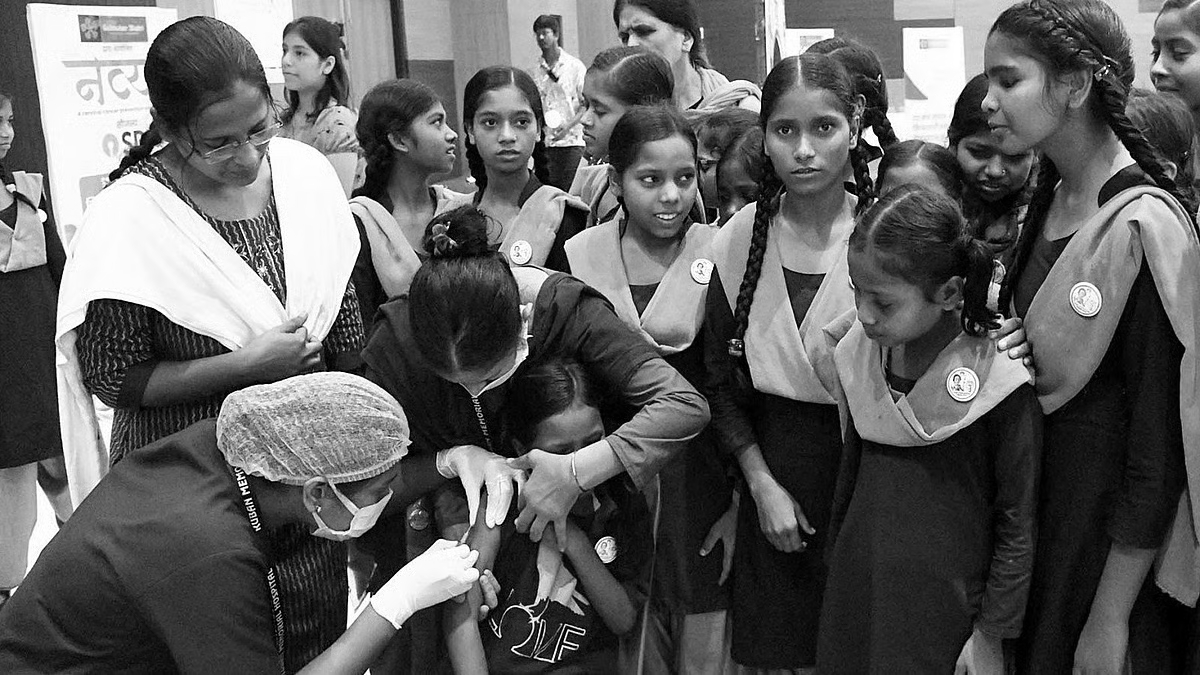
India to launch nationwide HPV Vaccination drive for 14-Year-Old Girls
In a significant step towards preventing cervical cancer among women, the Union government is set to launch a nationwide Human Papillomavirus (HPV) vaccination programme for girls aged 14 years. The initiative aims to curb one of the most common and preventable cancers affecting Indian women and will be implemented as a special vaccination drive outside the Universal Immunisation Programme.
The programme will use a single dose of Gardasil , a quadrivalent HPV vaccine that provides protection against HPV types 16 and 18, which together account for more than 80 per cent of cervical cancer cases in India, as well as HPV types 6 and 11 that cause genital warts. The vaccination will be voluntary and free of cost, ensuring equal access across socio-economic groups.
HPV is a common virus transmitted mainly through skin-to-skin contact. While most infections resolve naturally, persistent infection with high-risk HPV strains can lead to cervical cancer over time. The vaccine works by stimulating the body’s immune system to produce protective antibodies, preventing HPV infection before it can cause long-term cellular damage. Health experts say vaccination at 14 years offers maximum benefit as it provides immunity well before possible exposure to the virus.
Scientific studies have shown that a single dose of the vaccine in adolescent girls provides strong and durable protection. This approach is aligned with recommendations of the World Health Organisation , which considers HPV vaccination a key pillar in its global strategy to eliminate cervical cancer.
Gardasil was developed by global pharmaceutical major Merck & Co. and is manufactured and supplied in India by MSD India . Since its introduction in 2006, more than 500 million doses of HPV vaccines have been administered worldwide, with extensive data confirming their safety and effectiveness.
Cervical cancer remains the second most common cancer among women in India, with nearly 80,000 new cases and over 42,000 deaths reported annually. Medical evidence establishes that almost all cases are caused by persistent HPV infection, making the disease largely preventable through timely vaccination and screening.
The vaccination drive will be conducted at designated government health facilities, including Ayushman Arogya Mandirs and primary health centres, all linked to round-the-clock medical support to ensure safety and build parental confidence. India will join around 160 countries that have introduced HPV vaccination in their national programmes, many of which have reported significant reductions in HPV infections and precancerous lesions.
Health authorities have urged parents and guardians to ensure that eligible girls are vaccinated once the programme is rolled out, describing it as a one-time preventive measure that can offer lifelong protection and substantially reduce the future burden of cervical cancer in the country.