
India to provide traditional knowledge database to Brazil
India has signed a cooperation agreement with Brazil granting the latter access to the Traditional Knowledge Digital Library (TKDL) , an official digital repository of India’s traditional medicinal systems, officials said on Monday. The agreement is designed to help prevent biopiracy and the misappropriation of India’s traditional knowledge during patent examinations abroad.
Under the pact, Brazil’s patent authorities will be able to consult the TKDL while examining patent applications and during grant procedures. Officials clarified that the arrangement is not reciprocal . While Brazil will have access to India’s TKDL, India will not receive access to any Brazilian traditional knowledge database in return. The agreement is intended solely as a protective legal mechanism and not as an exchange of traditional knowledge.
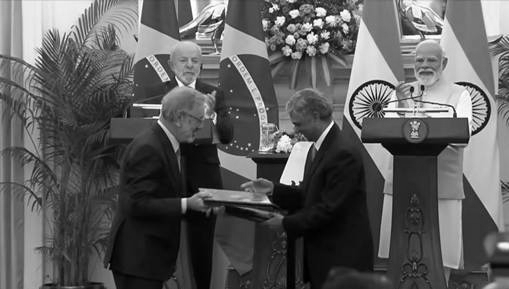
The agreement was signed on February 21 during the recent visit of Brazilian President Luiz Inacio Lula da Silva to India. It will be implemented under the guidance of Brazil’s National Institute of Industrial Property (INPI) and India’s Council of Scientific and Industrial Research (CSIR) , officials said.
Established in 2001, the TKDL aims to prevent the erroneous grant of patents on Indian traditional knowledge and to safeguard the country’s knowledge heritage from commercial exploitation. The database contains more than 5.2 lakh formulations and practices derived from classical texts of Indian systems of medicine, including Ayurveda, Unani, Siddha, Sowa Rigpa and Yoga.
Officials said access to the TKDL is provided to foreign patent offices strictly under non-disclosure agreements and is limited to patent examination purposes. With the inclusion of Brazil’s INPI, the number of patent offices worldwide authorised to access the TKDL has increased to 18, strengthening India’s international efforts to ensure that its traditional knowledge is recognised as prior art and not wrongly patented overseas.