
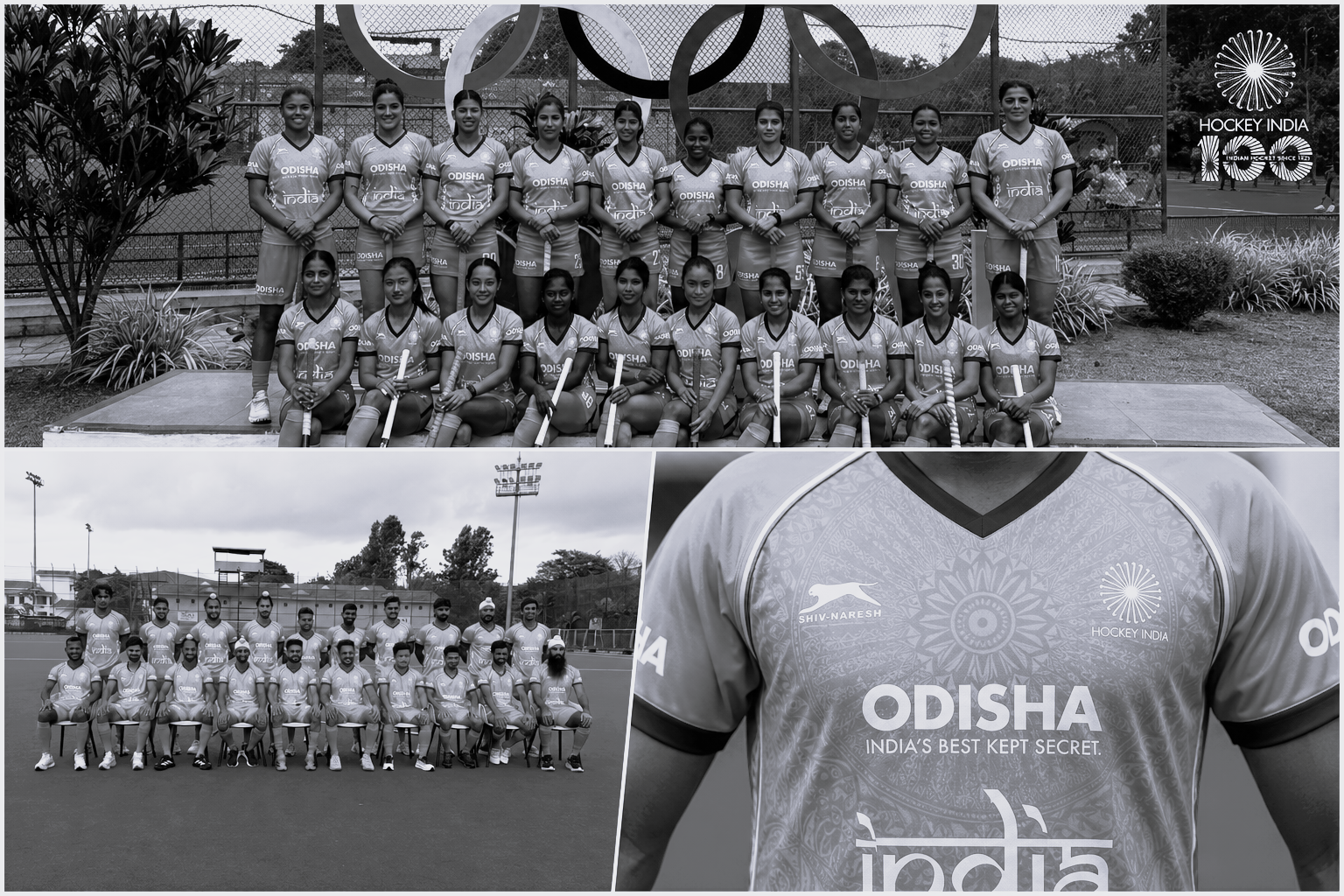
India Unveils Saffron Hockey Jersey, Triggers Legacy Debate
The unveiling of India's new saffron jersey for the FIH Hockey World Cup 2026 has triggered a spirited debate ahead of the marquee tournament, with Hockey India defending the move as a celebration of national identity and improved on-field visibility, while former players argue that replacing the iconic blue kit dilutes the team's legacy.
The Indian men's and women's hockey teams will sport the saffron jersey at the FIH Hockey World Cup, to be held in the Netherlands and Belgium from August 15 to 30. The tournament comes with high expectations for India, led by captain Harmanpreet Singh, as the team aims to end a 51-year wait for its second men's World Cup title after the historic triumph under Ajit Pal Singh in 1975.
Unveiling the kit, Hockey India said the design is inspired by the Indian tricolour and the rising sun, with saffron symbolising courage, sacrifice, victory and new beginnings. The jersey also features Mandala-inspired patterns, Ashoka Chakra-themed navy blue accents, a Sudarshan Chakra motif representing strength and unity, tricolour piping, and 'INDIA' written in Devanagari script. The federation said the design reflects the vision of "Ek Bharat, Shreshtha Bharat." A white alternate jersey with the same design will also be used.
The decision, however, drew sharp criticism from former India captain Viren Rasquinha, who said the blue jersey has always been the identity of Indian hockey. "The legacy and identity of the Indian team has always been BLUE... Fans want to see our Indian team in blue. What is the logic of orange?" he wrote on X, adding that his concern was about "pride, identity and legacy." Former captains Pargat Singh and Dhanraj Pillay have also questioned the move, noting that blue has become synonymous with Indian hockey and the country's sporting identity.
Responding to the criticism, Hockey India dismissed suggestions of any political motive, saying saffron is an integral part of the national flag. The federation also cited a technical reason, explaining that blue jerseys on blue synthetic hockey turfs reduce visual contrast, making it harder for spectators and broadcasters to track players during fast-paced matches. Officials added that the colour change also helps avoid kit clashes with opponents.
While alternate jerseys are common in international sport, India's decision to adopt saffron as its primary World Cup kit marks one of the most significant identity changes in the history of Indian hockey.
The controversy comes at a time when Indian hockey is enjoying a resurgence under chief coach Craig Fulton. The team has won back-to-back Olympic bronze medals at Tokyo 2020 and Paris 2024, besides claiming Asian Games gold in 2022. Captain Harmanpreet Singh, a multiple-time FIH Men's Player of the Year and one of the world's finest drag-flickers with more than 200 international goals, now hopes to lead India to its first World Cup crown in over five decades.
As India prepares for one of the biggest tournaments in world hockey, the spotlight has shifted beyond the team's medal ambitions to the symbolism of its jersey, setting up a debate between tradition and change even before the first whistle is blown.