
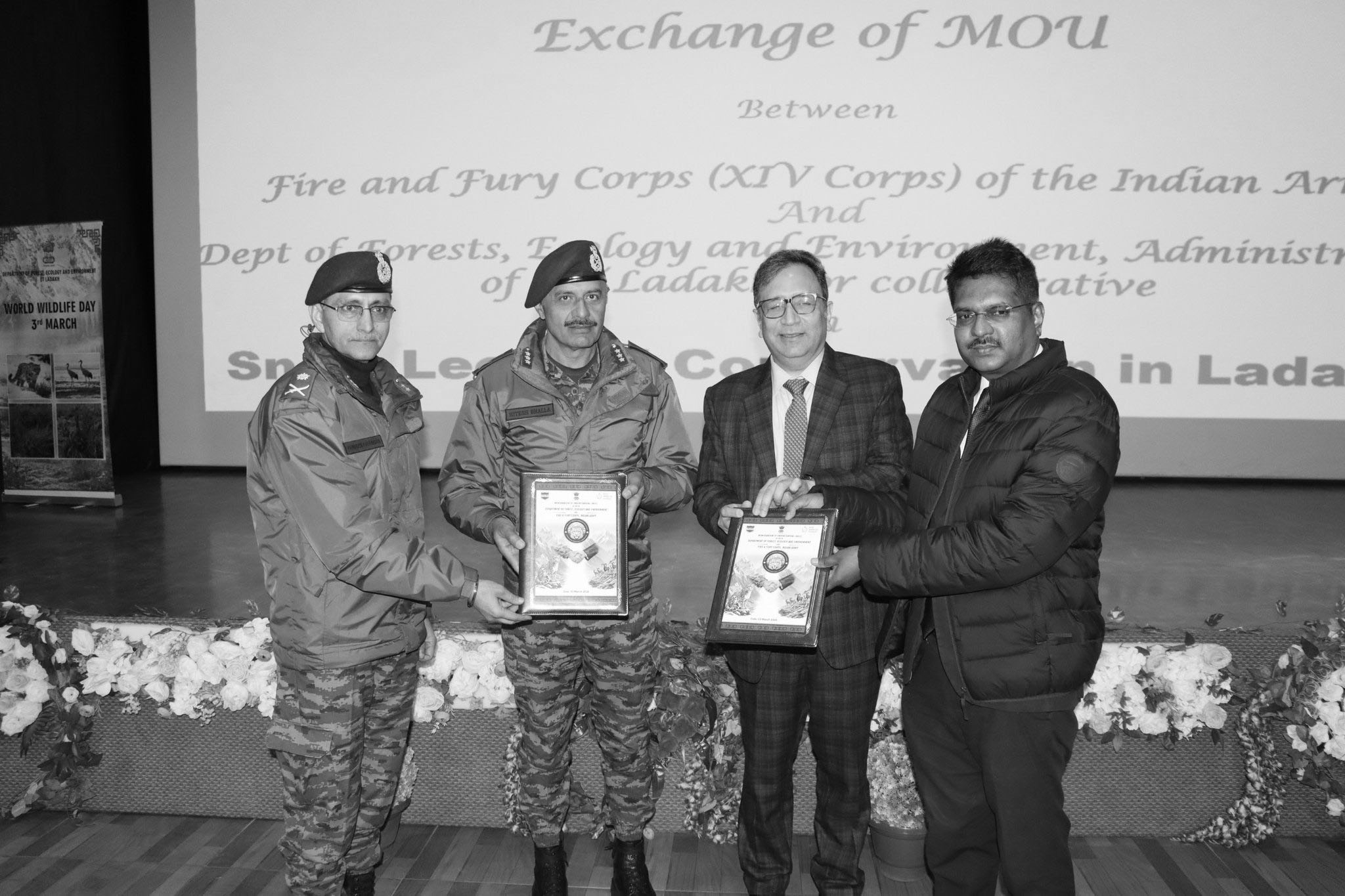
Indian Army, Ladakh administration ink MoU to protect fragile ecology, flagship species
The Army’s Fire and Fury Corps and the Ladakh administration on Tuesday signed a comprehensive memorandum of understanding (MoU) to protect the region’s fragile high‑altitude ecology and strengthen efforts to conserve key wildlife species, including the snow leopard, Himalayan wolf, ibex, marmot, bharal (blue sheep) and black‑necked crane . The agreement was finalised on the occasion of World Wildlife Day under the Global Snow Leopard and Ecosystem Protection (GSLEP) programme , a defence spokesperson said.
The MoU was signed in the presence of Lieutenant General Hitesh Bhalla , General Officer Commanding Fire and Fury Corps, and Ladakh Chief Secretary Ashish Kundra . Officials described the initiative as a historic step towards wildlife conservation , aimed at promoting sustainable development, environmental protection and biodiversity preservation in Ladakh’s high‑altitude ecosystems.
At the heart of the agreement is the establishment of a joint Snow Leopard Conservation Cell to monitor and coordinate conservation activities across the Union territory. This cell is expected to oversee research, habitat protection and species monitoring while facilitating coordinated action between civil authorities and the Army in the ecologically sensitive region.
The partnership places special emphasis on protecting flagship species and their natural habitats . By focusing on threatened and vulnerable wildlife, it seeks to address multiple ecological pressures such as habitat loss, climate change impacts and human‑wildlife conflicts that threaten long‑term species survival. Experts note that Ladakh holds one of the largest populations of snow leopards in India , with ecological surveys indicating the region as a core stronghold for the species — an important factor behind prioritising collaborative conservation efforts.
By aligning local action with the GSLEP framework, the initiative also supports scientific monitoring, adaptive management and sustainable land use practices that minimise environmental disturbance and promote responsible tourism in the fragile mountain environment. The MoU underscores the importance of balancing developmental needs with environmental stewardship, recognising that long‑term ecological health is essential alongside infrastructure and economic progress.
Officials highlighted the Indian Army’s longstanding role in India’s high‑altitude regions, where troops have sought to balance national security responsibilities with ecological conservation . The new partnership is expected to create a durable framework for eco‑friendly practices, coordinated conservation measures and strengthened habitat protection across Ladakh’s high plains and mountains.