
Indian Navy Marks 50 Years of Maritime Reconnaissance, Strengthens Ocean Surveillance
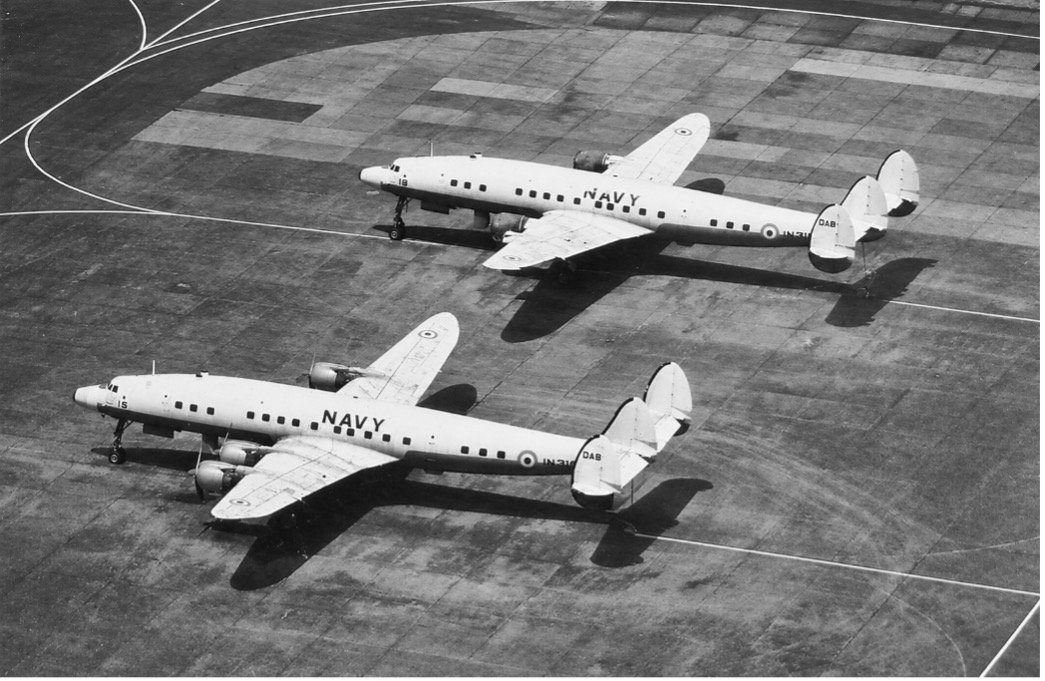
The Indian Navy marked 50 years of Long-Range Maritime Reconnaissance (LRMR) operations on November 18, commemorating five decades of airborne surveillance and maritime security capabilities, from the Lockheed Super Constellation to the advanced Boeing P-8I aircraft.
The milestone coincides with the Golden Jubilee of Indian Naval Air Squadron (INAS) 312, known as the 'Albatross', commissioned on November 18, 1976, at INS Hansa, Goa, with five Super Constellation aircraft transferred from the Indian Air Force.
The Navy's decision to develop an independent maritime reconnaissance capability followed the 1971 India-Pakistan war, which exposed gaps in underwater surveillance. On December 9, 1971, Pakistani submarine PNS Hangor sank INS Khukri off Diu, highlighting the need for dedicated anti-submarine warfare capabilities. The Navy had also sought control of maritime patrol aircraft in 1966.
The capability subsequently evolved with the induction of the Ilyushin Il-38 in 1977, the Tupolev Tu-142M in 1988 and the Boeing P-8I in 2013. The P-8I, based on the Boeing 737-800, uses advanced radar, sensors and sonobuoys to detect submarines. It can also carry torpedoes and Harpoon anti-ship missiles. Its magnetic anomaly detector further strengthens submarine detection.
Over five decades, LRMR aircraft supported Operations Cactus, Vijay, Parakram and Sindoor, besides anti-piracy patrols and search-and-rescue missions. The Navy retired its Il-38 fleet in 2023 after 46 years of service.
The capability has gained importance amid increasing Chinese submarine activity and Pakistan's induction of Chinese-designed Hangor-class submarines. With nearly 85–90 per cent of India's crude oil imports transported by sea, maritime surveillance is crucial for protecting energy supplies and strategic shipping routes.
Currently, INAS 312 operates from INS Rajali, Arakkonam, while INAS 316 is based at INS Hansa, Goa. The Navy is pursuing six additional P-8I aircraft and 15 MQ-9B SeaGuardian drones, with deliveries expected from 2029. India is also strengthening maritime information-sharing through the Quad's Indo-Pacific Maritime Surveillance Collaboration, including a planned joint exercise in 2027.
The Golden Jubilee recognises generations of naval aviators, mission crews and maintenance personnel who have strengthened India's maritime security over five decades.