
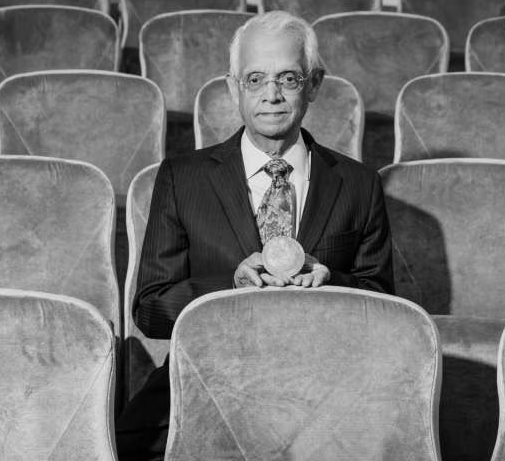
Indian-origin climate scientist wins Crafoord Prize for global warming research
Indian-origin climate scientist Veerabhadran Ramanathan has been awarded the 2026 Crafoord Prize in Geosciences by the Royal Swedish Academy of Sciences for his transformative contributions to climate science . Often described as the “Nobel of Geosciences,” the Crafoord Prize recognises fundamental discoveries in fields not covered by the Nobel Prizes, including geosciences, biosciences, mathematics, and astronomy . The prize carries a cash award of eight million Swedish kronor (approximately 900,000 dollars) and a gold medal, and will be presented during Crafoord Days in Stockholm and Lund in May 2026.
Ramanathan, 82, has spent decades advancing understanding of how short-lived climate pollutants, trace gases, and atmospheric brown clouds drive global warming. In 1975 , while working at NASA, he made the landmark discovery that chlorofluorocarbons (CFCs) , then widely used in refrigeration and aerosols, are up to 10,000 times more effective at trapping heat than carbon dioxide . This overturned the prevailing assumption that CO₂ was the main driver of global warming, showing for the first time that human-produced trace gases can radically alter the Earth’s climate .
The significance of his findings is profound. By demonstrating the heat-trapping potential of CFCs and other pollutants, Ramanathan not only reshaped climate science but also provided the scientific foundation for international agreements such as the Montreal Protocol , which successfully curbed harmful CFC emissions and protected both the climate and the ozone layer . His research also revealed that short-lived pollutants like methane, black carbon, and tropospheric ozone contribute significantly to warming and air pollution, highlighting opportunities for rapid climate mitigation and public health benefits.
Ramanathan’s Indian heritage informed his work on the Indian Ocean Experiment (INDOEX) , which documented widespread atmospheric brown clouds (ABCs) over South Asia. These ABCs were shown to reduce surface sunlight, weaken the Indian monsoon, and accelerate Himalayan glacier melting , linking local pollution to regional climate impacts and demonstrating the interconnectedness of human activities and environmental systems.
Born in Madurai and raised in Chennai , Ramanathan began his career as an engineer in a refrigerator factory in Secunderabad, where he first handled CFCs. He later studied at Annamalai University and the Indian Institute of Science , before completing advanced research in the United States. He is now Distinguished Professor Emeritus at the Scripps Institution of Oceanography, University of California, San Diego , and has advised global leaders and the Vatican on climate ethics , including serving as a science advisor at the 2015 Paris climate summit .
Ramanathan joins a distinguished lineage of Indian scientists recognised with the Crafoord Prize, including agricultural scientist M.S. Swaminathan and chemist C.N.R. Rao , highlighting the international impact of Indian research on fundamental science.