
India’s Divyastra: Armenia Picks India Over Russia For Kamikaze Drones
Armenia is looking for new weapons and Yerevan is going beyond its traditional defence suppliers. Armenian media reports say the country has selected India’s Divyastra family of loitering munitions, or kamikaze drones, after testing systems from several countries. The deal has not been officially announced, but the reported selection highlights Armenia’s growing trust in Indian defence equipment and India’s steady shift from weapons importer to exporter.
The report was first published by Armenian outlet Haraparak, citing Armenian military officials and experts. It says drones from Russia, India, France, China, Israel, Iran, Ukraine and the United States were tested before India’s Divyastra was reportedly chosen for its relatively low cost, artificial intelligence capabilities and potential for swarm attacks.
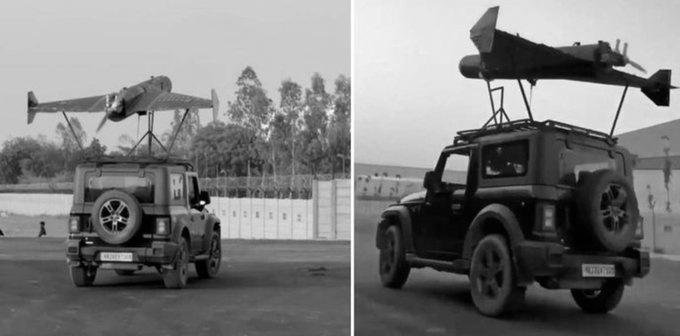
Divyastra is an AI-powered family of kamikaze drones developed by Lucknow-based Kava UAV Private Limited, also known as Hoverit. The company makes three variants. The Mark 1 has an operational range of nearly 500 km, can remain airborne for up to five hours, carries a 15 kg payload and can be rapidly deployed from vehicles. The Mark 2 extends the range to around 1,500 to 2,000 km and carries nearly 100 kg. The Mark III is a jet-powered loitering munition that successfully completed field trials in August this year. It has a range of nearly 400 km and uses a mini jet engine to conduct high-speed strikes.
Armenia’s Defence Ministry has not commented on the reported deal, and there is currently no publicly available contract or official delivery timeline.
The reported move comes amid a major expansion in India-Armenia defence ties following the second Nagorno-Karabakh war between Armenia and Azerbaijan in 2020. Over the past four to five years, Armenia has acquired a wide range of Indian weapons. Its artillery inventory includes the Pinaka guided multi-rocket launcher, the 155 mm ATAGS towed artillery gun and the 155 mm MARG truck-mounted artillery system.
Armenia has also acquired India’s Akash surface-to-air missile system, the Zen counter-drone system and the Swathi weapon-locating radar, which can track incoming artillery and rocket fire. It already operates India’s ALS50 loitering munition and has purchased hundreds of Indian-made armoured trucks and vehicles.
Military interactions between the two countries have also increased, while India and Armenia are exploring possibilities for joint weapons production.
If the Divyastra deal is confirmed, it would underline India’s broader defence ambitions. New Delhi is moving beyond “Make in India” for domestic requirements towards competing in global markets and selling Indian-made weapons abroad, with Armenia emerging as a repeat customer.