
India’s First LNG Train Rolls Out: 40% Diesel Replacement, ₹23.9 Lakh Annual Fuel Saving
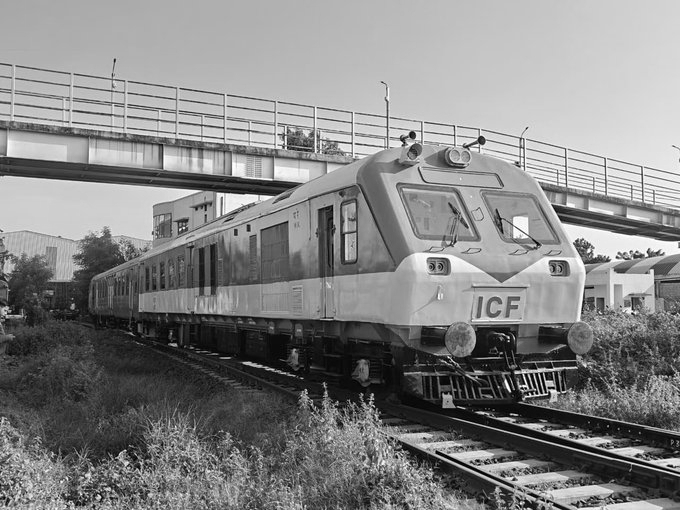
Union Home Minister Amit Shah on Sunday flagged off India’s first LNG-diesel train from Sabarmati station in Gujarat, presenting it as part of the government's wider push to modernise the railways while reducing dependence on diesel.
The eight-coach train uses a dual-fuel system, with LNG capable of replacing up to 40 per cent of diesel consumption. The arrangement is designed as a transition rather than a complete switch to LNG: the train can continue running on diesel when LNG is unavailable, an important consideration as specialised LNG storage and refuelling infrastructure is still limited.
The financial benefit is also measurable. Railway estimates put the fuel saving at around Rs 11.9 lakh annually per Driving Power Car. With two such power cars in the train, the estimated saving is about Rs 23.9 lakh a year, or roughly Rs 2 lakh a month, compared with conventional diesel operation. The figure is an estimate and would vary with fuel prices, utilisation and operating conditions.
The LNG launch came alongside the flagging off of a WAG-12 electric locomotive and the inauguration, dedication and foundation-laying of railway projects worth more than Rs 1,500 crore. These include line-doubling works, the Kavach train protection system, automatic signalling and a WAG-12 locomotive maintenance shed.
Shah said the Modi government had transformed the railways since 2014, citing dedicated freight corridors, rapid rail systems, upgraded stations and greater electrification. He said around 11,000 km of rail corridors were being converted into four-track networks and referred to the successful trial of a long double-stack container train between Mumbai and Vadodara.
He said railway electrification had risen sharply from 75 km in 2010-11 to 7,188 km in 2023-24, with electrification reaching 99.6 per cent. Diesel consumption, he added, had fallen from 293 crore litres in 2015-16 to 108 crore litres in 2024-25, with the government targeting zero diesel use by 2030.
Shah also attacked the Congress over its record in government and challenged it to debate railway performance using facts and figures.
The LNG experiment therefore sits alongside electrification and cleaner propulsion efforts, offering Railways another way to reduce diesel use on operations where full electrification is not yet practical.