
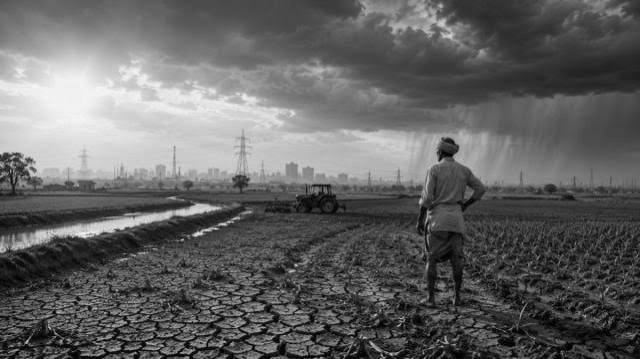
India's Food Supply Is Already Feeling the Heat: The Alarming Cost of Climate Change
Climate change is increasingly threatening India’s food security, with rising temperatures, extreme weather events and ecological damage affecting agricultural production, disrupting supply chains and pushing up food prices, according to a new report. The economic losses are already running into billions of dollars annually.
The impact is not limited to crop production. India’s dairy sector is also bearing a significant burden, with heat stress alone causing an estimated Rs 2,661 crore in annual losses due to reduced milk production. This amounts to around 1.8 million tonnes of milk, or nearly 2 per cent of the country’s total milk output, the report said.
Titled ‘ From Risk to Resilience: Climate Change, Ecology and the Future of Indian Agriculture ’, the report was published on Wednesday by Delhi-based climate research organisation Climate Trends. It brings together existing evidence on climate and ecological threats to India’s food system and outlines measures to make agriculture more resilient.
The findings highlight the scale of the country’s vulnerability. Approximately 40 per cent of India’s livestock population is exposed to extreme weather events, while 45 per cent of crop-producing land falls within areas facing significant flood risks.
The long-term impact of rising temperatures is equally concerning. Research cited in the report indicates that every 1-degree Celsius increase in temperature over the past five decades has reduced average national yields across crops by around 8 per cent.
Dr Palak Balyan, research lead at Climate Trends, said India’s food losses should not be viewed merely as an agricultural problem but as a wider challenge involving the entire food supply system.
Addressing the crisis requires more than improved weather forecasts, she said, stressing the need for sustained investment in storage facilities, agricultural extension services and market access to prevent farmers from bearing the burden of climate-related losses alone.
The report calls for a shift away from an approach focused primarily on increasing crop yields towards more sustainable farming practices. These include restoring soil health, conserving water, diversifying crops and reducing dependence on chemical inputs.