
India’s Indian Ocean dilemma as U.S. nets Venezuela’s last sanctioned tanker
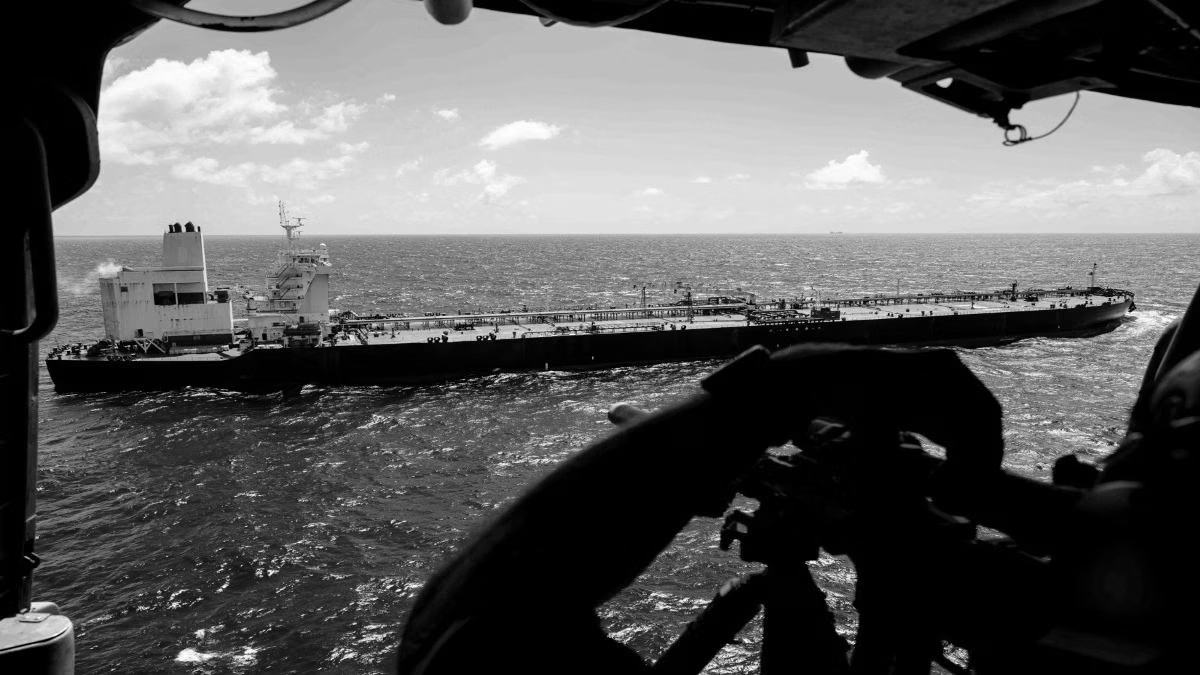
U.S. military forces boarded the Bertha , a sanctioned tanker intercepted in the Indian Ocean after a cross-ocean chase from the Caribbean, the Pentagon announced Tuesday - the tenth such interdiction since December , completing Washington's systematic dismantling of Venezuela's shadow fleet in waters that carry another nation's name entirely.
Southern Command confirmed forces boarded the vessel overnight, carrying 1.9 million barrels of Merey 16 Venezuelan crude. The Bertha had attempted to evade a U.S.-imposed quarantine before being tracked across two oceans and stopped. It was operating under a false flag of Curaçao, managed by a China-based company , and was the last of 16 tankers that fled Venezuela following the U.S. capture of Nicolás Maduro in January. Maduro, now facing U.S. drug trafficking charges, has pleaded not guilty.
The operation's strategic reach extends well beyond Venezuela. Trump confirmed a deal in which India would purchase Venezuelan crude - replacing Russian oil - under the implicit threat of 50% U.S. tariffs on Indian goods . The oil flows toward India. The leverage stays in America.
That dynamic captures something larger and more troubling. The Indian Ocean carries India's name. India has the longest coastline of any littoral (situated on shore of the sea) state, a growing navy, and a strategic doctrine (SAGAR) that envisions Indian primacy across these waters. Yet on Tuesday, there was no Indian vessel present , no Indian coordination, and no Indian benefit beyond what Washington chose to offer in exchange for abandoning Moscow.
The Portuguese ran this ocean once. Then the Dutch. Then the British. The Americans run it now. India watches. The question is no longer whether New Delhi should act - it is whether India can afford to keep watching while others write the rules in its own backyard.