
India's Semiconductor Revolution Moves from Policy to Production
India took another significant step towards becoming a global semiconductor manufacturing destination as CG SEMI's Outsourced Semiconductor Assembly and Test (OSAT) facility in Sanand, Gujarat, commenced commercial production , prompting Union Minister Ashwini Vaishnaw to declare that the country had entered a "new era" in semiconductor manufacturing.
The launch marks an important milestone in India's efforts to build a domestic semiconductor ecosystem and reduce dependence on imports for one of the world's most strategically important technologies. The facility is the third semiconductor plant in the country to begin commercial production in 2026 , reflecting the rapid pace at which India's semiconductor ambitions are taking shape. According to the minister, the achievement demonstrates growing global confidence in India's manufacturing capabilities and policy framework.
Vaishnaw said the development was part of a broader transformation taking place under the government's semiconductor programme, with multiple projects progressing simultaneously across the country. Of the 12 semiconductor projects approved by the Centre , three are now in commercial production, while two more are expected to be inaugurated in the coming months. The government expects five semiconductor plants to be operational by the end of 2026 , providing fresh momentum to the country's self-reliance goals.
The minister credited the support of Prime Minister Narendra Modi , the Gujarat government and industry partners for enabling the project to move from groundbreaking to commercial production within just 27 months. The facility's foundation stone was laid in March 2024 and has since emerged as one of the earliest success stories under India's semiconductor push.
The Sanand unit has been developed with an investment of more than ₹7,600 crore in partnership with Renesas Electronics of Japan , one of the world's leading semiconductor companies. The collaboration is expected to bring advanced manufacturing practices, technology expertise and quality standards to India's growing semiconductor sector.
The commercial production at the Sanand facility represents a major achievement for the India Semiconductor Mission (ISM) , the government's flagship initiative aimed at establishing a comprehensive semiconductor and display manufacturing ecosystem in the country.
Launched in 2021 with a financial commitment of ₹76,000 crore , the mission was conceived in response to the increasing strategic importance of semiconductors and the vulnerabilities exposed by global supply chain disruptions. The COVID-19 pandemic and subsequent chip shortages underscored how dependent countries had become on a limited number of semiconductor-producing regions. Industries ranging from automobiles and consumer electronics to telecommunications and healthcare suffered production delays because of shortages in semiconductor components.
Recognising the need for greater domestic capability, the government unveiled a comprehensive policy framework designed to attract investment across the semiconductor value chain. The objective extends beyond manufacturing chips; it encompasses semiconductor design, packaging, testing, research, workforce development and ecosystem creation.
India already possesses a strong base in semiconductor design, with many global technology companies operating research and development centres in the country. The challenge has been translating this design expertise into large-scale manufacturing and advanced packaging capabilities. The India Semiconductor Mission seeks to bridge that gap by supporting investments in fabrication plants, OSAT facilities, compound semiconductor units and design-linked incentives.
The progress reported by the government suggests that the strategy is beginning to yield results. According to Vaishnaw, 12 semiconductor units are currently under construction , while the country has also witnessed the emergence of 24 deep-tech chip design startups . More than 70,000 young people have received training in chip design , and 315 universities now offer semiconductor-related courses , creating a talent pipeline for the industry.
Although semiconductor fabrication plants often receive the greatest attention, experts point out that OSAT facilities play an equally important role in building a robust semiconductor ecosystem.
OSAT stands for Outsourced Semiconductor Assembly and Test , referring to the stage where semiconductor chips are packaged, assembled and tested before being delivered to customers. Once silicon wafers are manufactured, they must undergo a series of highly specialised processes to ensure reliability, performance and durability. Packaging protects the chip and enables it to be integrated into electronic devices, while testing ensures that the final product meets stringent quality standards.
These activities represent a critical segment of the semiconductor value chain and are increasingly important as advanced packaging technologies become essential for next-generation applications such as artificial intelligence, high-performance computing, automotive electronics and telecommunications.
For emerging semiconductor economies, OSAT facilities provide a practical entry point into semiconductor manufacturing. Compared with advanced fabrication plants, they require relatively lower capital investment and can be established more quickly. They also help create skilled jobs, facilitate technology transfer and attract global supply chain partnerships.
The CG SEMI facility therefore represents more than a manufacturing project. It serves as an important building block in India's long-term ambition to establish a fully integrated semiconductor ecosystem that spans design, fabrication, packaging and testing.
The commencement of commercial production also reinforces Sanand's emergence as one of India's most important semiconductor manufacturing centres .
Located in Gujarat, Sanand first gained prominence as an automotive manufacturing destination. Over the years, the region developed strong industrial infrastructure, efficient logistics networks, reliable power supply and supportive policy frameworks, making it attractive for large-scale manufacturing investments.
These advantages have increasingly drawn semiconductor companies seeking locations capable of supporting advanced industrial operations. The clustering of semiconductor projects in and around Sanand is creating the foundations of a specialised technology manufacturing ecosystem similar to those seen in leading semiconductor regions across the world.
Industry observers note that semiconductor manufacturing thrives when companies can access suppliers, skilled workers, testing facilities, educational institutions and logistics services within a concentrated geographic area. Such clustering reduces costs, improves efficiency and accelerates innovation.
As more semiconductor investments flow into Gujarat, Sanand is positioned to become a strategic node in both India's domestic electronics industry and the global semiconductor supply chain.
The importance of semiconductor manufacturing extends beyond economic considerations. It has become a central issue in discussions on national security, industrial competitiveness and technological sovereignty.
The global chip shortage that emerged during the pandemic highlighted the risks associated with excessive dependence on a small number of manufacturing locations. Disruptions in one part of the world quickly cascaded across industries, affecting production schedules for automobiles, smartphones, consumer electronics and industrial equipment.
Governments around the world responded by launching initiatives to diversify semiconductor supply chains and encourage domestic manufacturing. The United States, European Union, Japan, South Korea and several other economies announced major investments aimed at reducing vulnerabilities and ensuring access to critical technologies.
India's semiconductor programme forms part of this broader global trend. By developing domestic capabilities, the country seeks to reduce exposure to external shocks while strengthening its role within international technology supply chains.
According to the government, chips produced at the Sanand facility will be used in automobiles, scooters and industrial equipment while also being exported to markets including Japan, the United States and Europe . This demonstrates India's growing integration into global semiconductor networks and its ability to serve both domestic and international demand.
A diversified manufacturing base can enhance supply chain resilience not only for India but also for global industries seeking reliable alternative sources of semiconductor production.
Beyond manufacturing output, the government's semiconductor strategy is closely linked to the broader objective of technological self-reliance.
Semiconductors are foundational technologies that underpin modern economies. They power smartphones, computers, data centres, communication networks, defence systems, medical devices, renewable energy infrastructure and emerging technologies such as artificial intelligence.
Countries that possess domestic semiconductor capabilities enjoy greater strategic flexibility and reduced dependence on external suppliers. They are also better positioned to capture value from high-technology industries and participate in future innovation cycles.
The government views semiconductor manufacturing as a critical component of the Atmanirbhar Bharat vision. By building expertise across multiple stages of the semiconductor value chain, India hopes to strengthen domestic innovation capabilities while generating high-quality employment opportunities.
Vaishnaw highlighted that the Sanand facility is also contributing to social transformation. Young women from states including Jharkhand, Chhattisgarh, Madhya Pradesh, Bihar, Jammu and Kashmir, Kerala and Gujarat have found employment as operators at the plant and received specialised training in Malaysia. He said the development demonstrates how advanced manufacturing can create opportunities for workers from diverse backgrounds while fostering new technical skills.
As India's semiconductor ecosystem expands, training and skill development programmes are expected to play an increasingly important role in creating a workforce capable of supporting advanced manufacturing and research activities.
The semiconductor push is occurring alongside rapid growth in India's broader electronics manufacturing sector. According to the minister, the industry has expanded into a sector worth nearly ₹13 lakh crore and supports more than 25 lakh jobs , underscoring its importance to the country's industrial development strategy.
The government believes that continued investments in semiconductor manufacturing, electronics production and technology innovation will strengthen India's position as a global technology hub.
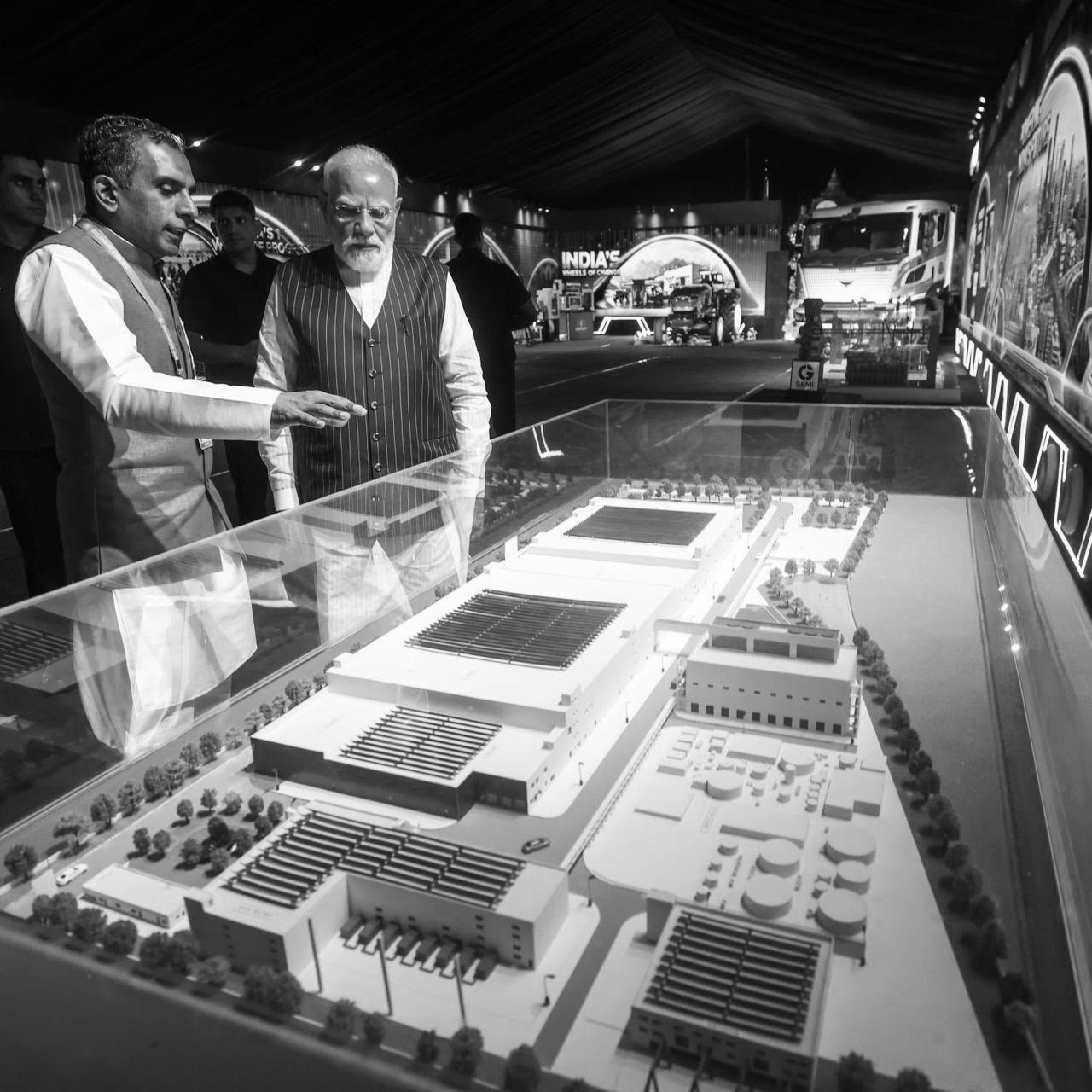
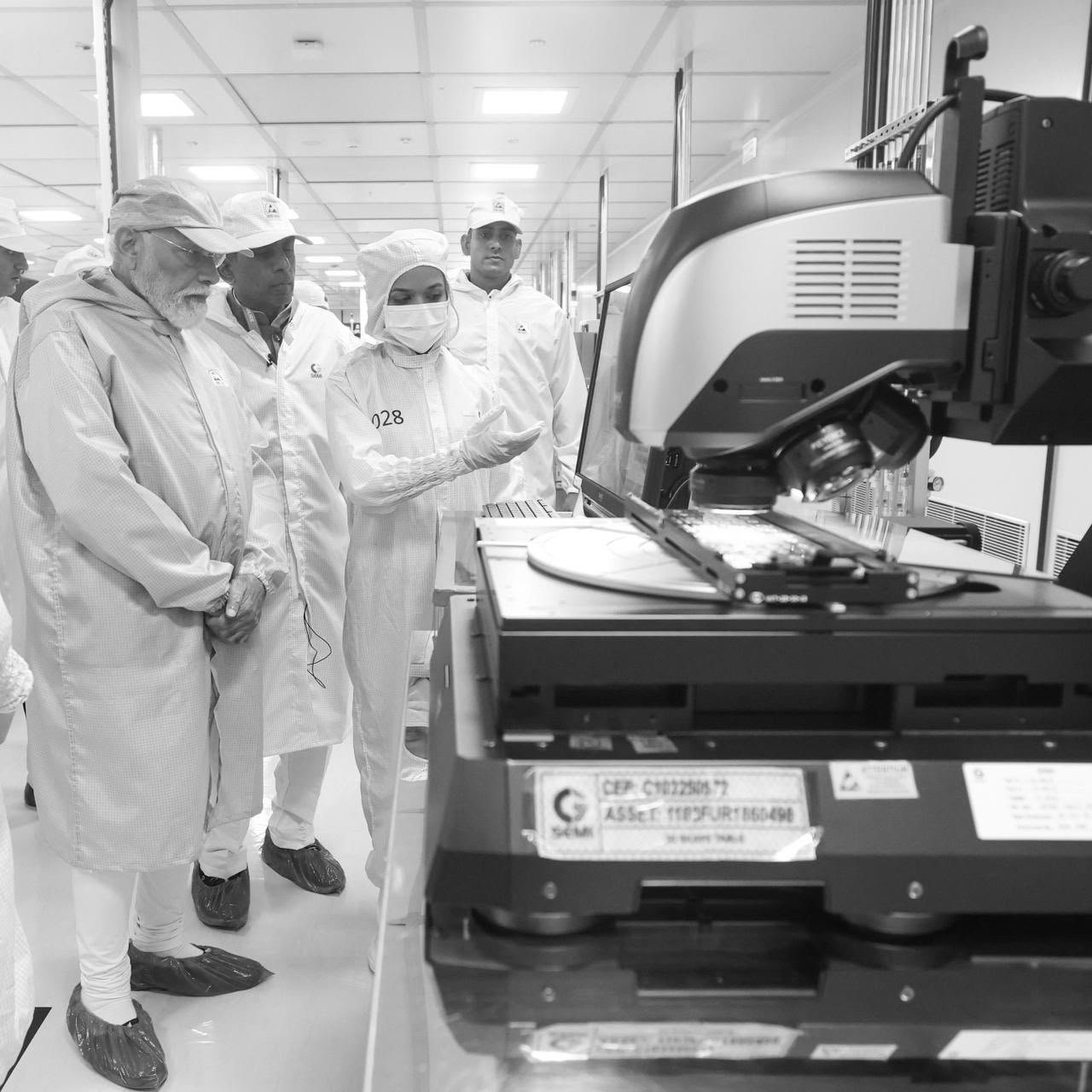
Prime Minister Narendra Modi visited the Sanand facility during the inauguration, touring its Experience Centre and Clean Room, interacting with engineers and operators, and formally marking the commencement of commercial production. The event was attended by Gujarat government representatives, industry leaders, company officials and engineering professionals from across the country.
With the Sanand facility now operational and additional projects nearing completion, India appears to be moving steadily towards its goal of establishing a globally competitive semiconductor ecosystem. While significant challenges remain in an industry known for high capital requirements and intense international competition, the commencement of commercial production at CG SEMI's OSAT facility represents a tangible sign of progress.
For policymakers, industry leaders and technology experts, the development signals that India's semiconductor journey has moved beyond planning and announcements into the phase of actual manufacturing. As additional facilities come online over the coming years, the country's aspirations of becoming a significant participant in the global semiconductor value chain may increasingly become a reality.