
Indonesia tightens nickel control as US and China compete for critical minerals
Indonesia is tightening state control over the world’s largest nickel supply as global demand shifts and competition intensifies between the United States and China for critical minerals. Once seen as the cornerstone of a domestic electric‑vehicle (EV) industry, nickel’s role is evolving even as Jakarta asserts greater authority over its production and exports.
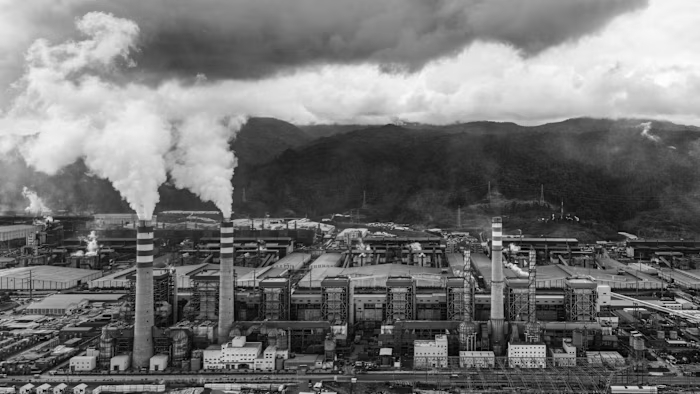
Indonesia now accounts for roughly 60 percent of global nickel supply , centred on Sulawesi and North Maluku , where high-grade nickel laterite deposits are abundant due to favourable geology and tropical weather conditions that concentrate nickel in surface soils. These regions have become the backbone of the country’s nickel dominance, drawing global investment but also environmental and social strain.
Nickel mining has contributed significantly to land conversion and forest loss. Satellite analysis shows forest clearing directly linked to mining has removed more than 370,000 hectares of Indonesian forests between 2001 and 2020, roughly 1.5 percent of the country’s total forest area - the most of any country in that period. Within key concession areas such as Morowali in Sulawesi, mining‑related deforestation reached around 8,200 hectares inside concessions and about 4,100 hectares cleared outside them by 2023, with only about 5 percent of cleared land being reforested in a form comparable to original forest.
Mining has also degraded waterways and coastal ecosystems. Soil erosion from deforested slopes channels sediment into rivers and out to coral reefs, mangroves and sea grass beds. In parts of the Raja Ampat region, more than 2,400 hectares of coral reefs and 7,200 hectares of forest cover lie at high risk from nickel mining concessions, affecting over 64,000 Indigenous and local community members. Local fisheries and livelihoods have suffered steep declines, with household incomes falling by up to 69 percent , octopus catches down 80 percent , and seaweed crop prices collapsing by 90 percent . Residents near mines and smelters report health issues from dust, contaminated water, and coal-fired emissions, with surveys showing over 40 percent of villagers affected.
In 2025, Indonesia cracked down on allegedly illegal mining and plantation licences, seizing over 4 million hectares and levying USD 1.7 billion in fines, though analysts warn global EV shifts to lower-nickel batteries may reduce the country’s expected payoff. “The forests have been exploited to the brim, but you never got the electric-vehicle value chain,” said Putra Adhiguna of the Jakarta-based Energy Shift Institute.
China remains deeply embedded in Indonesia’s nickel industry, financing and building much of the country’s refining capacity to feed its own stainless steel and EV battery sectors , while more than 90 percent of Indonesia’s nickel exports go to China . This has allowed China to benefit massively from Indonesia’s nickel reserves, while Indonesia bears the environmental degradation, polluted waterways, displacement of communities, and health risks associated with mining.
Efforts to build a domestic EV industry have seen mixed results. Hyundai and LG opened Indonesia’s first EV battery plant in 2024, but LG later withdrew from a larger USD 8.4 billion project. BYD and CATL continue construction, yet EV sales remain small and infrastructure limited. Analysts note that even a rapid expansion would consume only a fraction of Indonesia’s nickel output. Jakarta’s tighter control could curb China’s dominance, attract U.S. investment , and reshape export policies, but regulatory uncertainty and land seizures leave the sector’s future unclear.