
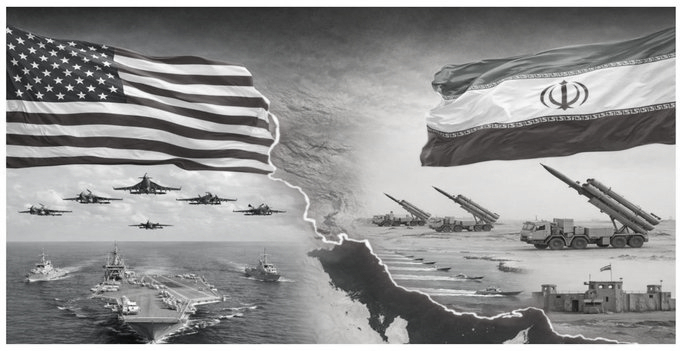
Iran War Drags On With Strait of Hormuz Now at the Heart of US Strategy
Six months after US President Donald Trump launched military action against Iran, a conflict he initially predicted would last only four to five weeks has entered a prolonged and uncertain phase, with the Strait of Hormuz emerging as a major priority for Washington.
Trump has repeatedly declared victory and suggested that a deal with Tehran was close, but a June memorandum of understanding aimed at ending the war has stalled. With US stockpiles of key weapons declining, the administration has increasingly shifted from military strikes towards economic pressure on Iran.
The changing nature of the conflict has also altered Washington's objectives. Reopening the Strait of Hormuz, a vital global energy route through which around 20 per cent of the world's oil normally passes, is now among the most pressing concerns.
Iran's efforts to restrict traffic through the waterway have disrupted shipping and contributed to higher prices for fuel and fertilizer, adding economic pressure far beyond the region. Trump has alternately insisted the strait remains functional and proposed that its reopening could form part of a broader agreement with Tehran.
On Iran's nuclear programme, Trump previously claimed that US strikes had "obliterated" the country's nuclear capabilities. However, uncertainty remains over an estimated 440 kg of enriched uranium, believed to be buried beneath sites attacked by the US and Israel. Removing the material without Tehran's cooperation could require a major military operation.
Another original objective was weakening Iran-backed militant groups. US attention has particularly focused on Hezbollah in Lebanon, but efforts to secure its disarmament remain unresolved.
Six months on, the war has therefore evolved from a campaign focused on Iran's nuclear and military capabilities into a wider contest involving economic pressure, regional security and control of a crucial global shipping route.