
Iran Warns US Of ‘Greater Damage’ As Trump Rejects Hormuz Plan
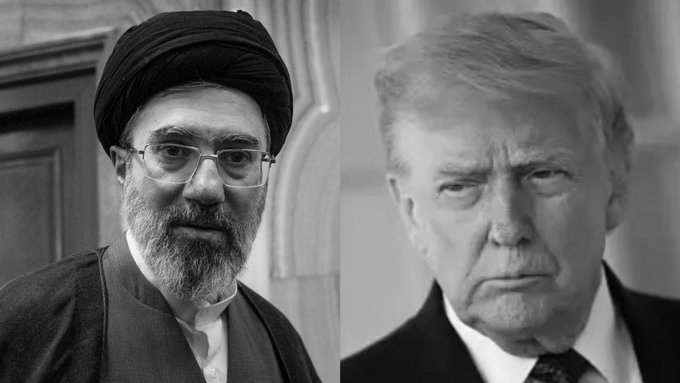
Iran has warned the United States of “greater damage” if Washington launches another attack, after President Donald Trump rejected Tehran’s seven-day proposal to reopen the Strait of Hormuz and halt regional fighting, as violence and territorial tensions continue to spread across West Asia.
Iranian army spokesperson Mohammad Akraminia said on Sunday that the country’s armed forces were fully prepared for any renewed US attack. Iranian Army Commander-in-Chief Amir Hatami described the war as being at a “critical and decisive” stage and said Tehran would not accept being prevented from trading while other powers continued using strategic waterways.
“If Iran cannot trade, if Iran cannot live, no one will be able to trade or live,” Hatami said. He added that Iran would not allow its adversaries to use the Strait of Hormuz while depriving Iranians of access to it, calling the waterway a matter of Iran’s “dignity and honour”.
Iranian Foreign Minister Abbas Araghchi said Tehran had conveyed a concrete seven-day plan through Qatar. Under the proposal, the Strait of Hormuz could be reopened and normal maritime traffic restored within seven days if Iran’s conditions were met. Trump has rejected the proposal as unacceptable.
The conditions include an end to hostilities across the Middle East, including in Lebanon, implementation of provisions from an earlier ceasefire understanding, the release of frozen Iranian assets, the lifting of sanctions on Iranian oil and an end to the US naval blockade of Iranian ports. Iran has also said an end to hostilities in Yemen is among its demands.
“Our conditions are clear, and any move toward reopening the Strait of Hormuz is contingent upon these conditions being fulfilled. We will not back down from them,” Araghchi said, according to Iranian state broadcaster IRIB.
The proposal follows a June memorandum of understanding between Washington and Tehran aimed at ending the war, reopening Hormuz and starting negotiations on Iran’s nuclear programme. That understanding later collapsed amid renewed fighting and tensions over shipping.
Iran currently requires vessels to obtain authorisation before passing through the strait, citing security and sovereignty concerns. Saudi Foreign Minister Faisal bin Farhan has criticised the use of both Hormuz and Bab al-Mandab as tools of pressure, stressing their importance to global energy security. Russian Foreign Minister Sergei Lavrov said Russia and other countries were prepared to contribute to stabilising the region.
The regional escalation was also evident in Yemen, where seven people were killed and 40 others, including children, were injured in a strike at the Mawiya junction in Taiz province, according to the Houthi-run health ministry. It said commercial shops at the market were hit.
Yemen’s internationally recognised government gave a different account, saying its forces had targeted a Houthi military camp and vehicles at the same location. Local sources cited by Yemen’s state news agency Saba also reported that shops were hit. The competing accounts could not be independently verified.
Meanwhile, Israeli far-right Finance Minister Bezalel Smotrich called for Israel to “go to war” in the West Bank, while seeking annexation of parts of Gaza and southern Lebanon. Speaking to Ynet, he said Israel should extend control in Gaza at least to the “Yellow Line” and in Lebanon to the Litani River.
“I think we need to go to war in Judea and Samaria, to dismantle the Palestinian Authority,” Smotrich said, using the biblical name for the West Bank. He also called for Israeli forces to eliminate what he described as militant infrastructure there.
The Palestinian Authority condemned the remarks as an explicit call for escalation, annexation and displacement, saying they undermined prospects for an independent Palestinian state.