
ISRO Scores Another Major Space Victory With EOS-05 Launch, PM Modi Hails Mission
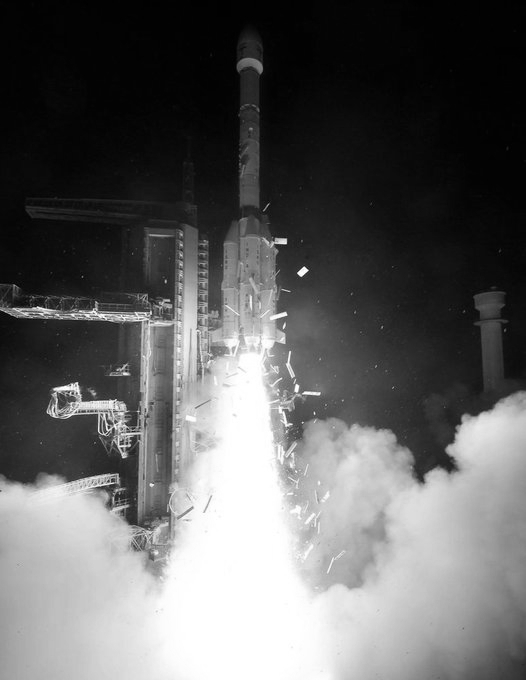
India’s space programme has added a significant new capability with the successful launch of EOS-05 aboard the GSLV-F17, giving the country its first imaging satellite designed to operate from a geosynchronous orbit. The mission marks an important expansion of India’s Earth-observation capabilities and could improve the way rapidly changing events are monitored from space.
The satellite was launched from the Satish Dhawan Space Centre in Sriharikota on Friday. GSLV-F17 placed EOS-05 into a Sub-Geosynchronous Transfer Orbit, from where the spacecraft will move towards its final operating position at an altitude of roughly 36,000 km above Earth.
The key difference between EOS-05 and many of India’s earlier Earth-imaging satellites lies in this orbital position. Conventional Earth-observation satellites operating in lower orbits can capture highly detailed images because they are much closer to the planet, but they move rapidly around Earth and can observe a particular location only when they pass overhead.
EOS-05 brings a different advantage: persistence. From geosynchronous orbit, it can maintain a broad and consistent view of a large region, allowing areas to be monitored at much more frequent intervals. This makes the satellite particularly useful when conditions on the ground are changing quickly.
Its observations can support disaster management, agriculture, forestry, environmental monitoring, land-use assessment and strategic requirements. During a cyclone, flood or major forest fire, for instance, frequently updated imagery could help authorities track developments and assess affected areas more quickly.
The mission also highlights the changing character of India’s space sector. EOS-05 remains an ISRO-led mission, but private Indian industry is increasingly contributing sophisticated hardware to national space missions. Hyderabad-based Ananth Technologies has reported supplying 15 systems for EOS-05, including power-management packages, two onboard computer packages and three Mark-3 star-sensor packages. For GSLV-F17, the company supplied 28 flight-hardware packages and worked on areas including stage harnessing, avionics and navigation, guidance and control systems.
Prime Minister Narendra Modi hailed the launch as a proud moment for the country, highlighting ISRO’s technological progress and the growing partnership between the space agency and Indian industry.
EOS-05 therefore represents more than another successful launch. It adds a persistent, wide-area observation capability to India's existing fleet of high-resolution Earth-imaging satellites, while demonstrating the country's broader move towards a stronger and more integrated space ecosystem.