
IT stocks yet to bottom? Sensex drops 1000 points on more IT sell-off
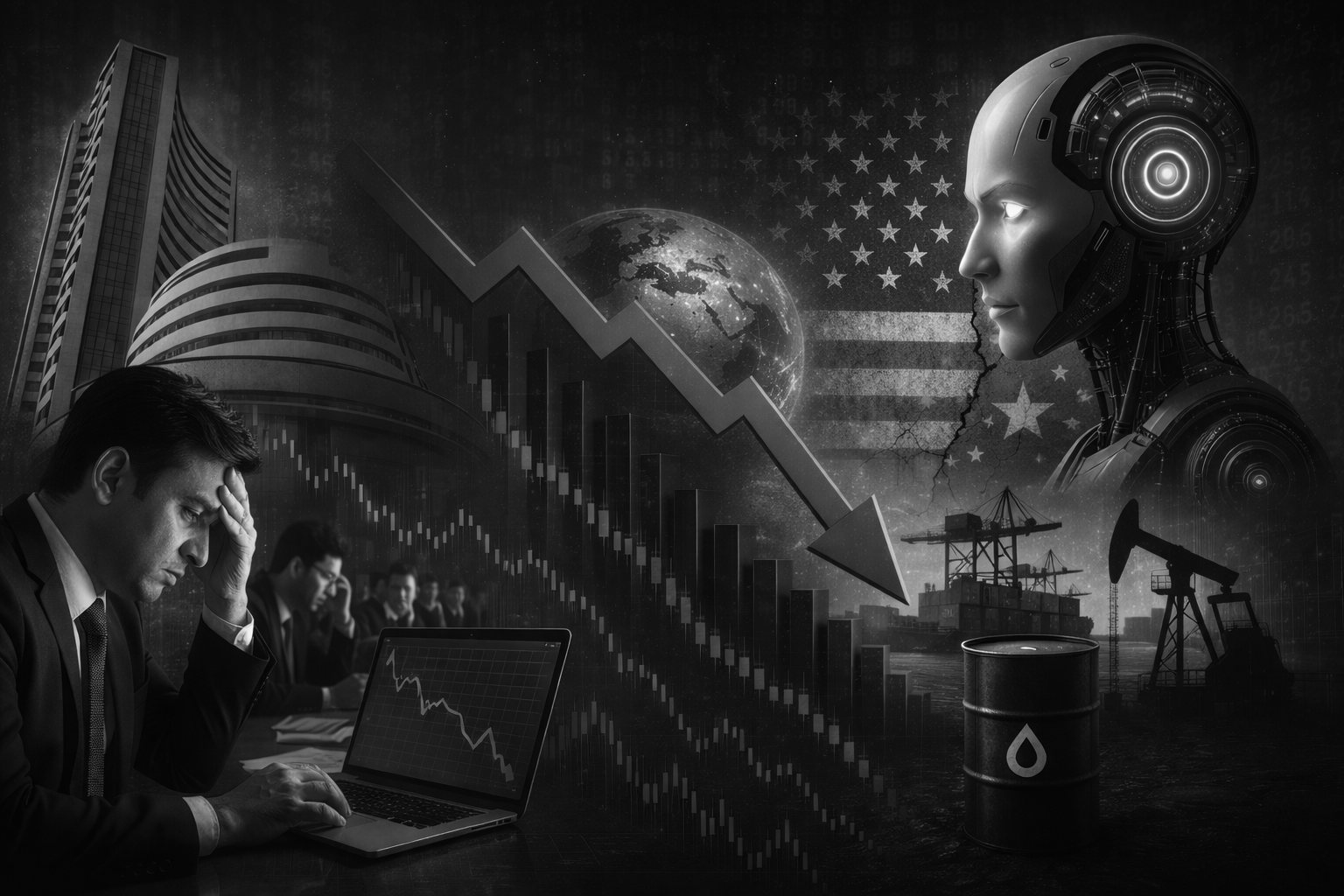
Indian equity markets tumbled sharply on Tuesday, with benchmark indices sliding over one per cent as a steep sell-off in the IT sector and renewed global trade worries rattled investor confidence. The Sensex plunged more than 1,000 points to close near 82,226, while the Nifty slipped over one per cent, reflecting broad-based weakness across equities. Market breadth remained negative, underscoring the depth of the decline.
Technology stocks led the downturn amid rising concerns that rapid advances in artificial intelligence and automation could disrupt traditional outsourcing models. Heavyweights such as Tech Mahindra , Infosys , HCLTech , and TCS recorded sharp losses as investors reassessed growth visibility and potential margin pressure in the face of AI-driven efficiencies. Since application development, maintenance, and support services form a significant portion of revenues, fears of reduced demand and pricing pressure weighed heavily on sentiment.
Global headwinds further dampened mood on Dalal Street. Renewed tariff threats and uncertainty surrounding international trade policies raised concerns about global demand , particularly in key markets like the United States and Europe, where Indian IT firms derive most of their revenues. Weakness in global technology stocks and rising crude oil prices amid geopolitical tensions added to investor sentiment risks and triggered risk aversion.
Foreign institutional investors trimmed exposure to technology stocks amid uncertainty over future growth prospects, accelerating valuation corrections after years of premium pricing. The weakness in IT shares also spilled over into real estate counters, as slower hiring and expansion by tech firms could reduce office leasing demand in major urban hubs.
Despite the sharp decline, defensive and domestic-focused sectors such as FMCG, healthcare, and power attracted selective buying as investors sought stability amid volatility. Analysts note the IT downturn reflects a structural shift rather than a collapse, with emerging opportunities in cloud computing , cybersecurity, and AI integration expected to drive the next phase of growth.
Markets are likely to remain volatile in the near term as investors weigh technological disruption, trade uncertainties, and geopolitical risks. The trajectory of the IT sector and its ability to adapt to AI-led transformation will remain a key determinant of broader market direction.