
Jal Jeevan Mission 2.0 Targets 54 Lakh Stakeholders for Water Management Training
The Centre is stepping up capacity-building efforts under Jal Jeevan Mission 2.0, proposing to train nearly 54 lakh stakeholders to improve community participation, local accountability and the long-term functioning of rural drinking water infrastructure.
The Department of Drinking Water and Sanitation (DDWS), under the Ministry of Jal Shakti, organised a national-level Training of Trainers (ToT) programme for state-level trainers at the India Habitat Centre in New Delhi on October 23. The initiative aims to equip Gram Panchayats, Village Water and Sanitation Committees (VWSCs), Sujalam Shakti Groups and other grassroots institutions with skills to manage and maintain rural water infrastructure.
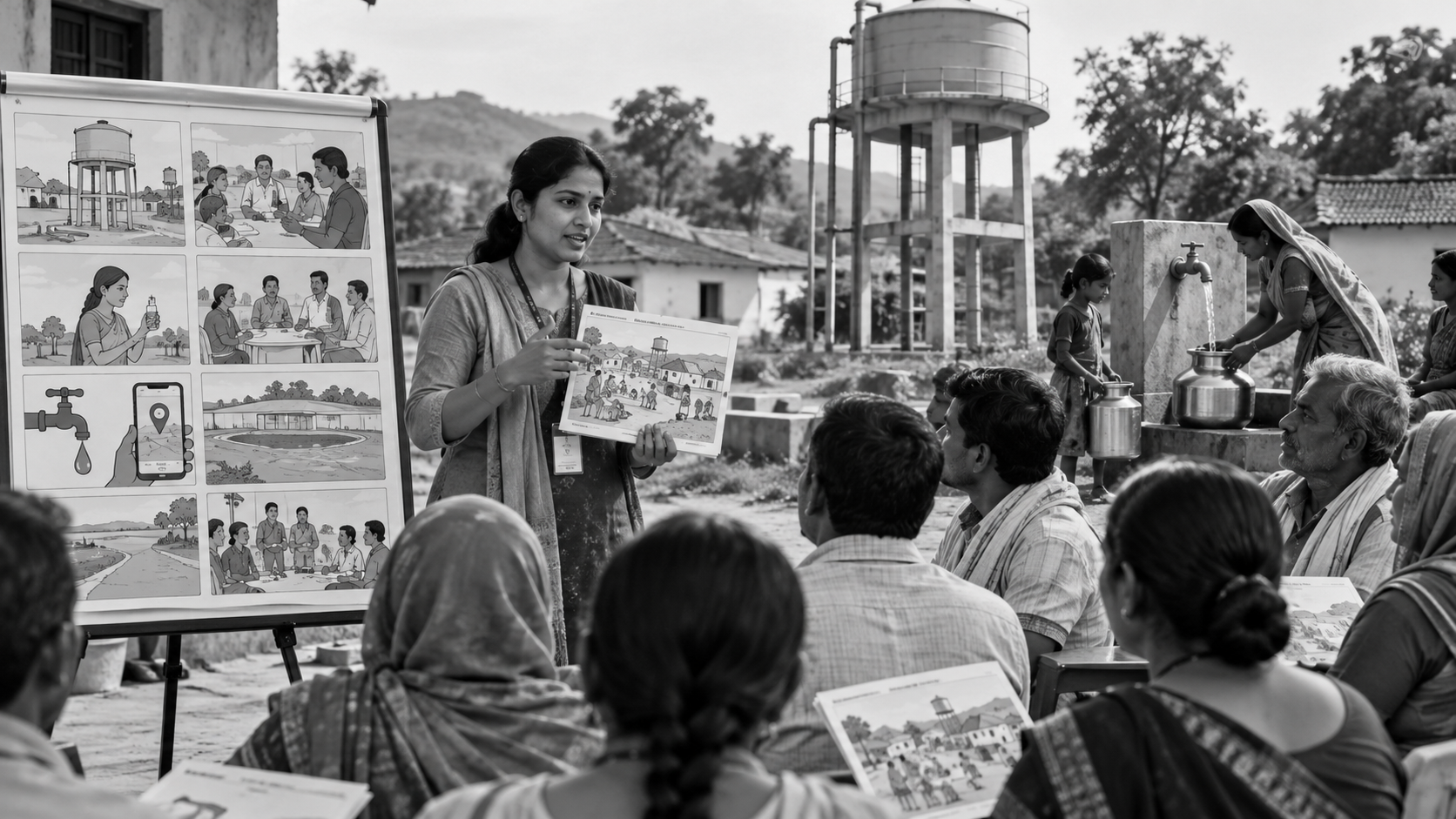
The eight-module training package comprises The Story of Panipur: A Story-Based Self-learning Handbook on Rural Drinking Water Supply Management and a Trainer’s Facilitation Manual. Using storytelling, folk communication, role-playing and gamification, it covers water quality, source sustainability, digital governance, operation and maintenance, community ownership and the development of sustainable Sujal Gaons.
Kamal Kishore Soan, Additional Secretary and Mission Director of the National Jal Jeevan Mission, stressed that sustainable drinking water services require community ownership and institutional accountability. He called for integrating the training modules into existing Rural Development and Panchayati Raj systems and aligning village water priorities with Gram Panchayat Development Plans, the Rashtriya Gram Swaraj Abhiyan and tied grants under the 16th Finance Commission.
Swati Meena Naik, Joint Secretary in the DDWS, highlighted the importance of capable local institutions, digital initiatives such as Sujalam Bharat, and layered dashboards for transparency and informed decision-making. She also emphasised women's leadership through Sujalam Shakti Groups.
The initiative comes as JJM 2.0, restructured by the Union Cabinet in March 2026, targets tap-water connections for all 19.36 crore rural households by December 2028. Its total outlay stands at ₹8.69 lakh crore, including central assistance of ₹3.59 lakh crore. Government figures released in March showed approximately 15.80 crore households, or 81.61%, had connections, compared with 3.23 crore in 2019.
Representatives of UNICEF and UNOPS shared field experiences and offered support for state- and district-level training. The programme's success will depend on translating training into effective maintenance, water-quality monitoring, source protection and reliable household supplies. The 54-lakh figure represents proposed coverage, not completed training.