
Jinnah Or Mujibur Rahman? Dhaka Student Tears Down Jinnah Museum Display
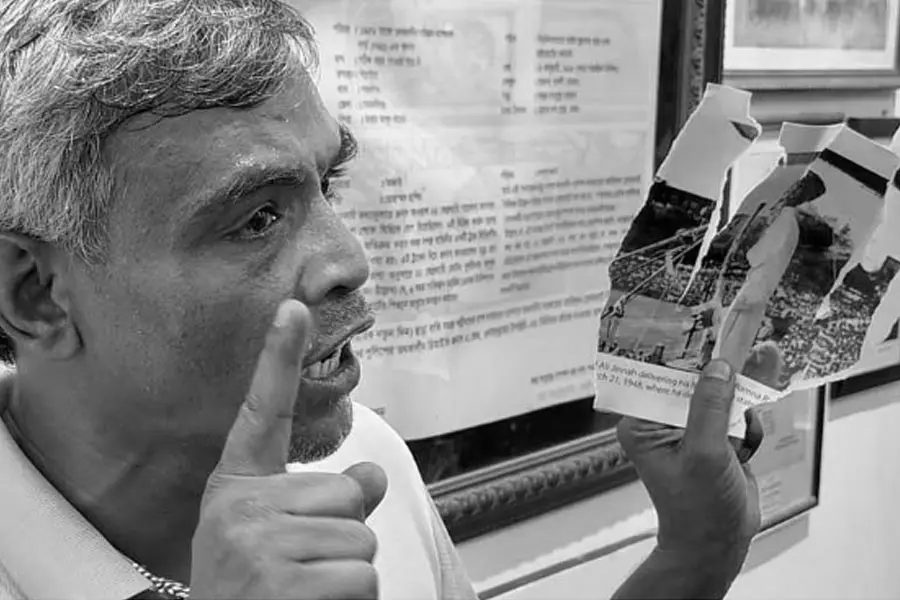
Bangladesh is facing a fresh controversy over its history and national identity after a museum display featuring Muhammad Ali Jinnah, the founder of Pakistan, was torn down by a Dhaka University student who accused organisers of glorifying him.
The display contained three items: a photograph of Jinnah from 1940, a newspaper clipping from 1970 and a photograph of him delivering a speech in Dhaka in March 1948. The last image is particularly contentious because Jinnah’s language stance during that visit became an early flashpoint in the tensions that eventually contributed to Bangladesh’s independence in 1971.
The student said the display was an attempt to rehabilitate Jinnah’s image and distort Bangladesh’s history. He argued that while Jinnah is Pakistan’s founding figure, he became a villain for many Bengalis because of his opposition to recognising Bengali alongside Urdu.
After Pakistan was created in 1947, unrest grew in East Pakistan, where Bengali was the dominant language. Jinnah insisted that Urdu alone should be Pakistan’s official language. During his March 1948 visit to Dhaka, he reiterated that position before a large crowd, but Bengali students and others openly rejected his demand.
Jinnah died later that year, but attempts to impose Urdu continued under his successors. The tensions eventually fuelled the Bengali Language Movement of 1952, when Pakistani authorities violently suppressed demonstrations demanding official recognition for Bengali. Several protesters were killed.
Bangladesh ultimately emerged as an independent country in 1971 after a liberation war against Pakistan. The latest controversy, however, is also tied to the country’s turbulent politics since the 2024 nationwide protests that led to the ouster of former Prime Minister Sheikh Hasina, daughter of Bangladesh’s founding leader Sheikh Mujibur Rahman.
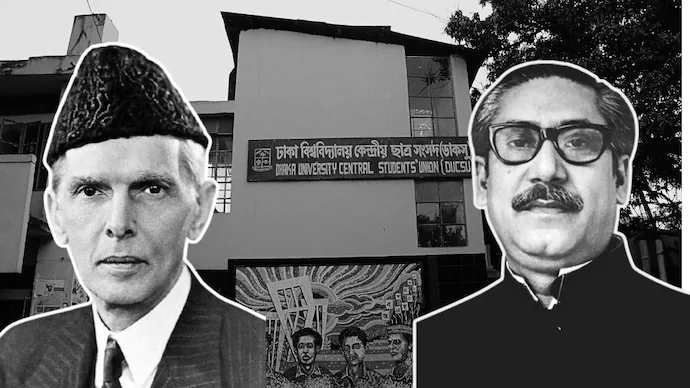
Mujibur Rahman played a central role in Bangladesh’s independence and is widely known as Bangabandhu, or “Friend of Bengal”. Critics of Hasina have sought to challenge aspects of her family’s political legacy, while the display has triggered accusations that Jinnah is being elevated at Mujibur Rahman’s expense.
The controversy has intensified because the Dhaka University Central Students’ Union is run by the student wing of Jamaat-e-Islami. Jamaat opposed Bangladesh’s independence in 1971 and has faced longstanding criticism over its role during the conflict. Critics therefore see the Jinnah display as part of an attempt to reshape the country’s historical narrative.
But some Dhaka University students are resisting both competing versions of history. One student argued that Mujibur Rahman remains an indispensable part of Bangladesh and that his image should not be erased, while Jinnah is also part of the country’s history and his image should not be destroyed.