
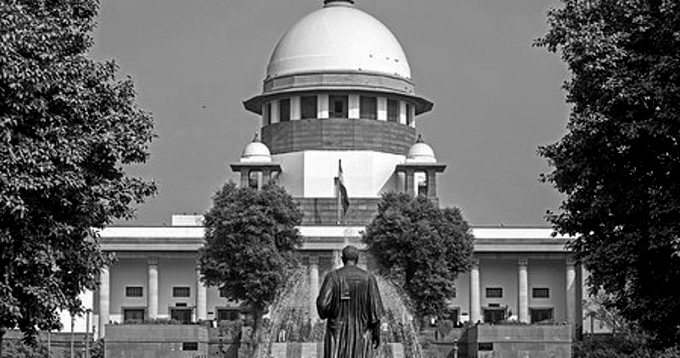
Justice Nagarathna Questions Need to Reconsider 48-Year-Old ‘Industry’ Verdict
Supreme Court Justice B V Nagarathna has termed as “misconceived” and “uncalled for” the reference to a nine-judge bench seeking reconsideration of the landmark 1978 judgment that gave a broad, worker-friendly interpretation to the term “industry”.
In her separate 157-page judgment, Justice Nagarathna strongly opposed any reconsideration of the Bangalore Water Supply & Sewerage Board v. A. Rajappa verdict, saying the ruling should continue to govern pending cases before labour courts, industrial tribunals, high courts and the Supreme Court.
The nine-judge bench, headed by Chief Justice of India Surya Kant, on Thursday held that the 48-year-old interpretation under the now-repealed Industrial Disputes Act, 1947, would continue to apply to thousands of pending cases involving hospitals, educational institutions and government departments.
Justice Nagarathna said the reference made by a five-judge bench was based on an incorrect perception of conflict between earlier judgments. She concluded that the 1978 ruling remained good law and binding, and did not require interference or modification.
A key reason cited by her was the repeal of the Industrial Disputes Act, 1947, with effect from November 21, 2025. It was replaced by the Industrial Relations Code, 2020, which contains a new definition of “industry”. Given this legislative change, she questioned the necessity of reconsidering a judgment delivered under the previous law.
Justice Nagarathna also highlighted the economic transformation following the 1991 liberalisation, privatisation and globalisation reforms. She noted that several activities earlier undertaken by the government had subsequently been privatised, liberalised or globalised.
She held that retaining the 1978 interpretation for pending disputes would be in the interest of workers, employers, industrial activity and the Indian economy.
The 1978 judgment, delivered by a seven-judge bench and authored primarily by Justice V R Krishna Iyer, significantly expanded the meaning of “industry” and brought millions of workers, including those in hospitals, educational institutions, clubs and government departments, within the ambit of labour-law protection.