
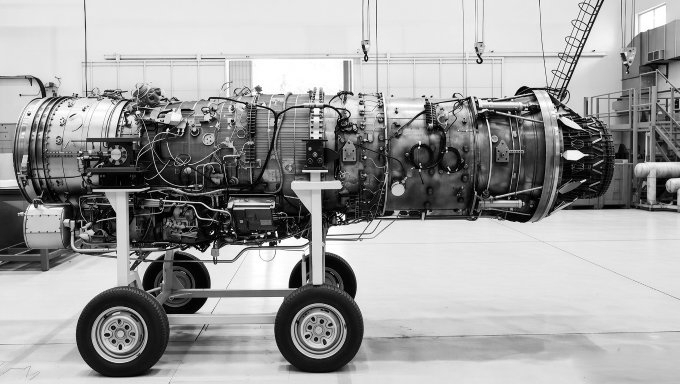
Kaveri 2.0 vs GE F404: Can India Finally Build Its Own Tejas Engine?
India’s long-running effort to develop an indigenous fighter aircraft engine is entering a new phase with Kaveri 2.0, a redesigned powerplant being developed by the DRDO’s Gas Turbine Research Establishment (GTRE). The programme aims to reduce India’s dependence on foreign engines and eventually give its fighter aircraft a domestically controlled source of power.
The Kaveri programme was originally conceived to power the Tejas, but the first-generation engine failed to meet the aircraft’s requirements. Its biggest shortcomings were insufficient thrust, weight and performance at demanding operating conditions. The engine was capable of around 80-85 kilonewtons (kN) with afterburner, but could not deliver the required combination of thrust and weight for the fighter.
The Tejas Mk1A therefore relies on the American GE F404-IN20, a mature and proven engine producing around 84-85 kN of afterburner thrust. GE says the engine weighs about 1,072 kg and incorporates technologies including FADEC and single-crystal turbine blades. The F404 family has also accumulated extensive operational experience.
Kaveri 2.0 is being designed to address some of the shortcomings of its predecessor. GTRE is targeting 55-60 kN of dry thrust and 90-100 kN with afterburner, along with a weight below 1,100 kg. The redesigned engine is expected to feature a new core, rebuilt compressor, advanced single-crystal turbine blades and modern digital controls.
If those targets are achieved, Kaveri 2.0 could produce more afterburner thrust than the F404-IN20. But the comparison must be treated carefully: the F404 is already a certified production engine, while Kaveri 2.0 remains under development and must still prove its performance and reliability through extensive testing.
Safety is another important consideration. At least one Tejas accident in March 2024 was linked in preliminary reporting to an engine seizure, with an oil-pump malfunction suspected. However, other Tejas crashes, including the 2025 Dubai Airshow accident, cannot simply be attributed to the GE engine without established findings.
The new Kaveri therefore faces a bigger test than simply producing more thrust. It must demonstrate reliability, durability, efficiency and safety. If successful, the programme could give India greater control over a critical fighter component and mark a major step towards reducing dependence on imported engines.
An early-2030s maturity timeline is plausible, but it is not a firm government deadline. The engine will have to earn that milestone through testing.