
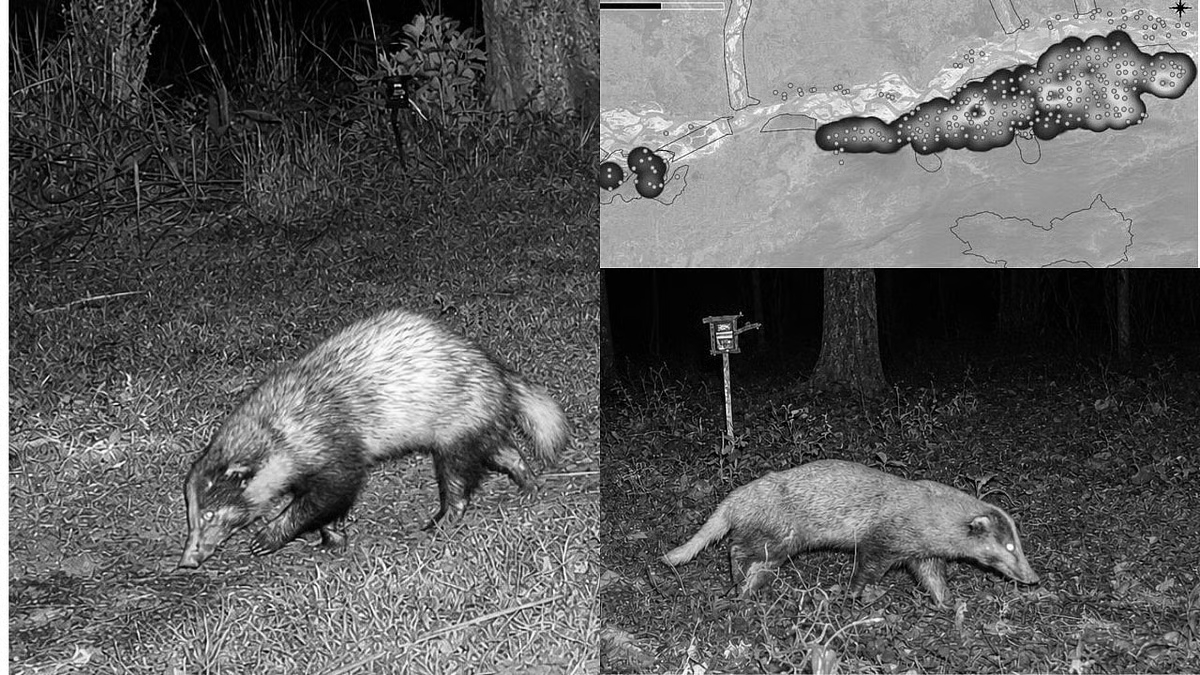
Kaziranga's Hidden Treasure: More Than 55 Rare Hog Badgers Discovered
In a significant boost to wildlife conservation efforts in Northeast India, the first scientific assessment of the Greater Hog Badger , a globally vulnerable species, has revealed a healthy and potentially sustainable population within Assam’s Kaziranga National Park and Tiger Reserve (KNPTR) .
The study estimates that at least 55 Greater Hog Badgers inhabit the protected landscape, underscoring Kaziranga’s growing importance not only for iconic species such as rhinos and tigers but also for lesser known animals that play a vital role in maintaining ecological balance.
Known locally as “Mati Gahori” , the Greater Hog Badger is a nocturnal, burrowing mammal protected under Schedule I of the Wildlife (Protection) Act, 1972 . The assessment was carried out by Kaziranga’s Tiger Cell in collaboration with the Wildlife Conservation Trust and researcher Tiasa Adhya of The Fishing Cat Project . The study focused on estimating the species’ density and habitat occupancy across the reserve using scientific monitoring methods.
Welcoming the findings, Assam Forest and Environment Minister Jayanta Malla Baruah described the results as encouraging evidence of the strength of Kaziranga’s ecosystems. He noted that the species has been recorded across a variety of habitats within the park, reflecting the effectiveness of ongoing conservation measures.
Wildlife experts highlight that the Greater Hog Badger is much more than an elusive forest dweller. As an omnivorous and highly fossorial species, it contributes significantly to ecosystem health by disturbing soil, redistributing nutrients and turning over leaf litter while foraging. These activities help sustain biodiversity and improve forest productivity.
Globally, the species faces mounting threats from habitat destruction and poaching, leading the International Union for Conservation of Nature (IUCN) to classify it as Vulnerable . While populations have declined across much of Southeast Asia, India and Thailand are believed to host some of the healthiest remaining populations.
The latest findings reinforce Kaziranga’s reputation as a biodiversity hotspot and highlight the importance of conserving even the most elusive species that quietly support the health of natural ecosystems.