
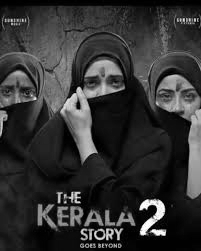
‘Kerala Story 2’: IUML criticises SFI protest, CPI(M) flags polarisation bid
The political controversy surrounding the upcoming film Kerala Story 2: Goes Beyond intensified on Sunday, with sharp reactions from multiple quarters in Kerala, as the Indian Union Muslim League (IUML) criticised a beef festival organised by the Students' Federation of India (SFI), while CPI(M) Rajya Sabha MP John Brittas termed the film a “propaganda” exercise aimed at creating communal polarisation ahead of the Assembly elections.
IUML state general secretary P M A Salam described the beef fest organised by the SFI as “provocative” and a “cheap political gimmick”, alleging that it was designed to woo and mislead Muslim voters rather than address genuine concerns. Responding to media queries, Salam questioned the attempt to associate beef consumption with any particular community.
“What is the connection between beef and any community? What is the link between beef and Muslims?” Salam asked, pointing out that some of the largest beef exporters and owners of meat processing units in India include individuals associated with the Bharatiya Janata Party, the Rashtriya Swayamsevak Sangh, as well as Muslims. He asserted that no one was forcing those who do not consume beef to do so.
While criticising the film for allegedly creating divisions among communities, Salam maintained that the form of protest adopted by the SFI was unnecessary and inflammatory. He accused the ruling Communist Party of India (Marxist) (CPI-M) of attempting to project itself as pro-Muslim through symbolic acts while allegedly denying real benefits to minorities and indirectly aiding the BJP by contributing to polarisation.
The IUML’s criticism came amid differing views even among Muslim organisations. The Muslim Students Federation (MSF) had earlier called for a boycott of the film but opposed the beef fest. MSF state general secretary C K Najaf warned that such protests could hurt Hindu religious sentiments and strain communal harmony.
The SFI district committee had organised the beef festival at Manaveeyam Veedhi on Friday, citing a scene in the film’s trailer in which a character is allegedly shown being force-fed beef. The SFI said the protest was meant to counter what it views as a communal portrayal.
Separately, CPI(M) MP John Brittas launched a scathing attack on the film, calling it a politically motivated propaganda project designed to malign Kerala’s image as a peaceful, plural society . He alleged that the timing of the film was aimed at influencing voters ahead of the upcoming Assembly elections.
“It’s a propaganda movie. It should be put in the septic tank rather than viewed in the theatre,” Brittas said, alleging that the Bharatiya Janata Party was using cinema as a tool to create communal polarisation and gain a foothold in Kerala. He specifically objected to the promotional scene involving forced consumption of beef, describing it as misleading and provocative.
Brittas, however, made it clear that he did not favour banning the film. “Even when the earlier Kerala Story came, we did not ban it. It was screened and left. Nobody went to see the movie,” he said, adding that Kerala’s voters were politically conscious and capable of rejecting propaganda on their own.
Referring to the first film, The Kerala Story, directed by Sudipto Sen, Brittas questioned claims about its box-office success, suggesting that organised support and bulk ticket purchases by BJP supporters may have contributed to its performance. He also took a swipe at Narendra Modi, recalling that the Prime Minister had publicly praised the film during its release.
Brittas further raised concerns about the speed with which the sequel reportedly received certification from the Central Board of Film Certification, and questioned whether authorities applied double standards when films allegedly malign an entire state. He cited past observations of the Supreme Court of India on the need for social sensitivity in film titles and content.
Directed by Kamakhya Narayan Singh, Kerala Story 2: Goes Beyond is scheduled for release on February 27. Its predecessor, despite widespread political opposition in Kerala over its claims of radicalisation and trafficking, went on to win awards for Best Direction and Best Cinematography at the 71st National Film Awards.
With protests, political sparring and legal scrutiny intensifying even before the film’s release, the debate over cinema, communal harmony and electoral narratives has once again come to the fore in Kerala, highlighting deep divisions over the role of films in the state’s public and political discourse.