
Kerala’s GI Handlooms Gain Identity, But Economic Benefits Stay Uneven
Geographical Indication (GI) registration has strengthened the identity, legal protection and cultural recognition of Kerala’s traditional handloom products, but the status has not translated into uniform economic benefits across weaving clusters, according to an independent study. The findings underline a wider challenge: heritage recognition alone cannot guarantee higher incomes, employment or sustainable livelihoods for artisans.
The study, led by Praveen Raj RS, Sravanth T, Valanrebinro G, Mohan B and Vismitha V M, examined four GI-tagged products - Balaramapuram Sarees and Fine Cotton Fabrics, Kasargode Sarees, Kuthampully Sarees, and Chendamangalam Dhoties and Set Mundu. While GI registration improved product identity and cultural recognition, researchers found significant variations in sales, profitability, employment generation and overall economic performance among the clusters.
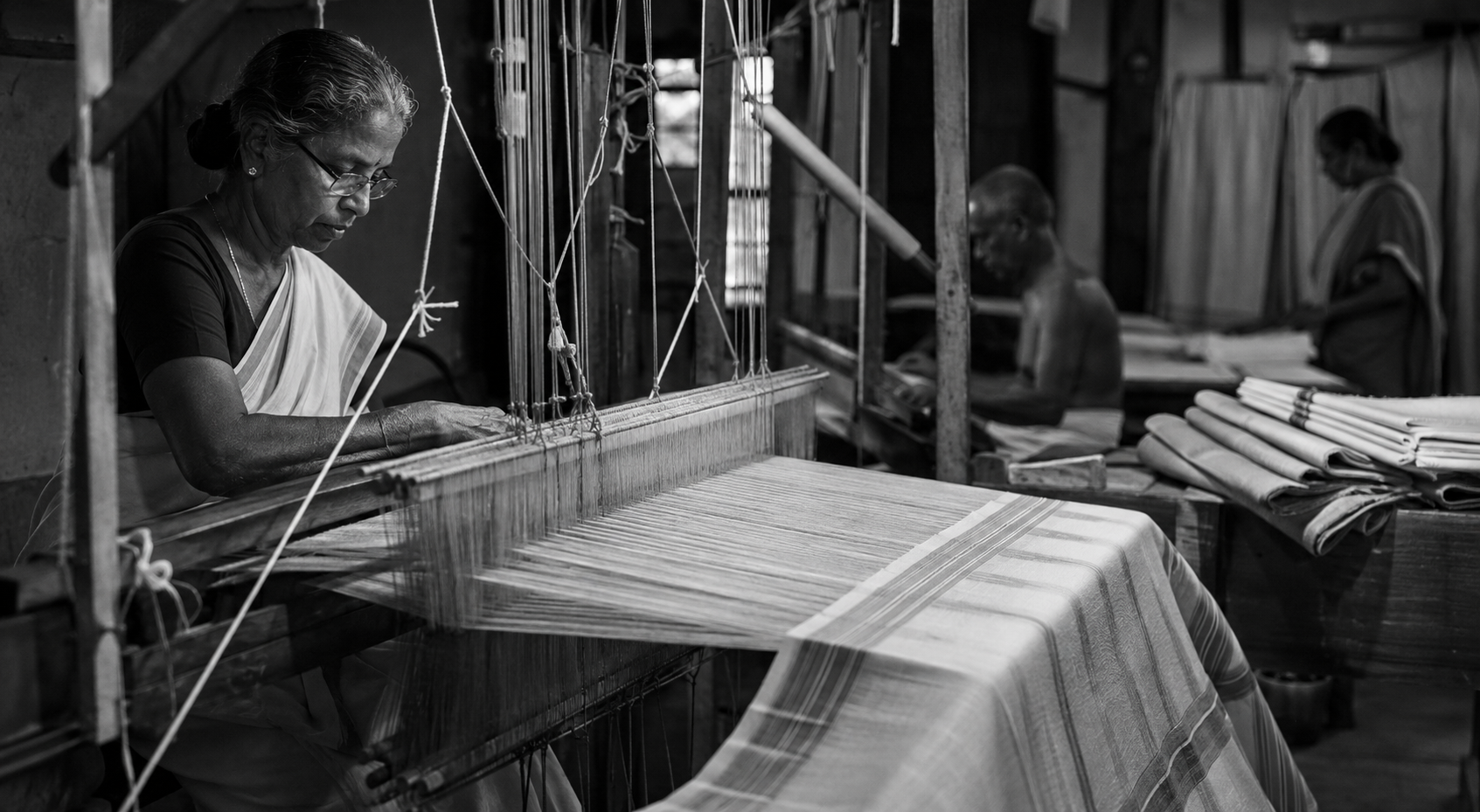
The study identified an ageing artisan population and labour shortage as major threats to the sector. Physically demanding work, relatively low earnings and irregular employment have discouraged younger people from entering weaving, raising concerns over the continuity of traditional skills.
The sector also faces growing competition from low-cost powerloom imitations that closely resemble traditional handloom products. Sold at substantially lower prices, these machine-made alternatives have reduced the market share and premium available to genuine GI products. Weak enforcement of GI regulations and limited consumer awareness have further complicated the situation.
Rising cotton yarn and raw-material costs have added to production pressures. With many producers operating on narrow margins, passing higher costs to consumers risks weakening demand and further reducing profitability.
Marketing remains another major constraint. Many producers continue to rely on traditional channels and cooperative outlets, with limited access to digital platforms, national retail chains and international markets. The absence of effective branding, authentication and traceability also makes it difficult for genuine producers to command premium prices.
The researchers recommended stronger consumer awareness, stricter action against counterfeit products, improved branding and QR-based digital traceability. Kerala’s existing Kaithari Mark and the national Handloom Mark could support such authentication efforts.
They also called for stronger cooperatives, stable raw-material procurement, financial assistance, product diversification and design innovation, alongside better e-commerce access. Programmes to attract younger workers into weaving and greater integration of GI handlooms with tourism were also suggested.
The findings come as Kerala’s wider handloom sector faces pressure. The state’s Economic Review reported 13,570 handloom weavers in 2024-25, including 10,415 women, with production at ₹198.49 crore and sales turnover at ₹186.27 crore.
The study ultimately argues that GI registration should be treated as a foundation, not the final solution. The next challenge is converting recognition into higher artisan incomes, stronger markets and sustainable employment, ensuring that the economic value of Kerala’s handloom heritage reaches the people who preserve it.