
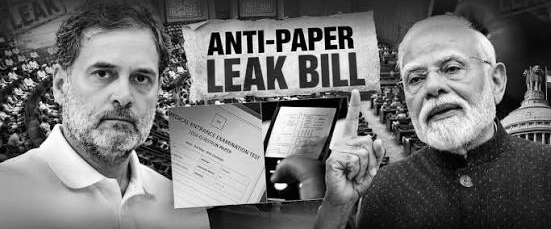
Lok Sabha Passes Tough Anti-Paper Leak Bill: Up to 10 Years in Jail, ₹10 Crore Fine for Organised Crimes
The Lok Sabha on Wednesday passed the Public Examination (Prevention of Unfair Means) Amendment Bill, 2026, significantly strengthening India's anti-paper leak law with tougher punishments, time-bound investigations and fast-track trials. The legislation was passed by voice vote amid noisy protests and sloganeering by Opposition members, underscoring the political storm that has followed recent examination paper leak controversies, particularly the NEET row.
The amendment seeks to plug loopholes in the Public Examinations (Prevention of Unfair Means) Act, 2024, which was enacted to tackle organised cheating and paper leaks in centrally conducted examinations. The law applies to exams conducted by agencies such as the Union Public Service Commission (UPSC), Staff Selection Commission (SSC), National Testing Agency (NTA), Railway Recruitment Boards and banking recruitment bodies.
Under the amended law, anyone found guilty of leaking question papers or using unfair means in public examinations will face a minimum jail term of five years, extendable to 10 years, along with a fine of up to ₹50 lakh. For organised paper leak rackets, the punishment is even stricter, with a minimum sentence of seven years and a fine of up to ₹10 crore.
The bill also introduces a faster judicial process. State governments and Union Territory administrations can now designate Special Fast-Track Courts to hear cases under the law. These courts must conduct day-to-day hearings and complete trials within three months of the filing of the charge sheet. Investigations must be completed within two months, while appeals will be heard by a two-judge bench of the High Court, which is expected to dispose of cases within three months. The Centre can also set up special task forces to investigate major offences, while states and UTs may appoint special public prosecutors for these cases.
Speaking in the Lok Sabha, Union Minister Jitendra Singh said the amendments were based on the government's experience since the law came into force in 2024. He said 52 FIRs have been registered under the anti-paper leak law so far and maintained that the government acted swiftly in the NEET paper leak case. He described the amendment as a strong deterrent against organised exam fraud and said it would help restore confidence in India's examination system.
The debate witnessed repeated interruptions as the Opposition raised slogans and criticised the government's handling of the recent student protests over the NEET controversy. Leader of Opposition Rahul Gandhi referred to the protests during the discussion, prompting sharp objections from the Treasury benches and leading to heated exchanges in the House. Despite the uproar, the bill was passed before the Lok Sabha was adjourned for the day.
The amendment comes at a time when repeated paper leak incidents have shaken the confidence of lakhs of students and job aspirants across the country. By combining harsher punishment, faster investigations and time-bound trials, the government hopes to dismantle organised paper leak networks and safeguard the integrity of India's public examination system.