
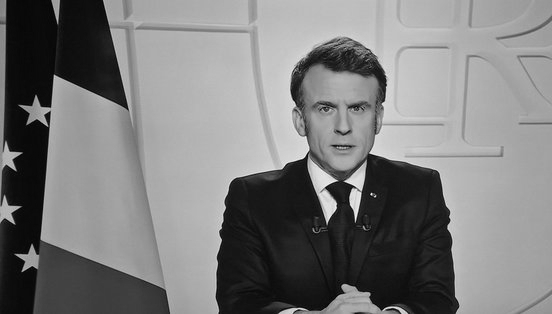
Macron says France to increase nuclear warheads, lend nuclear‑armed aircraft to EU allies
French President Emmanuel Macron announced a major overhaul of France’s nuclear policy on Monday, unveiling plans to increase the country’s nuclear warheads and deepen cooperation with European allies. Speaking at the Île Longue naval base, which hosts France’s ballistic missile submarines , Macron described the initiative as a new “advanced deterrence” doctrine , aimed at strengthening Europe’s strategic autonomy amid global tensions and doubts over U.S. security commitments.
Under the new framework, France will permit the temporary deployment of nuclear-armed aircraft to allied countries in times of crisis, though Macron stressed that decision-making on their use will remain strictly sovereign , with authority retained solely by the French president. “We will not share the final decision,” he said. “There will also be no sharing of vital interests, which will remain a sovereign assessment for our country.”
Eight European nations — the United Kingdom, Germany, Poland, the Netherlands, Belgium, Greece, Sweden and Denmark — are in talks on how cooperation could work, including participating in deterrence exercises and allowing non-nuclear allied forces to support related operations. Macron and German Chancellor Friedrich Merz announced plans for German conventional forces to join French nuclear exercises and visit strategic sites this year, emphasizing that the strategy supplements NATO rather than replacing it.
France currently maintains an estimated 290 nuclear warheads , making it the fourth-largest arsenal globally, after Russia, the United States and China. Macron confirmed the stockpile will grow, marking the first increase since at least 1992, and that France will no longer publicly disclose its exact size . He framed the move as essential to credible deterrence: “If we had to use our arsenal, no state, however powerful, could avoid it, and no state, however vast, would recover from it,” he said.
The announcement drew support from European partners but criticism from disarmament advocates, who warned that expanding nuclear forces could escalate risks. Macron concluded: “To be free, one needs to be feared,” underscoring France’s determination to safeguard its security and reinforce European deterrence.