
Made in India, Tested at 22,000 Feet: DRDO's Combat Parachute Breaks Foreign Dependence
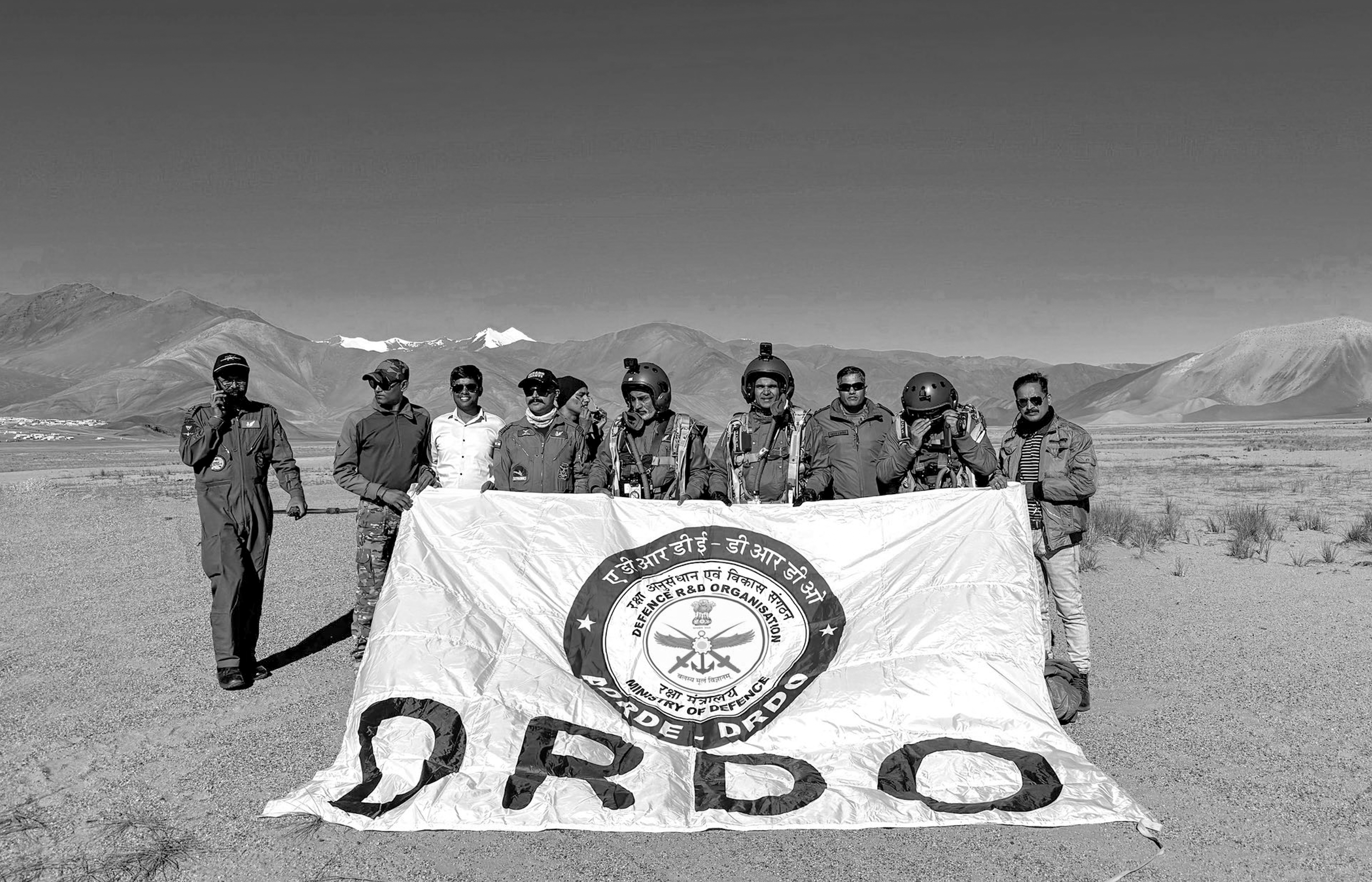
India has strengthened its high-altitude warfare capabilities with the successful trial of an indigenous Military Combat Parachute System (MCPS) at a drop zone near the Line of Control (LoC) in the Nyoma sector of south-eastern Ladakh.
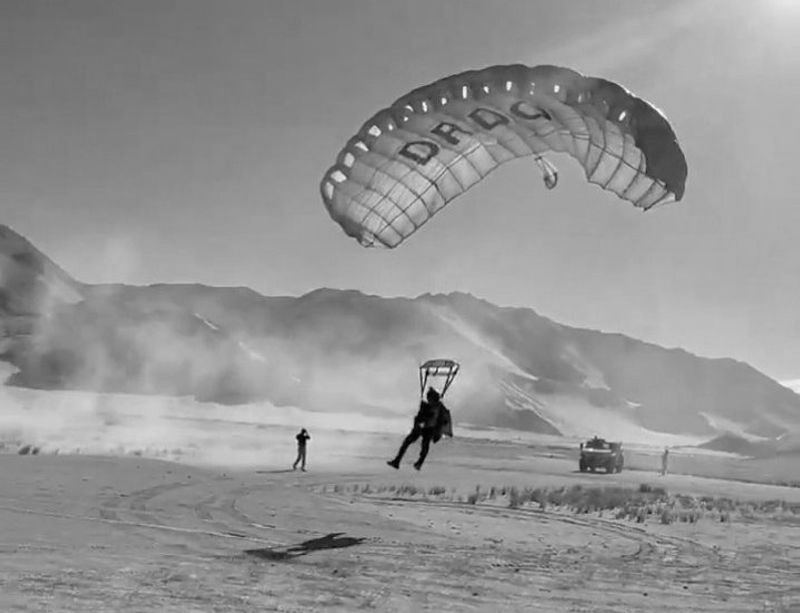
Conducted by the Defence Research and Development Organisation (DRDO) at around 22,000 feet, the trial tested the system under extreme conditions. Wing Commander Rahul Jha, along with Master Warrant Officers R J Singh and Vivek Tiwari, used the complete system, including a para computer, oxygen equipment and specialised jumpsuits. The parachutes were deployed at approximately 20,000 feet, with the personnel landing at around 13,700 feet.
The significance goes beyond altitude. At extreme heights, thin air, freezing temperatures and unpredictable mountain winds leave little room for error. The MCPS is designed with a lower descent rate, improved steering and precise navigation, giving troops greater control over their trajectory and allowing more accurate landings.
The system supports High Altitude High Opening (HAHO), High Altitude Medium Opening (HAMO) and High Altitude Low Opening (HALO) operational profiles. This gives special forces greater flexibility for missions ranging from long-distance, high-altitude insertion to faster tactical drops, including reconnaissance, rescue and other specialised operations in remote terrain.
What makes the MCPS particularly important is its indigenous design. Developed by the Aerial Delivery Research and Development Establishment (ADRDE), Agra, with support from the Defence Bioengineering and Electromedical Laboratory (DEBEL), Bengaluru, it combines parachute technology with life-support and safety systems required for extreme-altitude operations.
Its integration with NavIC (Navigation with Indian Constellation), India's own satellite-navigation system, further strengthens operational autonomy and reduces dependence on foreign navigation infrastructure.
Countries including the United States, United Kingdom, France and Russia possess advanced military free-fall capabilities, so India cannot simply claim the MCPS is the world's best parachute. Its major advantage is indigenous control over development, maintenance, upgrades and supply.
The MCPS has also been tested at altitudes of up to 32,000 feet, highlighting its extreme-altitude potential.
For India's special forces, the achievement is therefore less about having the world's “best” parachute and more about securing a home-grown, high-altitude capability tailored to the country's demanding Himalayan operational environment.