
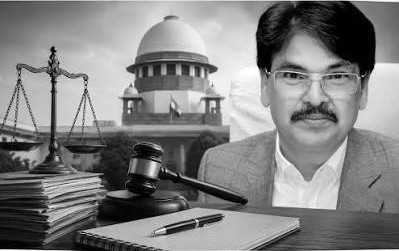
Manan Mishra Can Stay Only Until Fresh BCI Elections, Says Supreme Court
The Supreme Court put the continuation of Bar Council of India (BCI) Chairman Manan Kumar Mishra on a temporary basis, holding that he can remain in office only until a freshly constituted BCI elects its office-bearers. The ruling came amid petitions challenging his prolonged tenure, the 2030 extension and governance.
The petitioners argue that Rule 12(2) of the BCI Rules prescribes a two-year term for the chairman and vice-chairman, or until membership ends, whichever is earlier. They have challenged an April 21, 2025 Gazette notification recording Mishra’s tenure from April 17, 2025 to April 16, 2030, contending that an administrative decision cannot override the rule without a valid amendment.
They also questioned the use of the provision to Section 4(3) of the Advocates Act, 1961. They say it prevents an administrative vacuum, not indefinite retention or postponed elections. With State Bar Council elections now completed, the Supreme Court said the transitional controversy may no longer survive.
Under Section 4, each State Bar Council elects a representative to the BCI. The constituted councils must complete the statutory process and elect office-bearers and BCI representatives, paving the way for a new national body. The Court has set a reconstitution process.
The bench also scrutinised the BCI-PEARL FIRST Trust, over claims that 11 managing trustees were made permanent regardless of continued BCI membership. It questioned how an elected statutory body could create a trust from institutional assets and allow individuals to retain permanent control after leaving elected office.
The concern goes beyond the Trust: it touches on democratic accountability, institutional integrity and control of BCI-linked assets. Petitioners have sought an independent probe into the Trust, its finances and related transactions.
Until a new BCI is elected, the Court has allowed routine work to continue but directed that policy decisions involve the Attorney General and Solicitor General. It stressed that the existing arrangement carries no judicial stamp of approval.
The matter will be taken up again as the reconstitution process moves forward.