
Marcos Reaffirms South China Sea Stand, Vows Corruption Crackdown
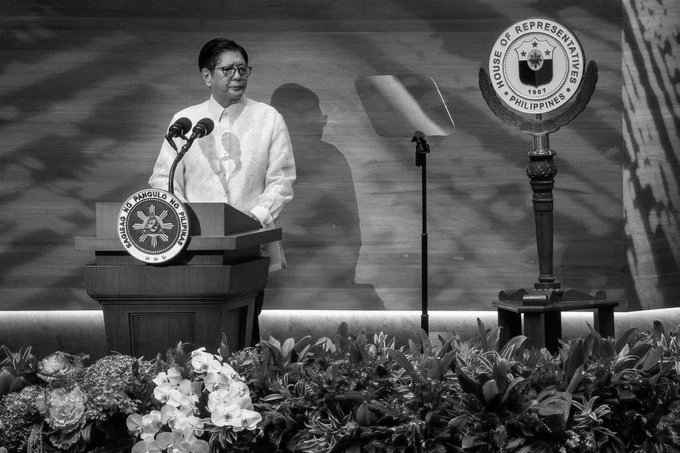
Philippine President Ferdinand Marcos Jr. on Monday pledged to intensify his administration's fight against corruption, declaring that even his closest political allies would not be spared if found guilty, as he delivered his fifth State of the Nation Address (SONA) amid mounting political and economic challenges.
Addressing a joint session of Congress under heavy security, Marcos said his government would continue pursuing investigations into the multi-billion-peso flood-control corruption scandal that has implicated lawmakers, public works officials and contractors. He stressed that personal relationships would not interfere with the rule of law, adding that authorities were prepared to prosecute anyone backed by sufficient evidence. Reports indicated that charges would also be filed against former House Speaker Martin Romualdez, the President's cousin and a key political ally, who has denied any wrongdoing.
Turning to foreign policy, Marcos issued a strong yet indirect warning to China, reaffirming the Philippines' commitment to the 2016 international arbitration ruling that invalidated Beijing's sweeping claims in the South China Sea. He declared that Filipinos would never surrender the country's sovereignty and would continue to pursue a rules-based and peaceful approach to resolving maritime disputes.
The President also outlined measures to cushion the impact of rising global energy prices triggered by renewed conflict in the Middle East. He proposed tax reforms, economic relief initiatives and renewed discussions on nuclear energy as part of a long-term strategy to strengthen the country's energy security and reduce dependence on imported fuel.
The address came amid heightened political tensions, with the impeachment trial of Vice President Sara Duterte continuing and public concerns over inflation, corruption and governance fuelling protests outside the Congress complex. More than 23,000 police personnel were deployed across Metro Manila after a minor bomb blast near the Department of Justice and the discovery of explosive components near the Senate prompted tighter security.