
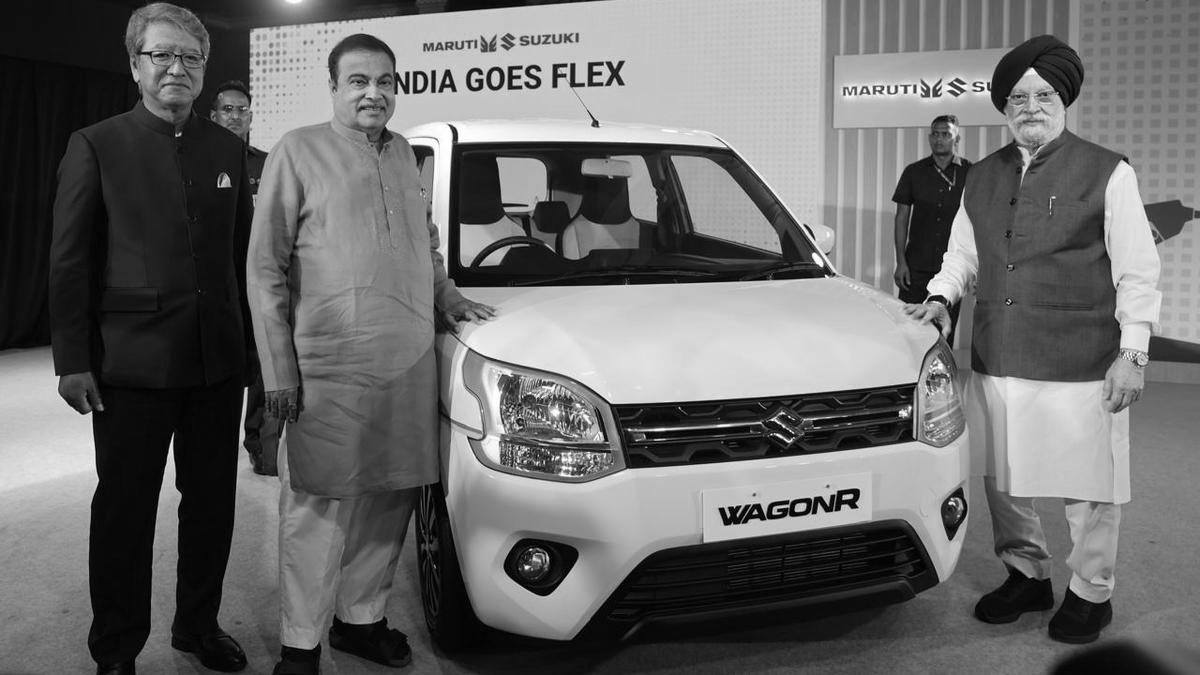
Maruti Suzuki Launches India’s First Flex-Fuel Car, Redefining Sustainable Mobility
In a significant milestone for India's automotive and energy sectors, Maruti Suzuki India has launched the country's first flex-fuel passenger vehicle, the Wagon R Flex Fuel , marking a major step in the government's efforts to reduce crude oil imports and promote cleaner, domestically sourced fuels. The launch underscores India's growing focus on energy security , sustainability, and reducing its dependence on volatile global oil markets.
The newly unveiled Wagon R Flex Fuel can operate on ethanol-petrol blends ranging from E20 to E100 , allowing it to run on fuel containing up to 100 percent ethanol. Unlike conventional petrol vehicles, the model is equipped with an advanced Engine Control Unit (ECU) that automatically adjusts engine performance according to the ethanol content in the fuel tank.
Speaking at the launch, Hisashi Takeuchi , Managing Director and CEO of Maruti Suzuki India, said long-term reliance on imported crude oil is not a viable option for the country. He emphasized that India needs cleaner, affordable, and scalable solutions built on domestic strengths, with flex-fuel technology playing a crucial role in achieving those goals.
The launch comes as India accelerates its ethanol-blending programme. According to Petroleum Minister Hardeep Singh Puri , ethanol blending in petrol has increased from just 1.5 percent in 2014 to 20 percent today , resulting in foreign exchange savings of nearly ₹1.84 lakh crore through the replacement of 302 lakh metric tonnes of crude oil . The minister said the programme has strengthened India's energy security while creating new economic opportunities for farmers.
Ethanol, produced from feedstocks such as sugarcane, maize, and surplus rice , is viewed as a key component of India's strategy to reduce fossil fuel dependence. The importance of alternative fuels has become even more evident amid geopolitical uncertainties and energy supply concerns arising from tensions in West Asia .
To support the adoption of flex-fuel vehicles, the government is expanding fuel infrastructure across the country. Puri announced that ethanol dispensing stations, currently limited to around 50-100 outlets in select cities, are expected to grow to 500 stations by the end of 2026 and approximately 5,000 stations by the end of 2027 .
Road Transport and Highways Minister Nitin Gadkari said flex-fuel vehicles can create sustained demand for ethanol, benefiting farmers, industry, and the environment simultaneously. He described biofuels as a crucial pathway toward reducing India's massive crude oil import bill.
The Wagon R Flex Fuel launch is expected to pave the way for broader industry participation. Automakers including Toyota , Tata Motors , and Hyundai are developing similar technologies, while Hero MotoCorp recently introduced India's first flex-fuel motorcycles. Together, these developments signal the emergence of a robust biofuel ecosystem aimed at making India's transportation sector cleaner, more self-reliant, and less dependent on imported energy.