
Middle East War, Day 10: The Supreme Leader's First Day Smelled Like Burning Oil
The people of Tehran woke up on Monday and thought it was still night. The sun had risen. The smoke from thirty burning fuel depots had not let anyone know. By 10:30 a.m., cars on Valiasr Street still had their headlights on. Black residue settled on balconies. Iran's Red Crescent warned of acid rain. The foreign ministry called it chemical warfare. And as Tehran disappeared behind a curtain of toxic smoke, the world was watching — not just in horror, but in calculation. Brent crude spiked to $119.50 a barrel on Monday, its highest since the Ukraine war, before easing to around $110 after G7 finance ministers signalled emergency reserve releases. Every depot burning in Tehran was a barrel the world would not be getting. The Supreme Leader's first day smelled like burning oil. So did everyone's gas bill.
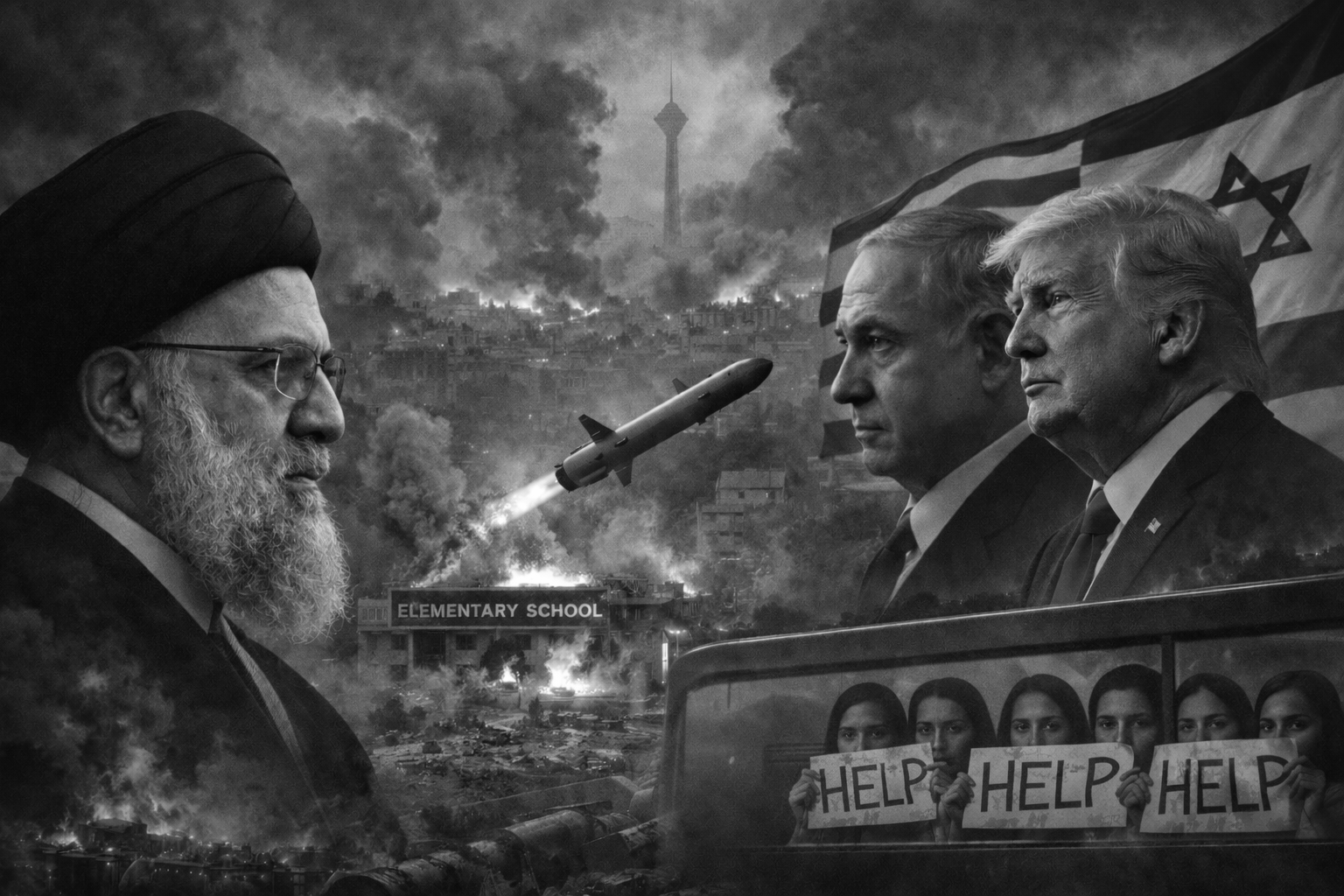
This was the inheritance handed to Mojtaba Khamenei , Iran’s new supreme leader, on his first morning in power: black smoke still choking the capital’s skies from burning fuel depots even as Tehran struggled to breathe, and a country at war around him. He served in the Islamic Revolutionary Guard Corps toward the end of the Iran–Iraq War in the late 1980s , forging deep ties with its commanders that have defined his rise and influence with the IRGC. Over decades inside the Islamic Republic’s inner circles, he built a financial empire reportedly worth billions, is under US and Western sanctions , and spent his life largely behind the scenes. On his first day in office, Mojtaba Khamenei inherited a state of war and domestic upheaval, and by every measure he is exactly the kind of hard‑line leader Washington said it did not want in Tehran.
Russia moved first, with Putin pledging unwavering support for Tehran and urging Mojtaba Khamenei to lead with courage while honouring his father’s work. China followed, calling the appointment constitutional, rejecting interference, and demanding respect for Iranian sovereignty . Two of the world’s three great powers had embraced Iran’s new leader; the third — the one flying B‑2s — had not. Trump warned Mojtaba "has to get approval from us" or "he's not going to last long," later calling him a "lightweight." Senator Lindsey Graham said he was "not the change we're looking for" and would meet his father’s fate. Iran’s parliament speaker Mohammad Bagher Ghalibaf fired back on X: Iran’s future "will be determined solely by the proud Iranian nation, not by Epstein's gang." Less than twelve hours into power, the new supreme leader was already facing high-altitude insults.
A US Tomahawk struck an IRGC naval base in Minab next to Shajareh Tayyebeh school, killing 168 children on February 28. Experts confirmed only the US possesses Tomahawks, though Trump blamed Iran. UNESCO condemned the attack, senators demanded a review, and the White House continued its investigation. Netanyahu, confident, announced Israel had destroyed the IRGC Air Force headquarters , struck missile sites, vowed "many surprises," and warned Lebanon to disarm Hezbollah, with Defense Minister Katz emphasizing Israeli soldiers come first.
Tensions flared between Washington and Jerusalem over thirty burning Iranian oil depots, raising concerns about civilian impact, soaring oil prices, and toxic fumes spreading to Turkey, Pakistan, and Afghanistan. Iran responded with missile strikes on Israel, claiming to target Netanyahu’s office, while Israel hit Ghobeiry in Beirut, killed five IRGC commanders, and Human Rights Watch reported white phosphorus use in residential areas. Two Lebanese paramedics were killed, and Lebanon’s parliament extended its term by two years, postponing elections amid the crisis.
Then the Gulf took its turn, and the night it had just endured told a story of its own.
At 3 a.m., sirens blared across the Arabian Peninsula. Qatar intercepted multiple missiles, Saudi jets downed a drone, and a strike in Al Kharj killed two Bangladeshi workers and wounded twelve. Bahrain faced Iranian attacks on a facility and a desalination plant, forcing Bapco Energies to declare force majeure. UAE and Kuwait were hit by missiles and drones, killing two Kuwaiti guards, while a missile struck a US Embassy helicopter pad in Iraq. Turkey deployed six F-16s to Northern Cyprus after NATO shot down an Iranian missile, prompting US evacuations. Russia reportedly shared US positions with Iran, enabling precise strikes, while China urged negotiations to protect oil supplies. Across the region, foreign workers and ordinary civilians bore the brunt of the war.
And then, on a football pitch in Gold Coast, Australia , the war arrived in a form that nobody had written into any war plan.
Iran’s women’s football team, eliminated in Australia, faced returning to a country at war under a new hardline supreme leader, with state media calling them traitors. Protesters blocked their bus as players mouthed “help”; five members later left safely with Australian police. Trump warned against sending them back, offering US asylum, while Iran’s federation hinted at boycotting the 2026 World Cup. Meanwhile, Iran’s death toll reached 1,255 with 12,000 injured, toxic air spread from strikes, and 90 million Iranians remained offline. Qatar warned oil could hit $150, and G7 ministers scheduled an emergency call. There is no Plan B on any table. There is only Day 11, and it is already underway.