
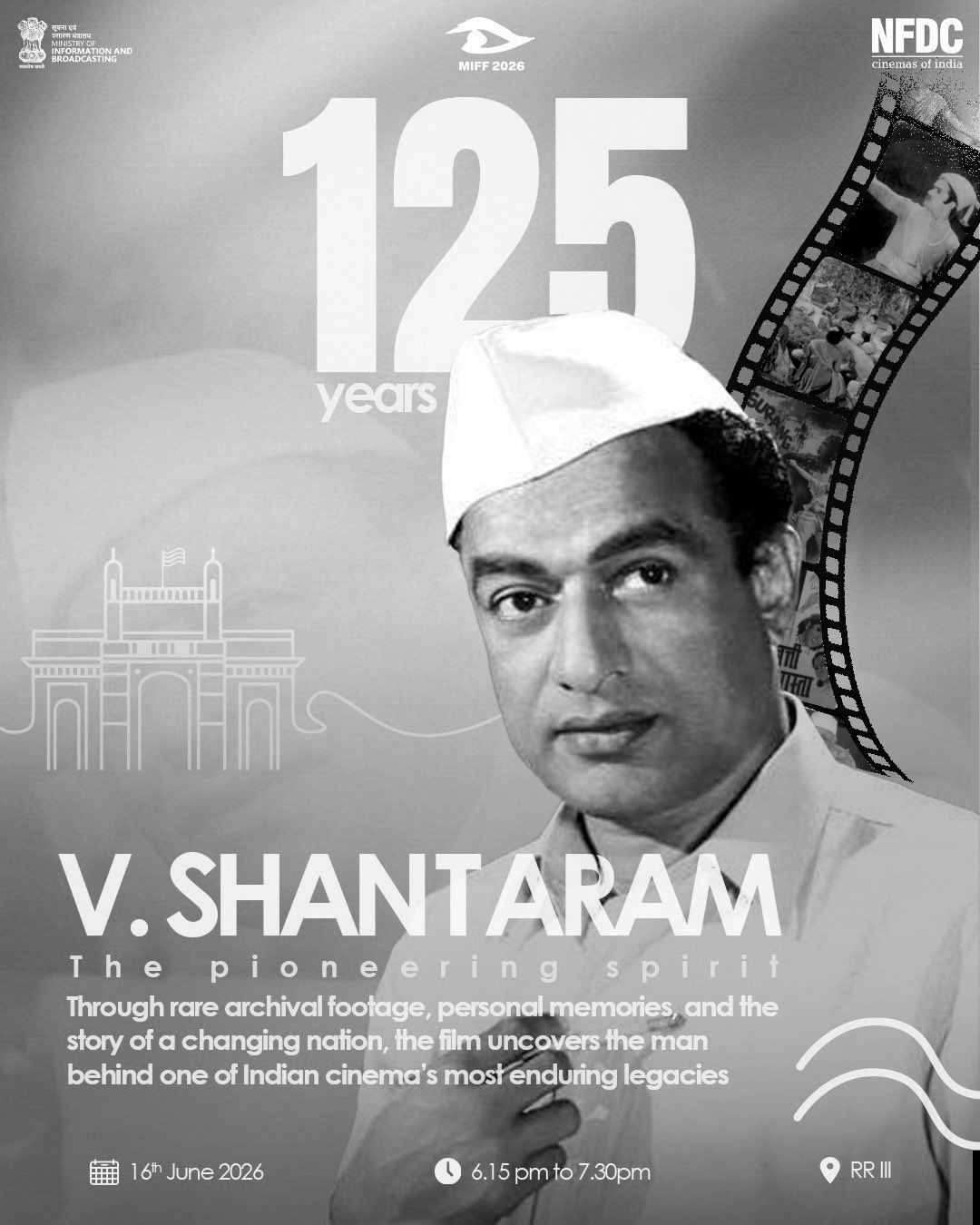
MIFF 2026 Celebrates V. Shantaram’s 125-Year Legacy with Special Documentary Screening
The 19th Mumbai International Film Festival (MIFF) 2026 paid tribute to one of Indian cinema’s greatest visionaries on Tuesday with the successful screening of the documentary “V. Shantaram: The Pioneering Spirit.” Directed by National Award-winning film historian Sanjit Narwekar , the film was showcased as part of a special retrospective marking 125 years of V. Shantaram , celebrating the life and achievements of the legendary filmmaker who helped shape the foundations of modern Indian cinema.
Held during MIFF’s special showcase segment, the documentary drew film enthusiasts, historians, students, and industry professionals eager to revisit the extraordinary journey of a filmmaker whose career spanned more than six decades. Through rare archival footage, photographs, personal memories, and historical insights, the film traced Shantaram’s remarkable evolution from the silent era to becoming one of the most influential creative forces in Indian cinema.
Widely regarded as a pioneer, V. Shantaram played a transformative role in the development of Indian filmmaking. At a time when cinema was still finding its identity, he pushed the boundaries of storytelling, technology, and social commentary. His work helped bridge the transition from silent films to talkies , while later embracing color cinema and innovative visual techniques that were ahead of their time.
Shantaram’s contribution extended beyond filmmaking. As a co-founder of the Prabhat Film Company and later the founder of Rajkamal Kalamandir , he helped establish institutions that nurtured talent and raised technical and artistic standards across the industry. His studios became training grounds for generations of actors, writers, cinematographers, and technicians who would go on to influence Indian cinema for decades.
What set Shantaram apart was his commitment to using cinema as an instrument of social reform. Long before issue-based films became common, he addressed themes such as women’s empowerment, social justice, communal harmony, caste discrimination, and human dignity . His films encouraged audiences to question societal conventions while remaining accessible and entertaining.
Among his most celebrated works are “Amrit Manthan” (1934), “Duniya Na Mane” (1937), “Manoos” (1939), “Padosi” (1941), “Dr. Kotnis Ki Amar Kahani” (1946), “Jhanak Jhanak Payal Baaje” (1955), “Do Aankhen Barah Haath” (1957), “Navrang” (1959), and the acclaimed Marathi classic “Pinjra” (1972) . Many of these films are considered landmarks in Indian cinematic history for their artistic innovation and social relevance.
The screening also highlighted Shantaram’s enduring influence on generations of filmmakers. His blend of visual experimentation, strong narratives, and progressive themes laid the groundwork for many of the storytelling traditions that continue to define Indian cinema today.
By presenting “V. Shantaram: The Pioneering Spirit,” MIFF 2026 not only celebrated the filmmaker’s 125-year legacy but also offered audiences a deeper understanding of the man whose vision helped transform Indian cinema from a fledgling medium into a powerful cultural force. The documentary served as both a tribute and a reminder of why V. Shantaram remains one of the most revered names in the history of Indian filmmaking.