
Mission Intercepted: India Successfully Tests BMD Capability to Stop Enemy Missiles Mid-Air
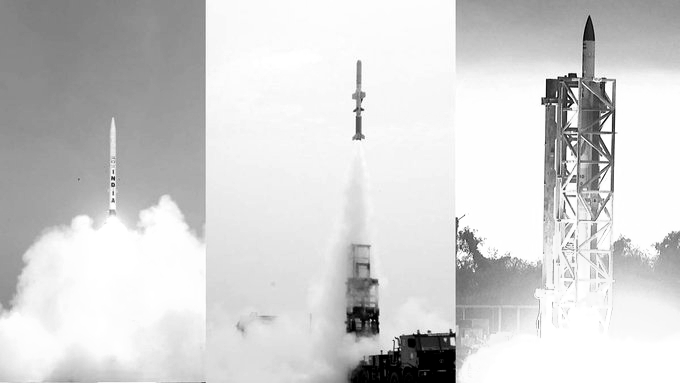
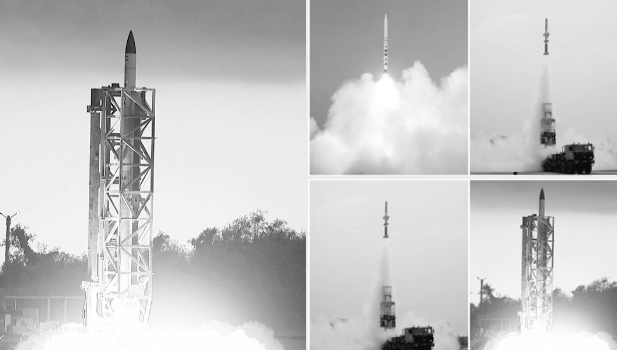
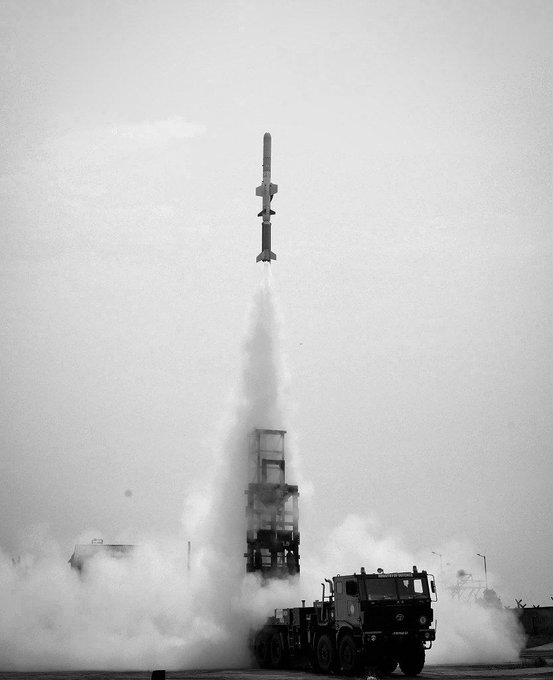
India has placed itself firmly among the world's elite military powers after the Defence Research and Development Organisation (DRDO) successfully carried out three consecutive flight-tests on June 10 and 11 , demonstrating a multi-layered Ballistic Missile Defence (BMD) system capable of intercepting hostile missiles ranging from medium-range threats to those approaching Intercontinental Ballistic Missile (ICBM) class. The trials, conducted from the Integrated Test Range (ITR) off the Odisha coast, validated India's ability to neutralise incoming missiles both inside the earth's atmosphere (endo-atmospheric, below 100 km altitude) and in the upper reaches beyond it (exo-atmospheric), giving the country a layered shield against threats that vary in trajectory, speed and altitude.
According to the Defence Ministry, two next-generation interceptor missiles, reportedly the AD-1 and AD-2 , were tested against targets believed to be Agni-series missiles configured to mimic hostile incoming weapons. Both interceptors successfully tracked, engaged and destroyed their designated targets, confirming the reliability of the layered defence architecture built using indigenous and emerging technologies. The achievement places India in a select club of nations, alongside the United States, Russia and China, that possess operational BMD systems capable of countering long-range ballistic threats and hostile aircraft, including AWACS platforms.
In a parallel development hailed as equally significant, DRDO also conducted the maiden flight-tes t of the Naval Anti-Ship Missile-Medium Range (NASM-MR), an indigenously developed, precision-guided weapon designed as a subsonic counterpart to the supersonic BrahMos . Weighing around 600 kg with a stated range between 100 and 350 km, the NASM-MR is intended for deployment from platforms such as the MiG-29K , Tejas and future naval fighters, and is expected to eventually replace the ageing Russian-origin Kh-35 Uran missiles in service with the Indian Navy. The missile demonstrated precision navigation and a low-altitude, sea-skimming flight profile that makes it difficult for enemy radar to detect.
The trials were closely monitored by DRDO Chairman Rajesh Kumar Singh along with senior officials from the Armed Forces. Defence Minister Rajnath Singh congratulated DRDO and industry partners, saying the achievements would strengthen India's national security preparedness and technological self-reliance. Coming amid heightened regional tensions, the back-to-back successes underline India's growing focus on indigenous defence manufacturing and its push to reduce dependence on foreign-sourced critical military hardware.