
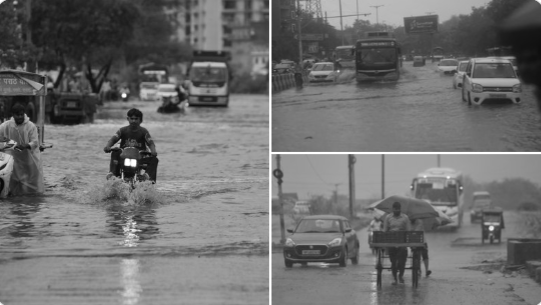
Monsoon Fury Sweeps India as Urban Flooding Exposes City Infrastructure Challenges
Heavy monsoon rains battered several parts of India on Wednesday, causing urban flooding, landslides, building collapses and major transport disruptions across cities including Delhi, Mumbai, Pune and Surat. The widespread impact has highlighted growing concerns over urban infrastructure resilience, disaster preparedness and the challenges posed by extreme rainfall events .
In Maharashtra’s Pimpri Chinchwad near Pune , a three-storey building collapsed after a massive mound of legacy waste crashed onto the structure at Moshi. The building was being used as an administrative office by a private waste-processing company operating a waste-to-energy plant in collaboration with the civic body.
Officials said 23 people were initially feared trapped , with several rescued during a large-scale operation involving the National Disaster Response Force (NDRF), Indian Army, fire services and police teams . By Wednesday night, seven more people had been safely evacuated, while efforts continued to rescue those still trapped.
Pimpri Chinchwad Municipal Commissioner Vijay Suryawanshi said preliminary assessment suggested that heavy rainfall weakened the old waste mound , causing it to collapse onto the building like a landslide. The incident raised concerns over the management of legacy waste sites and the need for stronger safety measures around urban infrastructure located near vulnerable areas.
Mumbai witnessed another spell of intense rainfall after a brief break, leading to waterlogging, delayed suburban train services and disruptions to road traffic . Long-distance train services towards Gujarat remained affected due to flooding in the Vasai-Virar section, while Mumbai-Pune rail connectivity was impacted by landslides in the Bhor Ghat section. Several flights were temporarily diverted due to poor visibility, though operations later normalised.
The city’s reservoirs, including Tulsi Lake and Vihar Lake , overflowed following heavy rainfall in their catchment areas. However, recurring flooding in Mumbai has renewed debates over the capacity of urban drainage systems amid rapid expansion, reduced natural water absorption areas and increasingly intense rainfall patterns.
In the national capital, Delhi faced severe waterlogging and traffic disruptions as continuous showers affected several areas. The India Meteorological Department (IMD) issued red and orange alerts, warning of more thunderstorms and rainfall. A building collapse in Rohini during the rains resulted in one death, while rescue teams searched for others feared trapped.
Surat in Gujarat also faced a flood-like situation after receiving 358 mm of rainfall in 24 hours . More than 3,400 people were rescued and thousands shifted from low-lying areas. Rain-related incidents, including electrocutions, tree falls and drownings, claimed nine lives in the district.
The latest monsoon crisis reflects the increasing vulnerability of Indian cities to climate-driven extreme weather events . Rapid urbanisation, ageing drainage systems, encroachment of water bodies, excessive concretisation and inadequate waste management have intensified flood risks.
While agencies such as the NDRF, Army, municipal authorities and local emergency teams continue to strengthen response mechanisms, experts stress that cities need a shift from relief-based action to long-term disaster resilience planning . Improved drainage networks, climate-sensitive urban planning, early warning systems and stronger infrastructure standards will be essential to reduce the impact of future monsoon disasters.