
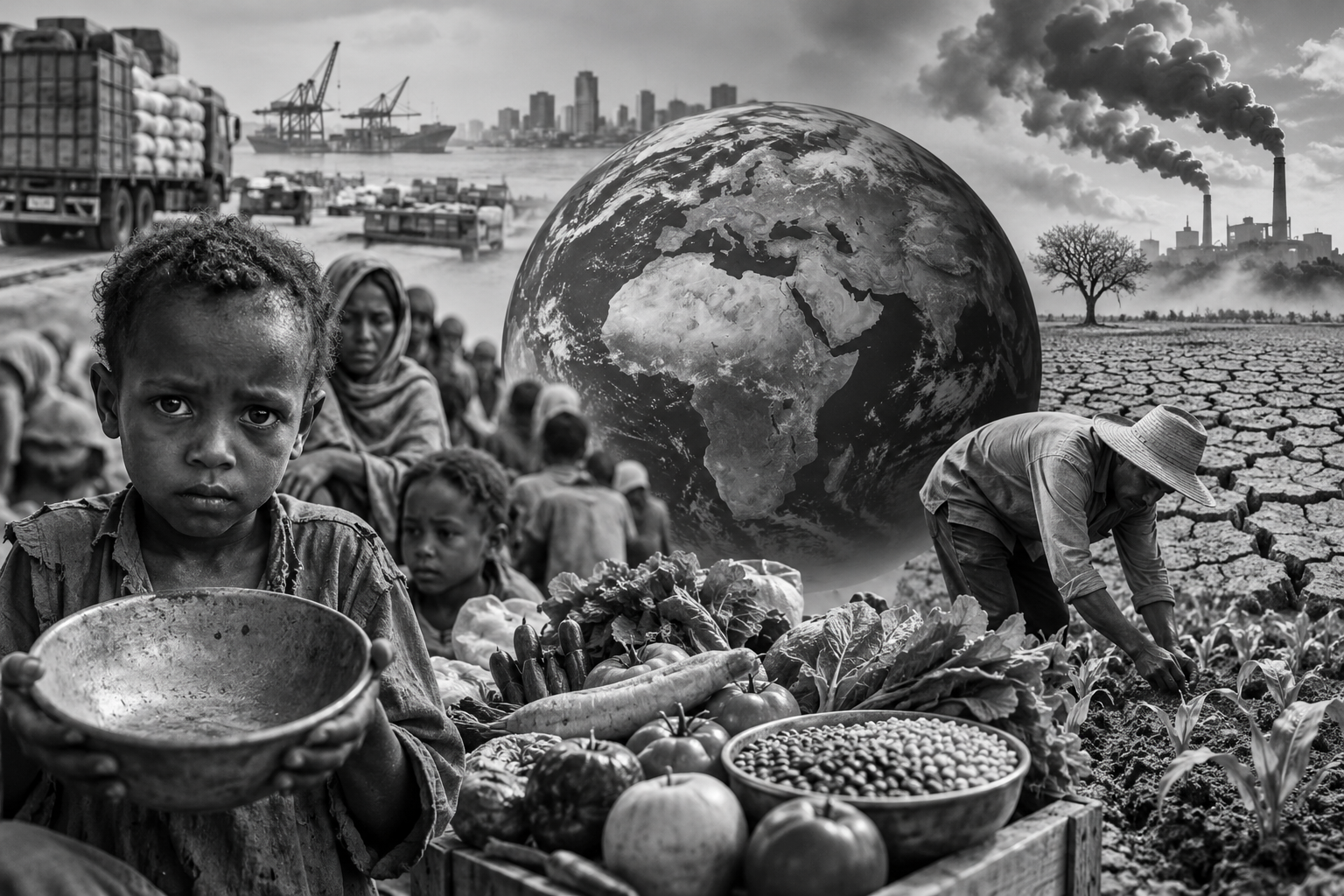
Most Countries Set to Miss 2030 Food System Targets, Study Finds
The world is moving too slowly to meet most of its food-system goals by 2030, with countries falling behind on hunger, nutrition, healthy-diet affordability, environmental sustainability, livelihoods, governance and resilience, according to a new global assessment. The study, however, says the situation is not irreversible, with most targets potentially achievable by 2050 if countries dramatically accelerate and sustain action.
The 2026 Food Systems Countdown Initiative (FSCI) assessment, published in Nature Food, covers 197 countries and 44 indicators across diets, nutrition and health; environment and production; livelihoods, poverty and equity; governance; and resilience. For 22 indicators, fewer than one-third of countries are projected to meet their global target or benchmark by 2030 at the current pace. Only mobile-phone subscriptions, used as a proxy for connectedness and resilience, has been achieved by most countries.
Food-system greenhouse-gas emissions represent one of the biggest gaps, with the global average 75% away from the target, while no country is projected to meet it at the present pace. Other indicators moving in the wrong direction include ultra-processed food sales, pesticide use, agricultural water withdrawals, government accountability and civil-society participation.
The regional challenge is particularly severe. Africa would require 15–20% annual improvement across 23 indicators, while Asia would need to reduce food insecurity by more than 63% annually to reach its target. Europe still has 19 indicators considered unattainable by 2030 at current rates.
The latest UN food-security assessment adds to the concern. Global hunger declined for the third consecutive year, with 645 million people estimated to have faced hunger in 2025. Yet 2.1 billion people experienced moderate or severe food insecurity, while 2.69 billion could not afford a healthy diet. Africa remains the hardest-hit region, with about 309 million undernourished people and 66.6% of its population unable to afford a healthy diet.
Climate pressures compound the challenge. FAO estimates agrifood systems generated 16.5 billion tonnes of CO2-equivalent emissions in 2023, around one-third of global human-caused emissions. Meanwhile, 266 million people across 47 countries and territories faced acute food insecurity in 2025, according to the Global Report on Food Crises.
The FSCI identifies government effectiveness and accountability as critical leverage points across the food system. Despite the setbacks, seven of 33 indicators already have at least one-third of countries on track, while about half are moving globally in the desired direction.
Researchers say 2050 remains achievable, but only with sustained acceleration. The assessment's central message is clear: progress exists, but incremental change will not be enough to deliver the transformation required.