
MP Doctors’ Tribal Sickle Cell Initiative Finds Place in Harvard University Press Book
A low-cost screening and genetic counselling tool developed by a doctor couple from Madhya Pradesh to help tackle sickle cell disease in tribal areas has received international recognition after being featured in a book published by Harvard University Press.
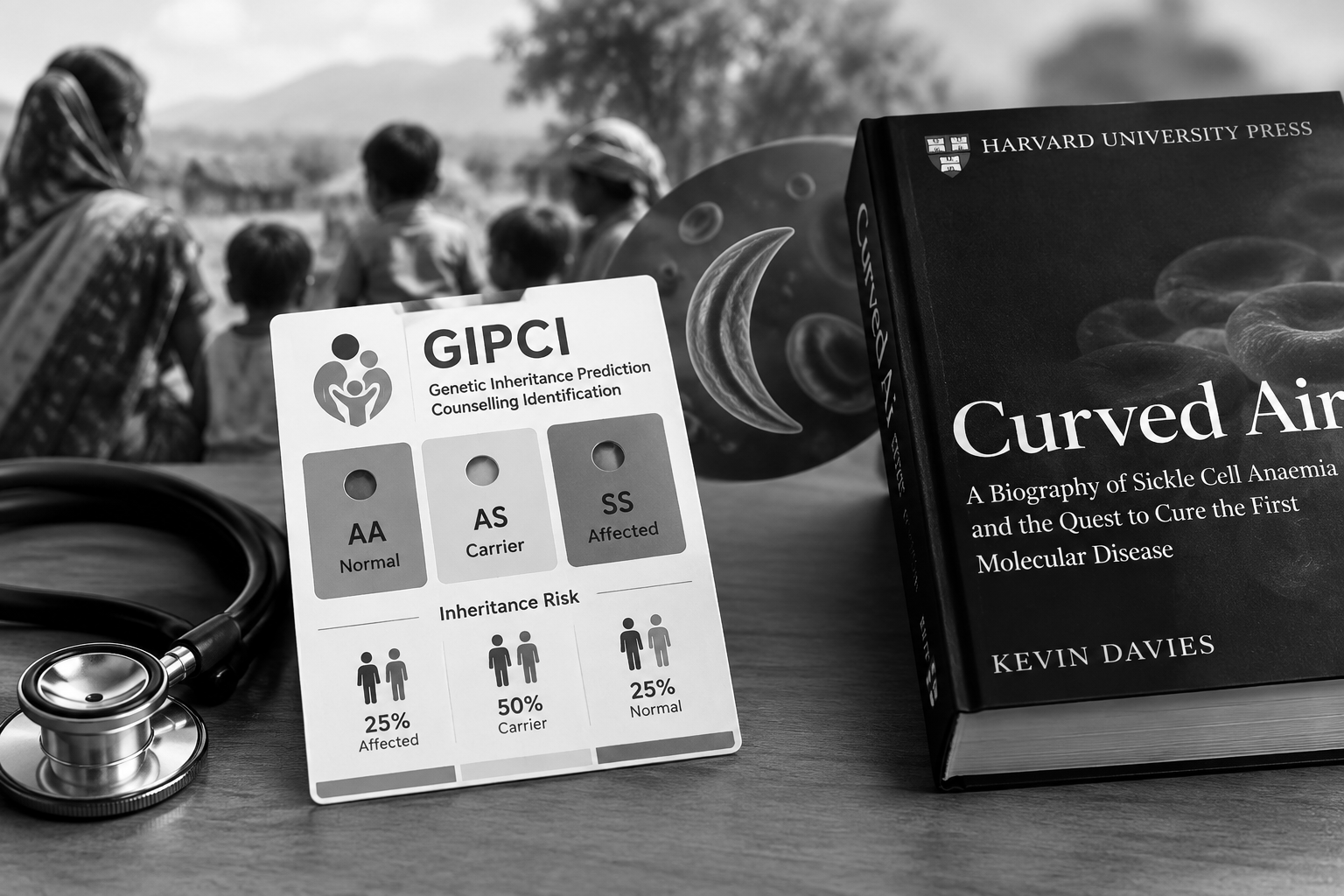
The innovation by homoeopaths Prof Dr Nishant Nambison and Dr Smita Nambison has been highlighted in Curved Air: A Biography of Sickle Cell Anaemia and the Quest to Cure the First Molecular Disease, authored by molecular geneticist Kevin Davies and published in August.
Speaking on Saturday, Dr Nishant said the inclusion of their work in the publication marked international recognition for a grassroots health innovation originating in Madhya Pradesh. Nishant is an associate professor at the Government Homoeopathic Medical College and Hospital in Bhopal, while Smita is a doctor and independent researcher.
The book traces the global history of scientific research into sickle cell disease, including efforts focused on prevention and treatment. It also highlights the Nambisons’ work among tribal communities in Madhya Pradesh. According to Nishant, the initiative began after the couple witnessed difficulties faced by children and families affected by the disease in Chhindwara, particularly because of limited awareness, screening facilities and access to genetic counselling.
In 2018, their team, with support from local authorities, conducted door-to-door screening of around 25,000 people. The exercise revealed several practical barriers, including fear of testing, long distances to health centres, social hesitation and limited counselling facilities. To address these challenges, the doctors developed the GIPCI (Genetic Inheritance Prediction Counselling Identification) Card. It uses colours and a special punch-hole system to help people understand their sickle cell status and the risk of passing the genetic condition to their children.
The book also mentions a proposal to integrate the system with a mobile application and central database, potentially making genetic counselling more accessible. On India’s goal of eliminating sickle cell disease as a public health problem by 2047, Nambison said ambition was necessary, adding that “time will tell” whether the target is achieved.