
National Handloom Day 2026: How India's Weavers Are Taking Tradition to Global Markets
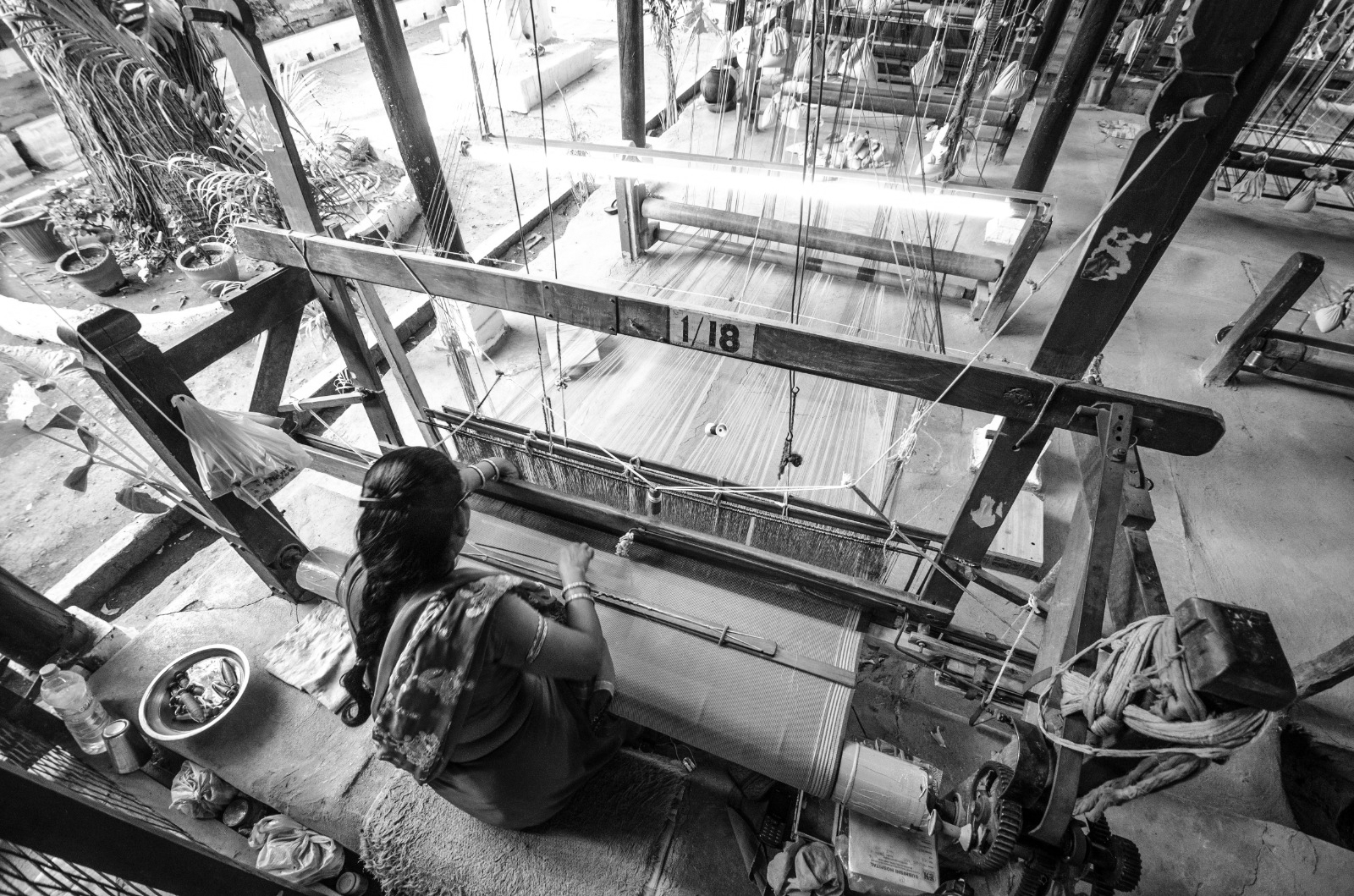
India marked National Handloom Day on August 7 by celebrating the country's centuries-old weaving traditions while reaffirming its commitment to transforming the handloom sector into a modern, sustainable and globally competitive industry. The annual observance honours millions of handloom weavers whose craftsmanship has shaped India's cultural identity for generations and continues to support rural livelihoods across the country.
Instituted by the Government of India in 2015, National Handloom Day commemorates the launch of the Swadeshi Movement on August 7, 1905. The movement emerged as one of the earliest mass campaigns during India's freedom struggle, encouraging people to boycott foreign-made goods and embrace indigenous products. Handwoven textiles became powerful symbols of self-reliance, economic independence and national pride, laying the foundation for today's celebration of India's handloom heritage.
India's handloom tradition dates back thousands of years, with evidence of spinning and weaving found in the Indus Valley Civilization. Ancient Indian literature, including the Rigveda, Ramayana and Mahabharata, also refers to the country's expertise in cotton and silk weaving. Over centuries, these skills have been preserved and refined through generations, giving rise to distinctive regional weaving traditions that continue to define India's rich textile heritage.
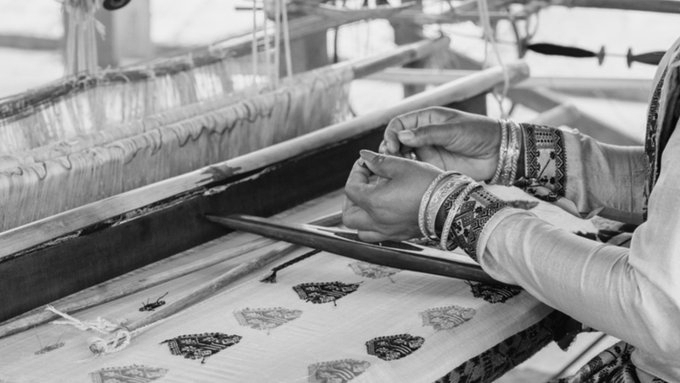
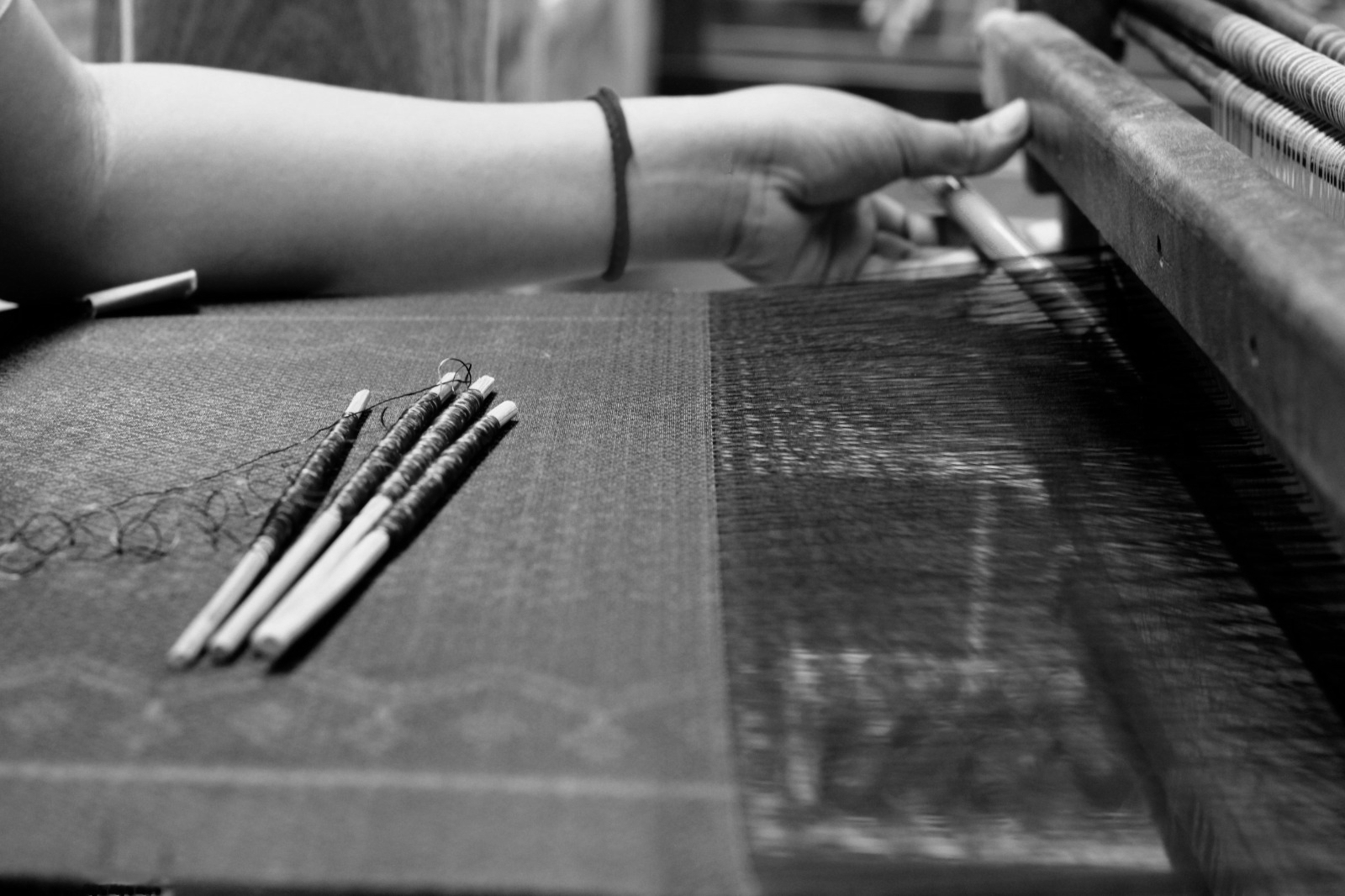
Today, handloom remains more than an industry. It represents the identity of communities, regional cultures and family traditions, where every fabric reflects generations of accumulated knowledge, craftsmanship and artistic expression.
According to the Fourth All India Handloom Census (2019-20), India has around 31.45 lakh handloom households and 35.22 lakh handloom weavers and allied workers. Among them, 8.48 lakh allied workers contribute through activities such as dyeing, warping, winding and finishing, making the sector one of India's largest traditional rural occupations.
The census also highlights the sector's strong rural character. Of the country's 28.20 lakh handlooms, nearly 25.30 lakh are located in rural India, underlining the importance of handloom weaving in supporting village economies.
Women form the backbone of the industry, accounting for 25.46 lakh workers, or more than 72 percent of the total workforce. The sector also provides employment opportunities across diverse social groups, including members of Scheduled Castes, Scheduled Tribes and Other Backward Classes, making it an important instrument of inclusive economic development.
To improve access to welfare benefits and government schemes, workers identified through the Handloom Census have been issued Pehchan and e-Pehchan cards. The e-Pehchan Portal, launched in January 2025, enables new and previously unregistered weavers to enrol online, update their records and download digital identity cards.
By July 2026, nearly 84,000 additional workers had been approved for e-Pehchan cards, expanding the formal coverage of the handloom workforce.
The government's support for the sector is anchored by the National Handloom Development Programme (NHDP) and the Raw Material Supply Scheme (RMSS).
The NHDP, implemented through government agencies, cooperative societies, producer companies and banks, adopts an integrated approach to improve productivity, infrastructure, marketing and welfare. It promotes better looms, worksheds, design development, product diversification and skill enhancement while encouraging professionally managed Handloom Producer Companies.
One of its major components, the Small Cluster Development Programme (SCDP), provides financial assistance of up to ₹2 crore for handloom clusters to strengthen infrastructure, improve looms, develop new products and expand marketing opportunities. Between 2021-22 and June 2026, 357 clusters were sanctioned under the programme.
Government assessments indicate that investments in worksheds have significantly improved working conditions and productivity. Beneficiaries recorded higher production levels, longer productive working hours and an increase in average daily earnings from ₹328 to ₹465.
Technology is increasingly complementing traditional weaving without replacing its handmade character.
The introduction of electronic jacquards, which use digital controls to manage complex weaving patterns, has enabled artisans to produce intricate designs more efficiently. Government evaluations show that average daily production increased by 55 percent, while 96 percent of beneficiaries reported improved productivity. Daily wages increased from ₹360 to ₹560, and average monthly income rose from ₹9,600 to ₹15,000.
Digital technology is also transforming access to government services through the e-Pehchan system and improving communication between weavers and support agencies.
Access to finance remains another key pillar of government support.
Through the Weaver MUDRA Scheme, eligible weavers receive loans at a concessional 6 percent interest rate, supported by government interest subvention of up to 7 percent, along with margin money assistance and credit guarantee support.
Between 2021-22 and June 2026, more than 40,000 loans worth over ₹280 crore were sanctioned under the scheme, helping artisans invest in production and expand their businesses.
Social security initiatives further strengthen financial protection. Eligible workers are covered under the Pradhan Mantri Jeevan Jyoti Bima Yojana (PMJJBY) for life insurance and the Pradhan Mantri Suraksha Bima Yojana (PMSBY) for accident insurance. Enrolment under these schemes has risen substantially in recent years, reflecting greater awareness and outreach.
Scholarships are also available for children of handloom workers pursuing recognised textile-related diploma, undergraduate and postgraduate courses, encouraging the next generation to build careers in the textile sector.
Government support increasingly focuses on helping weavers connect directly with buyers.
Through Handloom Marketing Assistance, hundreds of national, state and district-level exhibitions, craft fairs and handloom expos are organised to promote direct sales and strengthen market visibility. Between 2021-22 and June 2026, more than 960 marketing events were held across the country.
Digital commerce has become equally important. Around 1.5 lakh weavers and handloom entities are now registered on the Government e-Marketplace (GeM), enabling them to supply products directly to government buyers.
The Indiahandmade platform further allows verified weavers and producer groups to sell authentic handloom and GI-tagged products directly to consumers, reducing dependence on intermediaries and expanding nationwide market access.
India's handloom sector is increasingly finding new expression through fashion, design and creative collaborations.
Recent initiatives such as Vishwa Sutra, presented in partnership with NIFT during the 61st Femina Miss India event, showcased Indian handloom fabrics interpreted through global design influences.
Similarly, Breathing Threads at Bharat Tex 2025 demonstrated how traditional textiles such as Banarasi, Chanderi, Maheshwari, Jamdani, Kota Doria and other regional weaves can be adapted for contemporary fashion.
At IFFI 2025 in Goa, the presentation Handloom Sarees in Motion: 70MM on Runway highlighted the relationship between Indian cinema and regional weaving traditions, combining heritage textiles with modern artistic presentation.
Innovation is also being encouraged through the Handloom Hackathon 2026, which invites students, researchers, startups, designers and artisans to develop practical solutions in areas including digital technology, sustainability, branding, entrepreneurship, productivity and market access.
Meanwhile, initiatives such as Weave The Future 4.0 promote circular fashion, upcycling and environmentally responsible production, aligning Indian handlooms with growing global demand for sustainable textiles.
As Indian handlooms reach international markets, authenticity has become increasingly important.
The Handloom Mark, introduced in 2006, certifies that a textile has been genuinely woven on a handloom, giving consumers confidence in the authenticity of their purchase. By June 30, 2026, more than 29,400 registrations had been issued under the scheme.
The India Handloom Brand, launched on the first National Handloom Day in 2015, certifies premium-quality products that meet standards relating to traditional craftsmanship, natural fibres, eco-friendly production and social compliance. More than 2,300 registrations had been granted across 184 product categories by June 2026.
Equally significant are Geographical Indication (GI) tags, which legally protect region-specific weaving traditions from imitation. India now has 106 registered handloom GI products, helping preserve the unique identity of famous textiles such as Banarasi, Kanchipuram, Pochampally Ikat, Chanderi and Venkatagiri.
These certification systems not only safeguard India's cultural heritage but also enhance consumer confidence and strengthen export competitiveness.
Indian handlooms continue to attract growing international demand because of their craftsmanship, sustainability and unique regional identity.
According to official data, handloom exports reached approximately ₹1,330.96 crore during 2025-26. Major export destinations included the United Arab Emirates, United States, France, United Kingdom and Spain, reflecting increasing global appreciation for authentic Indian textiles.
Government-backed branding, quality certification, GI protection and digital platforms have collectively helped Indian handloom products establish a stronger presence in international markets.
The Union Budget 2026-27 introduced additional measures to strengthen the textile ecosystem. These include the proposed National Fibre Scheme, the Textile Expansion and Employment Scheme, the integrated National Handloom and Handicraft Programme, and the Mahatma Gandhi Gram Swaraj Initiative, all aimed at improving technology adoption, branding, skilling, quality enhancement and global market access.
Recent GST rationalisation has also reduced tax rates on several handicraft products, cotton handloom rugs, handwoven carpets and sewing machines, lowering costs for artisans and supporting domestic manufacturing.
National Handloom Day has evolved beyond a symbolic celebration of India's textile heritage. It now reflects a broader national effort to preserve traditional craftsmanship while embracing innovation, technology and global opportunities.
By combining centuries-old weaving knowledge with modern design, digital platforms, quality certification and supportive government policies, India is positioning its handloom sector for sustained growth. The continued emphasis on women-led livelihoods, rural development, sustainability and global branding ensures that the country's handwoven traditions remain relevant in the modern economy.
As Indian textiles find new admirers across international markets, the handloom sector stands as a powerful example of how cultural heritage can generate employment, empower communities and contribute to economic growth while preserving the artistry that has defined India's identity for generations.