
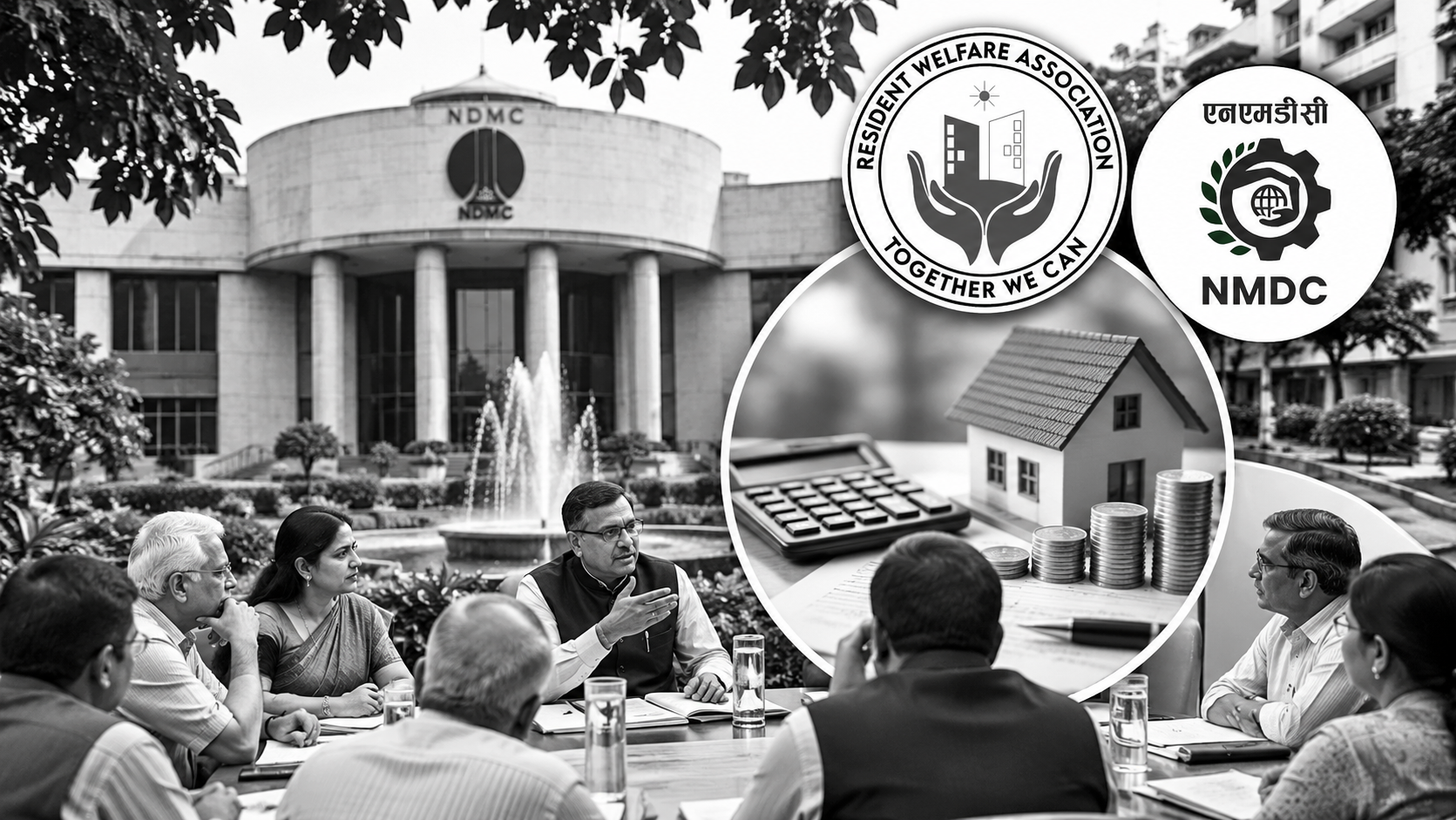
NDMC Plans Property Tax Overhaul, Seeks Stakeholder Feedback on November 23
The New Delhi Municipal Council (NDMC) will hold a meeting with representatives of market associations, Resident Welfare Associations (RWAs) and other stakeholders on November 23 to discuss the Jan Vishwas (Amendment of Provisions) Act, 2026, and its proposed overhaul of the existing property tax assessment system through the introduction of the Unit Area Method (UAM).
The meeting will be held at the NDMC Convention Centre at 10.30 am on Monday, according to an official communication. Discussions will focus on the draft NDMC (Property Taxes) Bye-Laws, 2026, which propose calculating property tax based on covered area, building age, usage, structure, occupancy, location and available infrastructure.
The proposed system seeks to replace the existing assessment mechanism, which relies on estimated rental values, property records and ground surveys. The Municipal Corporation of Delhi (MCD) has already implemented the Unit Area Method since April 2004, and NDMC's proposed transition is expected to bring greater consistency to property tax assessments across the national capital.
A key provision of the draft is the establishment of a Municipal Valuation Committee (MVC) to recommend base unit area values, tax rates, assessment slabs and colony classifications. Roads would be divided into three categories based on their width, while buildings would be classified into eight categories according to their construction age, ranging from structures built before the 1960s to those constructed between 2020 and 2029.
The proposed framework also provides for rebates of up to 30 per cent for eligible senior citizens, women and persons with disabilities, subject to conditions and a 100-square-metre covered-area limit. Property owners paying annual tax in a single instalment before June 30 could receive a rebate of up to 15 per cent. Alternatively, payments could be made in four quarterly instalments. Delayed payments would attract interest of 1.5 per cent per month.
The draft also proposes a separate vacant land tax, with exemptions for plots where ground-floor construction covers at least 25 per cent of the total area. NDMC has indicated that the revised system could potentially reduce tax liabilities by 20 to 30 per cent for certain properties.
The civic body currently covers approximately 16,400 properties and 10,500 taxpayers, including nearly 1,600 government-owned properties. Earlier consultations involved RWAs in Golf Links, Hanuman Road and Babar Road Colony, besides traders from Khan Market and Bengali Market. The deadline for submitting suggestions and objections was October 23.
The Delhi Jan Vishwas Act, 2026, received presidential assent on April 2 and was published in the Delhi Gazette on April 16, providing the legal framework for the proposed changes to the NDMC Act, 1994. The draft bye-laws will undergo further consideration and necessary approvals before implementation.