
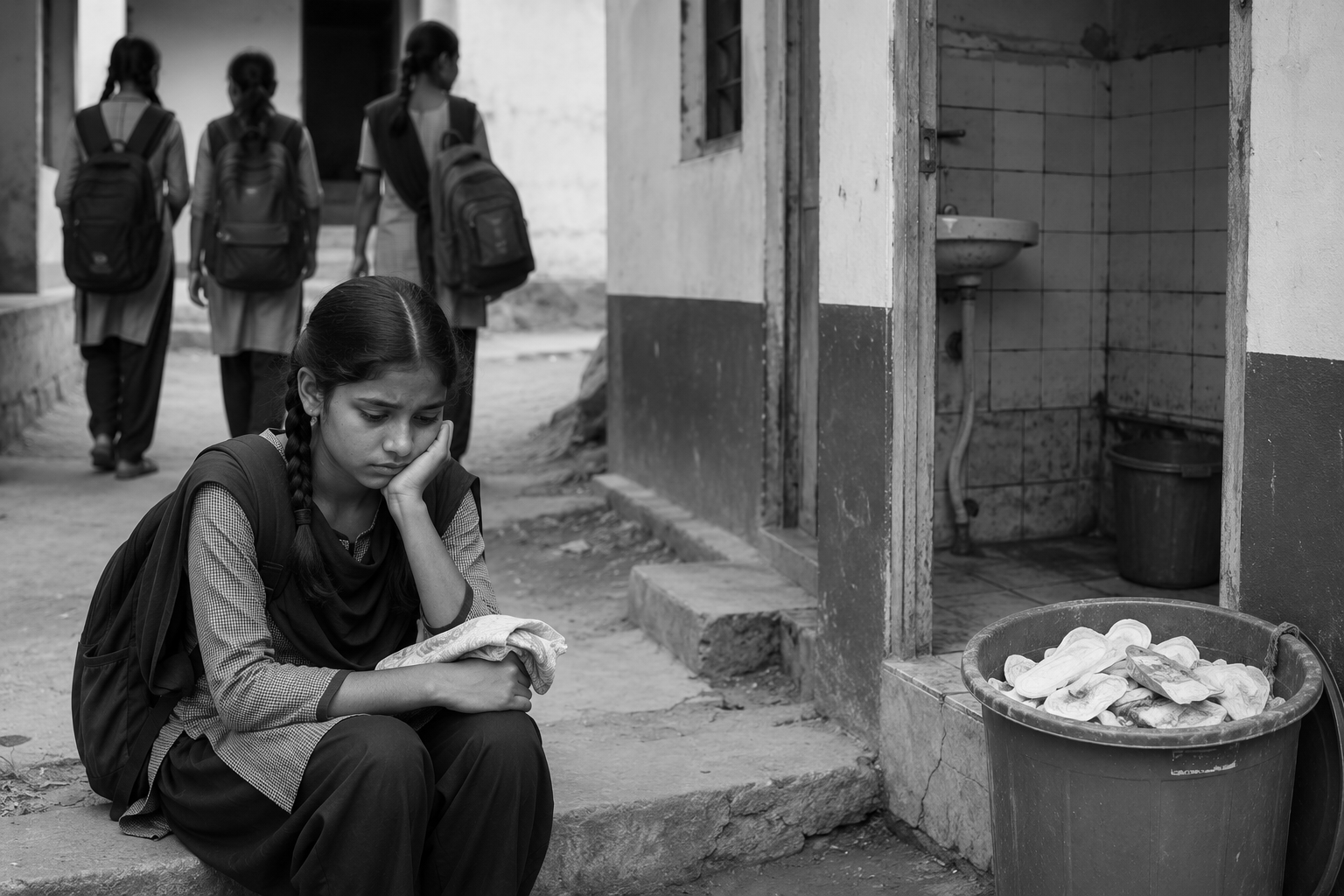
Nearly 74% of Girls Surveyed in Odisha Miss School During Menstruation
Despite years of government initiatives aimed at improving girls’ education and menstrual hygiene, period poverty remains a significant barrier for millions of adolescent girls across rural India. A recent assessment from Odisha has once again highlighted how menstruation, combined with inadequate sanitation facilities, poverty and social stigma, continues to keep girls out of classrooms and affect their educational outcomes.
The findings emerged from a menstrual health assessment conducted across 14 districts in educational institutions and eight districts in public institutions. Released at the Menstrual Health and Hygiene Conclave 2026 , the study found that nearly 74 per cent of surveyed girls reported missing school during menstruation, with absences ranging from one to eight days per cycle .
The assessment, carried out by organisations including UNICEF , Aaina , WaterAid , AIIMS Bhubaneswar and IIT Bhubaneswar , identified pain and discomfort as the primary reasons for absenteeism. Lack of privacy, inadequate facilities and persistent social stigma surrounding menstruation were also major contributing factors.
While 94 per cent of schools surveyed had separate toilets for girls, many lacked basic menstrual hygiene support systems. Availability of water and soap remained inconsistent, limiting the usefulness of existing infrastructure. The study also found that around 56 per cent of schools either lacked menstrual waste disposal facilities or relied on unsafe disposal methods, creating environmental and public health concerns.
Healthcare support within schools was another area of concern. Only 27 per cent of schools had a nurse or health worker, while 44 per cent reported having first-aid kits. Researchers noted that limited access to healthcare support leaves many adolescent girls without assistance during menstrual health emergencies.
The Odisha findings reflect a broader national challenge. According to studies cited by the World Bank , inadequate menstrual hygiene management continues to contribute to absenteeism and school dropouts among girls. Research suggests that repeated absences can significantly affect academic performance and confidence, while some estimates indicate that millions of girls face educational disruptions linked to menstruation every year.
Experts describe the issue as period poverty a lack of access to affordable menstrual products, sanitation facilities, healthcare support and menstrual health education. In many rural communities, girls continue to rely on old cloth due to affordability issues, while cultural taboos discourage open discussions about menstruation.
The report argues that menstrual health should be treated not merely as a hygiene concern but as an issue linked to education, public health, dignity and gender equality . It calls for stronger institutional support, improved sanitation infrastructure, uninterrupted access to menstrual products and sustained awareness campaigns to ensure that girls can attend school with confidence throughout the month.