
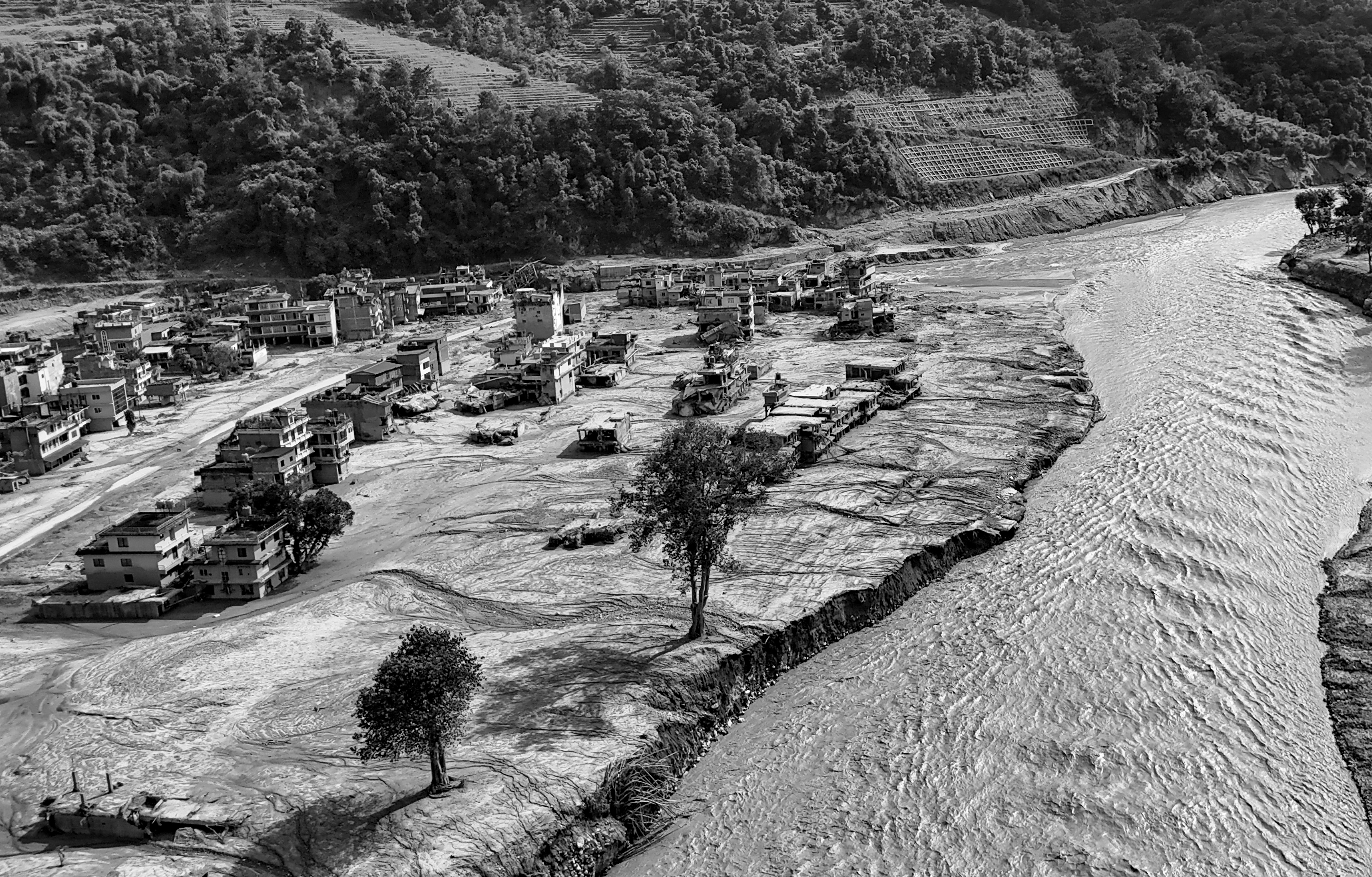
Nepal Flood Disaster Intensifies, 538 Bodies Recovered Amid New River Threat
Nepal’s devastating flood disaster has entered a critical new phase, with the recovery of hundreds of bodies and a fresh warning of possible flooding along the Bhotekoshi River adding to the humanitarian crisis. Authorities said on Friday that 538 bodies had been recovered from areas hit by flash floods and debris flows. The figure marks a sharp rise as rescue teams continue searching river corridors and isolated settlements for people still unaccounted for.
The situation became more precarious after a landslide-created lake near the Nepal-China border began releasing water into the river system. The development raised fears of another surge along the Bhotekoshi, which has already suffered extensive destruction. Officials, however, indicated that the volume of water entering Nepal was significantly lower than during the devastating flood earlier in the week.
The lake was formed near the meeting point of the Chochen and Purepu Tsangpo rivers in Tibet, around 10 kilometres from Gyirong Port. Reports estimated that the temporary water body contained more than two million cubic metres of water, prompting authorities to closely monitor downstream areas. Rescue and relief operations remain severely constrained by the destruction of roads and bridges. Helicopters have become vital for reaching communities cut off by floodwaters and landslides, while security personnel continue ground searches wherever access is possible.
The disaster has also created a major challenge for the tourism and pilgrimage sector. Foreign tourists and pilgrims remain among those affected, with Indian nationals travelling through the Himalayan border region also being traced by authorities. Indian diplomatic missions are coordinating with Nepalese agencies to locate citizens who remain unreachable. Beyond the immediate rescue effort, Nepal faces a massive rebuilding task. Floodwaters and debris have damaged homes, transport links, hydropower facilities and border infrastructure, threatening livelihoods and disrupting movement through important Himalayan corridors.
Officials are also watching for additional landslides, debris flows and sudden rises in river levels, particularly as unstable slopes remain vulnerable after the extreme flooding. With the humanitarian operation continuing, Nepal’s challenge is no longer limited to recovering from the first flood wave. Authorities must simultaneously protect vulnerable communities from further danger, restore transport connectivity and begin planning a reconstruction programme that could take months or years.
For the thousands affected by the disaster, the immediate priority remains finding survivors, reaching stranded communities and preventing further loss of life as rescue teams work under increasingly difficult conditions.