
Nepal Orders Fresh Review of 2001 Royal Palace Killings Case
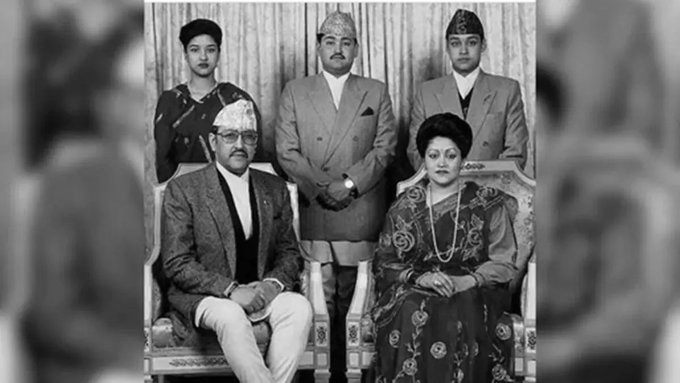
The Nepal government has decided to reopen the investigation into the 2001 Royal Palace massacre , one of the most controversial and debated incidents in the country’s modern history, in which King Birendra Shah and several members of the royal family were killed inside Narayanhiti Palace.
The decision was announced by Home Minister Sudan Gurung soon after assuming office, as part of a broader law-and-order reform agenda aimed at revisiting unresolved and disputed criminal cases.
The massacre occurred on June 1, 2001, during a family gathering at the Narayanhiti Royal Palace , where King Birendra, Queen Aishwarya, and several royal relatives were shot dead. The then crown prince Dipendra Shah was identified by an official inquiry commission as the alleged attacker before dying from self-inflicted injuries.
An official probe commission report at the time concluded that Dipendra carried out the shootings while reportedly under the influence of alcohol. However, the findings were widely contested and continue to face skepticism due to alleged inconsistencies and unanswered questions, keeping public debate alive even decades later.
According to the government’s latest directive, all previous investigation files will be formally reopened , and a structured review process is expected to be initiated. Reports indicate that a special task force or review mechanism may be set up to reassess how the case should be reinvestigated, rather than immediately launching a full criminal trial.
Officials also said the move is part of a wider initiative to review pending and backlogged criminal cases under the Central Investigation Bureau (CIB) , signalling a broader overhaul of Nepal’s investigative system rather than a single-case review.
Recent government statements suggest that the reform package includes improved oversight of high-profile investigations, enhanced accountability within law enforcement agencies, and mechanisms to prevent political and administrative interference in sensitive cases.
Home Minister Gurung, who was previously reappointed after receiving a clean chit from a government-formed inquiry panel in a separate corruption allegation case, has positioned the move as part of efforts to restore public trust in institutions and strengthen transparency in long-standing unresolved cases.
The reopening decision has also drawn political attention in Nepal, where the 2001 massacre is widely seen as a turning point that eventually contributed to the abolition of the monarchy and Nepal’s transition into a republic in 2008. International reporting on the case has long noted persistent public doubt over the original findings, despite the official conclusion blaming the then crown prince.