
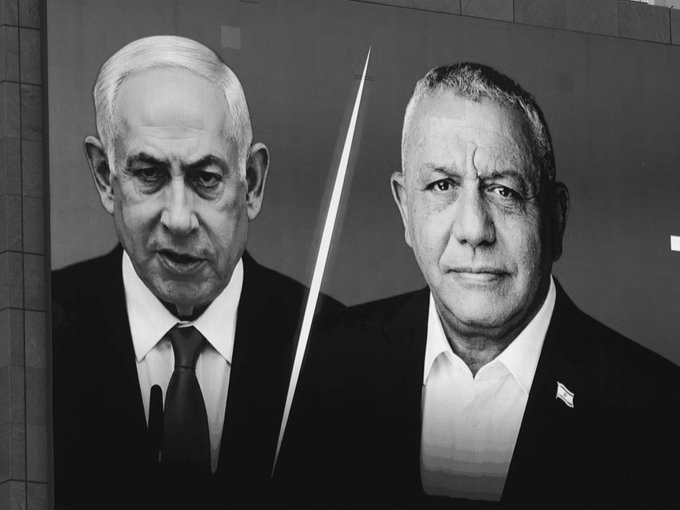
Netanyahu’s Likud And Eisenkot’s Yashar Fail To Break Deadlock As Coalition Talks End Without Deal
Four hours of negotiations, but no breakthrough. Benjamin Netanyahu’s Likud Party and Gadi Eisenkot’s Yashar Party have failed to resolve Israel’s political deadlock, leaving the formation of the next government uncertain as a December deadline approaches. The latest round of coalition talks took place on Sunday, November 22, near Tel Aviv, following an initial meeting last week. Both sides outlined their positions on key issues and agreed to meet again, but differences over leadership and coalition partners remain unresolved.
Netanyahu has proposed a national unity government, potentially involving a rotation of the prime minister’s office. Likud has also demanded an end to what it describes as personal attacks and incitement against Netanyahu, while insisting that the coalition comprise parties supporting Israel as a Jewish state, effectively ruling out Arab parties. However, Eisenkot, a former Israeli military chief who campaigned on replacing Netanyahu, does not want to serve in a government led by him. Former prime minister Naftali Bennett supports a unity government but only under Eisenkot's leadership.
Another major sticking point is the inclusion of far-right National Security Minister Itamar Ben-Gvir. Eisenkot’s camp wants Ben-Gvir and his party excluded, while Likud wants to keep the option open. The two sides also remain divided over the role of Arab parties and ultra-Orthodox factions in the proposed government.
The disagreement stems from the October 27 elections, which produced no clear majority. Although Netanyahu’s Likud-led bloc won more seats than Eisenkot’s opposition bloc, neither secured the 61 seats needed to govern in the 120-member Knesset. President Isaac Herzog subsequently gave Eisenkot the mandate after 67 lawmakers recommended him, compared with 46 who backed Netanyahu. The 19 Arab lawmakers could help Eisenkot secure parliamentary support, but the opposition remains divided. Democratic Party leader Yair Golan favours cooperation with Arab parties, while Avigdor Lieberman rejects the arrangement and wants ultra-Orthodox parties brought into the coalition instead.
Eisenkot has warned against prolonged negotiations, saying he could form a national emergency government and seek to expand it after its formation. He has urged lawmakers to choose between supporting a new government and pushing Israel towards another election.
Eisenkot has until December 6 to form a government and can request a 14-day extension. If he fails, Netanyahu could get another opportunity, or Israel could head towards fresh elections. For now, Netanyahu remains caretaker prime minister as the opposition struggles to agree on a common path to power.