
NHRC Finds Gaps in 27 Bonded Labour Cases in Gujarat, Moves to Draft SOP
The National Human Rights Commission (NHRC) will prepare a Standard Operating Procedure (SOP) to help authorities in Gujarat identify and prevent bonded labour, after finding gaps in the investigation of 27 alleged cases. NHRC Chairperson Justice V. Ramasubramanian said officials were also sensitised about the legal presumption of bonded labour where workers are hired through advance payments.
The NHRC held its Full Commission Camp Sitting and Open Hearing at the National Forensic Sciences University in Gandhinagar on September 2 and 3. The Commission heard 129 alleged human-rights violation cases, including bonded labour, custodial deaths, police excesses, industrial accidents and civic negligence. On the first day, 45 cases were heard and 27 closed, with proof of around ₹3.5 crore in compensation submitted. Overall, more than ₹3.7 crore in monetary relief was paid or recommended.
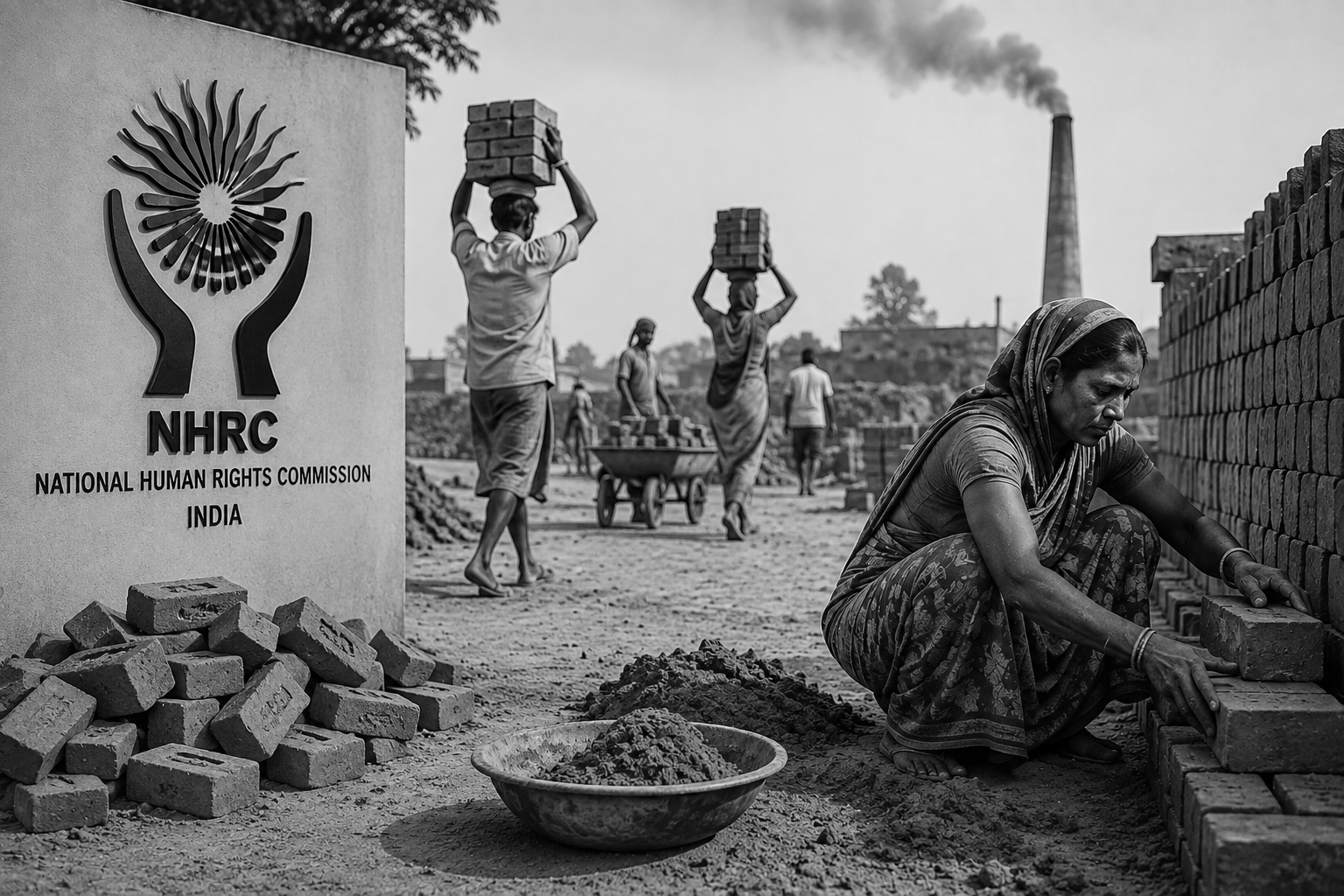
The bonded-labour cases highlighted a particular problem in seasonal industries such as brick kilns, where migrant workers may leave before inspections take place. District authorities had reported that none of the 27 cases appeared to involve bonded labour, but the NHRC found “missing links” in the investigations. In several cases, brick-kiln owners acknowledged paying advances to brokers to bring migrant workers from outside areas.
Under the Bonded Labour System (Abolition) Act, 1976, an advance coupled with an obligation to work for a specified period or produce a specified quantity can trigger the legal presumption of bonded labour. The law abolished bonded labour and bonded debt and provides for district-level mechanisms to identify, release and rehabilitate affected workers.
The NHRC's concerns come amid wider scrutiny of bonded labour in India's brick-kiln sector. The Commission heard 216 alleged cases in Uttar Pradesh in April and 86 cases in Haryana in July, highlighting recurring problems in identification, investigation and rehabilitation.
The Centre also has a national framework for rehabilitation, making the Gujarat initiative significant primarily for stronger ground-level implementation. The challenge is particularly acute for migrant workers, who may lack written contracts or wage records and depend on labour brokers.
Beyond bonded labour, the Gujarat hearing covered serious industrial incidents. Families of five Bharuch fire victims and four workers who died after inhaling toxic gas at Dahej received compensation, with the latter receiving more than ₹2 crore. A woman from Amreli received ₹7.5 lakh over alleged unlawful detention.
The NHRC also intervened after a Scheduled Caste community was allegedly forced to travel 12 km for cremation, leading authorities to identify land for a nearby crematorium. It also took cognisance of the Bhavnagar hooch tragedy and sought an Action Taken Report.