
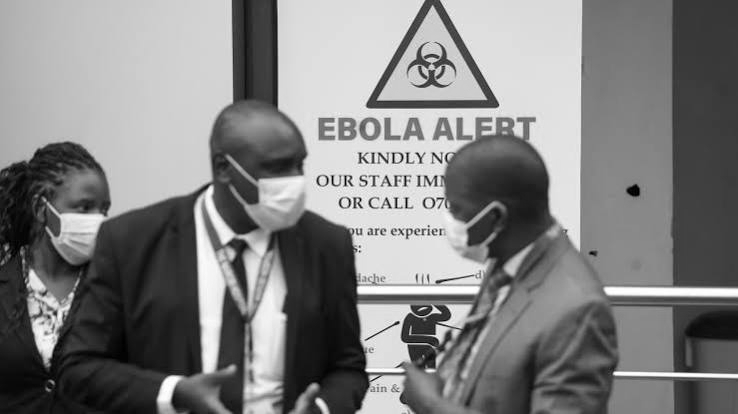
Nigeria Confirms First Ebola Case Amid Concerns About Continental Spread
Nigeria has confirmed its first Ebola case in the current outbreak after a woman with a recent travel history to Uganda tested positive in the capital, Abuja, raising concerns about the spread of the deadly virus across Africa. Authorities have identified 44 contacts and launched monitoring efforts to prevent further transmission.
Nigeria’s Health Minister Muhammad Ali Pate confirmed the infection on Tuesday, October 20. The woman developed symptoms on October 7 and sought treatment at a private hospital in Abuja on October 11. Laboratory tests confirmed the Bundibugyo virus, a rare strain of Ebola, on October 20.
The patient has been isolated and is receiving medical care, while investigations are underway to establish how she contracted the infection and reconstruct her travel and exposure history. Officials have not established that she acquired the virus in Uganda, which was declared free of the outbreak in August and has reported no active cases.
“We are doing everything possible to contain this case by tracing all the contacts the individual may have had,” Pate said, as health authorities intensified contact tracing and preparedness measures.
The confirmation comes as Kenya reported its ninth Ebola infection on Tuesday. According to the Kenyan Health Ministry, the latest patient is a 24-year-old man who was already in quarantine when he developed symptoms. He is a close family member of Kenya’s first patient, who travelled from the Democratic Republic of Congo (DRC) through Uganda before dying at a Nairobi hospital on October 5.
Kenyan health officials said all nine infections belonged to a single cluster, with no evidence of transmission outside the group. Of the 135 contacts identified, 134 had been traced and quarantined. Eight patients were stable and responding well to treatment, authorities said.
The wider Ebola outbreak originated in the DRC, where more than 9,000 cases and over 4,000 deaths have been reported since May. The virus has spread beyond Central Africa, with infections detected in Uganda, Kenya, France and now Nigeria. France reported an imported case involving a doctor who recovered without further transmission.
The World Health Organization has warned about the outbreak’s rapid spread. The Bundibugyo strain has no approved vaccine or specific treatment, making early detection, isolation and infection-control measures particularly important.
Nigeria previously contained an Ebola outbreak in 2014, recording 20 cases before declaring the outbreak over after approximately three months. The wider West African epidemic between 2014 and 2016 killed around 11,000 people, underscoring the importance of a swift public health response to prevent further spread.