
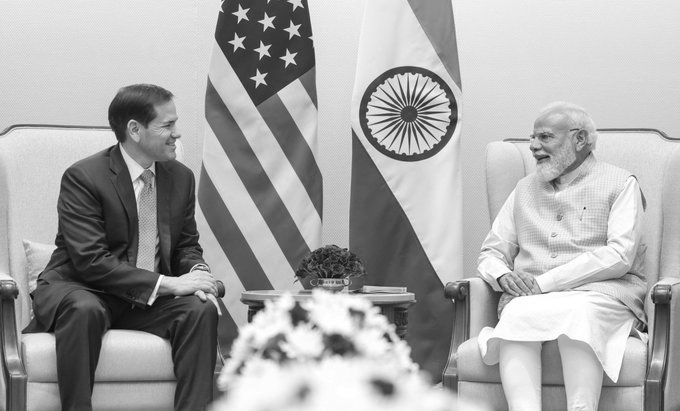
'No More Waivers for Russian Oil,' Says Rubio: A New Headache for India's Energy Security
Just when New Delhi thought it had successfully walked the tightrope between Washington and Moscow, US Secretary of State Marco Rubio has thrown a rather large spanner into India's carefully balanced energy strategy. Testifying before the Senate Foreign Relations Committee, Rubio was refreshingly blunt about Washington's intentions, leaving very little room for diplomatic interpretation.
"We would like to end it as soon as we possibly can because the underlying policy of this country has been to sanction their oil," Rubio declared, in case anyone was still entertaining the fantasy that these waivers were permanent. The current waiver, already extended three times, is due to expire on June 17, which makes this statement less a policy signal and more a countdown clock .
India's love affair with discounted Russian oil is entirely understandable. Since the Ukraine war began, Indian refiners have gorged on heavily discounted Russian crude , turning a geopolitical crisis into an economic opportunity with commendable pragmatism. Russian oil made up 35 to 40 per cent of India's oil imports in 2024, up from just 3 per cent in 2021, a staggering transformation that Washington has watched with growing irritation. Rubio himself has previously called India's Russian oil purchases a "point of irritation" in bilateral ties, which is diplomatic language for "we are genuinely annoyed."
Rubio did acknowledge, with rare candour, the uncomfortable reality facing energy dependent economies. "The problem we're facing, too, is there's a contagion potential... at the end of the day, the US economy is not in need of it, but other economies around the world have benefited from the Russian waiver," he conceded. Translation: America can afford this principle. India, rather less so.
Washington has its own version of India's commitments. President Trump announced a major US India trade deal last month that lowered US tariffs on Indian goods and reportedly ended India's Russian oil purchases. New Delhi has been considerably less enthusiastic about confirming that particular detail, continuing to insist any decision will be based purely on national interest , diplomatic language for "we will decide, thank you very much."
The consequences if waivers expire permanently are genuinely serious. Indian refiners would face tighter restrictions on Russian crude , forcing a scramble toward Saudi Arabia, Venezuela, the United States itself and African producers. India has already increased imports from alternative suppliers such as Venezuela, suggesting New Delhi is quietly preparing contingencies even while publicly holding firm.
Beyond sourcing, higher transportation and insurance costs would ripple directly into already pressured fuel prices, landing squarely on Indian consumers who have had quite enough economic turbulence in 2026.
The saving grace remains that the Treasury Department holds the final authority, and it has extended this programme repeatedly. Rubio's Senate testimony represents intent and pressure, not an immediate executive order.
But with June 17 approaching fast and Washington's patience visibly thinning, India's energy planners would be dangerously naive to treat this as background noise. The discounted Russian crude lifeline that served India so brilliantly for four years may be entering its final, uncomfortable chapter .