
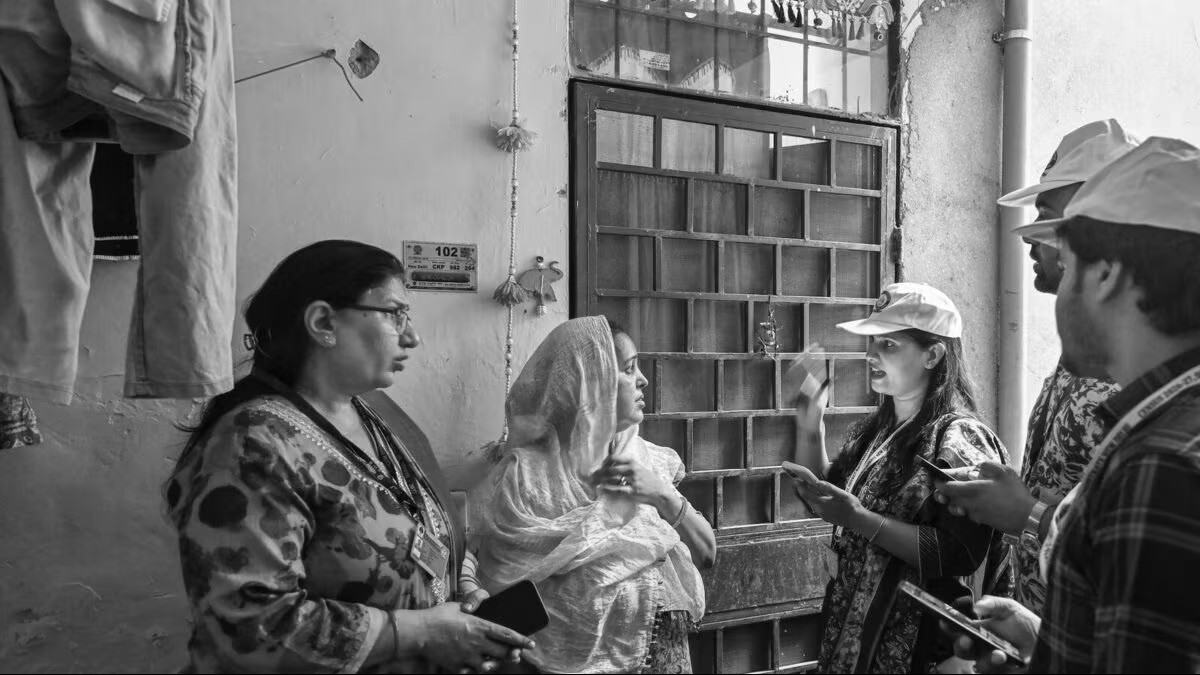
No One Left Uncounted as Census 2027 Reaches J&K and Ladakh
Census 2027 is taking a calibrated approach to population enumeration in Jammu & Kashmir and Ladakh, where geography, winters and restricted-access locations can make door-to-door counting difficult. The objective is to ensure that remote and vulnerable populations are not missed.
Population Enumeration in Ladakh and the snow-bound, non-synchronous areas of J&K is being conducted in September 2026, ahead of the winter season. The special schedule is linked to an October 1, 2026 reference date, rather than the March 1, 2027 date applicable elsewhere. This timing gives field teams a window to reach high-altitude settlements before heavy snowfall disrupts access.
Accuracy will depend on advance preparation. Officials have undertaken enumeration-block demarcation, mapping, logistics planning, training and deployment of field functionaries. In snow-bound J&K, the exercise covers 16 districts, 95 charges and an estimated 4,146 enumeration blocks. Ladakh is enumerated across an estimated 637 blocks, covering the entire Union Territory.
Digital participation provides a layer. Residents were allowed to self-enumerate from August 17 to 31. J&K recorded 9,672 submissions, while Ladakh recorded 527, taking the combined total to 10,199 households. However, self-enumeration complements rather than replaces field verification; enumerators remain responsible for coverage.
The exercise also includes populations that require special arrangements. Officials will identify and enumerate the houseless population, while Defence and Central Armed Police Forces establishments and other restricted-access locations will be covered as special charges in coordination with the concerned authorities.
Technology is a safeguard. Census 2027 is being conducted digitally, with mobile applications and monitoring platforms supporting data collection and oversight. Following field enumeration, a revision round from October 1 to 5 will provide an additional opportunity to review coverage and incorporate eligible changes.
Together, early scheduling, detailed mapping, trained personnel, digital tools, self-enumeration, special-access coordination and post-enumeration revision create a layered system designed to make the Census complete, accurate and inclusive, even in some of India’s most challenging terrain.