
North Korea Calls US Push for Denuclearisation an ‘Anachronistic Dream,’ Signals Defiance Ahead of Xi Visit
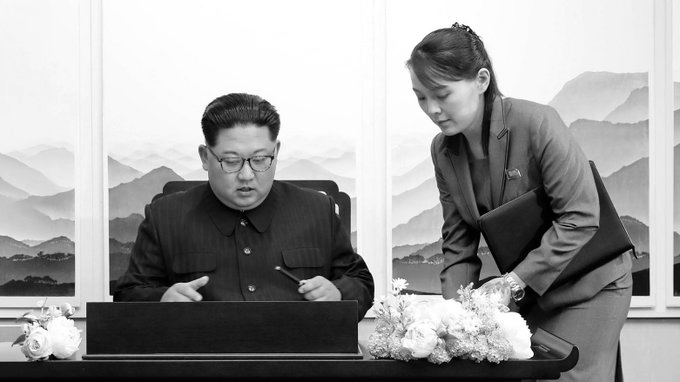
North Korea has dismissed renewed US efforts to denuclearise the country as an “anachronistic dream,” with Kim Yo Jong , the influential sister of leader Kim Jong Un , declaring that Pyongyang’s status as a nuclear weapons state is irreversible and that its nuclear forces will continue to expand despite international pressure.
The statement, issued through state media on Sunday, came just a day before Chinese President Xi Jinping was scheduled to arrive in Pyongyang for his first visit to North Korea in nearly seven years. Kim Yo Jong rejected US claims that Xi and President Donald Trump had reaffirmed a shared commitment to North Korean denuclearisation during their summit in Beijing last month, calling such assertions “false information.” She said some US officials had failed to wake from their “escapist and anachronistic dreams.”
Her remarks underscore North Korea’s increasingly confident posture since the collapse of Kim Jong Un’s diplomacy with Trump in 2019. In recent weeks, Pyongyang has unveiled a new uranium-enrichment facility, while Kim has ordered an “exponential” expansion of the country’s nuclear arsenal and a 2.5-fold increase in missile production capacity under the current five-year defence plan.
Kim Yo Jong accused the United States and South Korea of pursuing “ceaseless arms build-ups” and said North Korea’s policy of strengthening its nuclear deterrent was an “irreversible final conclusion” that would be implemented unconditionally.
Xi’s visit comes as North Korea deepens military and economic ties with Russia, including the deployment of troops and weapons in support of Moscow’s war in Ukraine. Analysts say Beijing is seeking to reassert its influence over Pyongyang, while discussions during the summit are expected to focus on economic cooperation, tourism, development projects and regional security rather than denuclearisation. North Korea, emboldened by closer ties with Russia and continued weapons development, appears increasingly unwilling to return to negotiations aimed at dismantling its nuclear programme.