
North Korea Claims Successful Test of AI-Enabled Zam-2.0 Torpedo
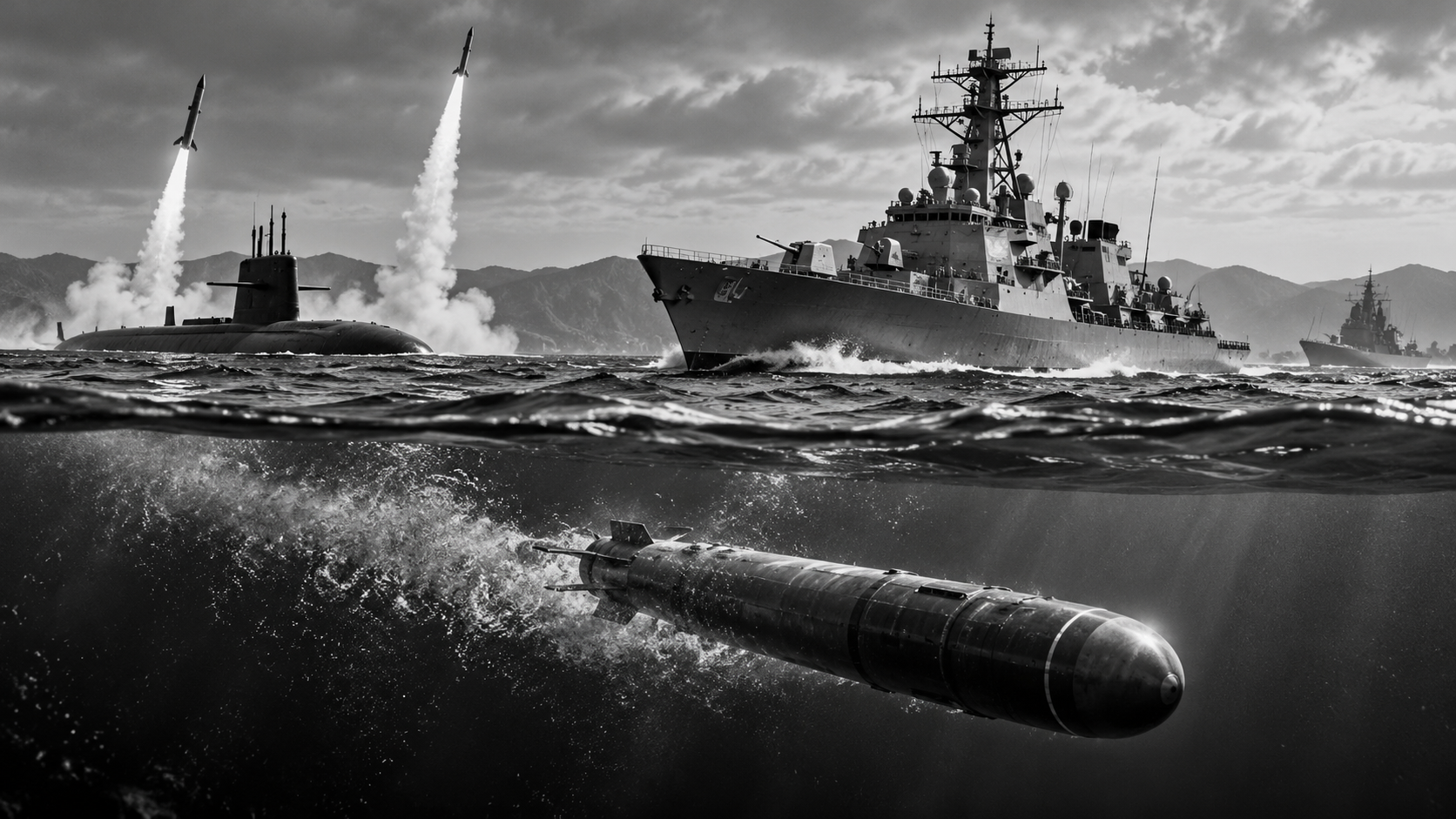
North Korea has announced the successful test of a new artificial intelligence-enabled torpedo system, intensifying concerns over maritime security in East Asia as Pyongyang accelerates efforts to modernise its naval arsenal and develop weapons capable of challenging regional defences. The weapon, named Zam-2.0, reportedly incorporates AI for target detection and guidance, potentially enhancing the effectiveness of underwater attacks against naval vessels.
The Korean Central News Agency (KCNA) reported on October 17 that the torpedo was tested on October 15. Describing it as a “super-speed, precisely guided” system, the agency said the trial verified improvements to its propulsion technology. North Korea claimed that more than 180 tests had been conducted over five years to develop the relevant systems. However, it did not disclose the weapon’s speed, range or specific AI capabilities. South Korea’s military had not immediately commented.
The description of Zam-2.0 has prompted speculation that it could use supercavitating technology, which creates a gas cavity around a weapon to reduce water resistance and enable higher speeds. However, North Korea has not confirmed this technology, and questions remain about the torpedo’s accuracy, reliability and operational readiness.
If effective, AI-assisted guidance could help the weapon process sensor information, track targets and potentially distinguish vessels from decoys. Nevertheless, experts caution that these claims do not establish that the torpedo can independently identify and select targets.
The test comes amid North Korea’s broader naval expansion. On October 14, Pyongyang reportedly tested two types of strategic cruise missiles launched from underwater platforms, marking its first publicly reported underwater-launched missile tests in nearly three years. The launches have been linked to the Hero Kim Kun Ok, a submarine North Korea says is designed to carry nuclear weapons. Pyongyang has also commissioned the 5,000-ton destroyers Choe Hyon and Kang Kon.
North Korea additionally tested hypersonic missile systems on September 20 and October 3. Kim Yo Jong claimed the latter incorporated AI technology, although independent verification remains unavailable.
These developments could complicate naval operations for South Korea, the United States and Japan, increasing demands for underwater surveillance, anti-submarine warfare and torpedo countermeasures. Experts also warn that uncertainty surrounding advanced weapons could heighten the risk of miscalculation during a regional crisis.
The tests come amid stalled nuclear negotiations with Washington and deteriorating inter-Korean relations. While Zam-2.0 highlights Pyongyang’s expanding military ambitions, its actual capabilities remain unverified, making independent assessment crucial to understanding its potential security implications.