
Odisha Moves Supreme Court, Files Contempt Petition Over AP Polls in Disputed Kotia Villages
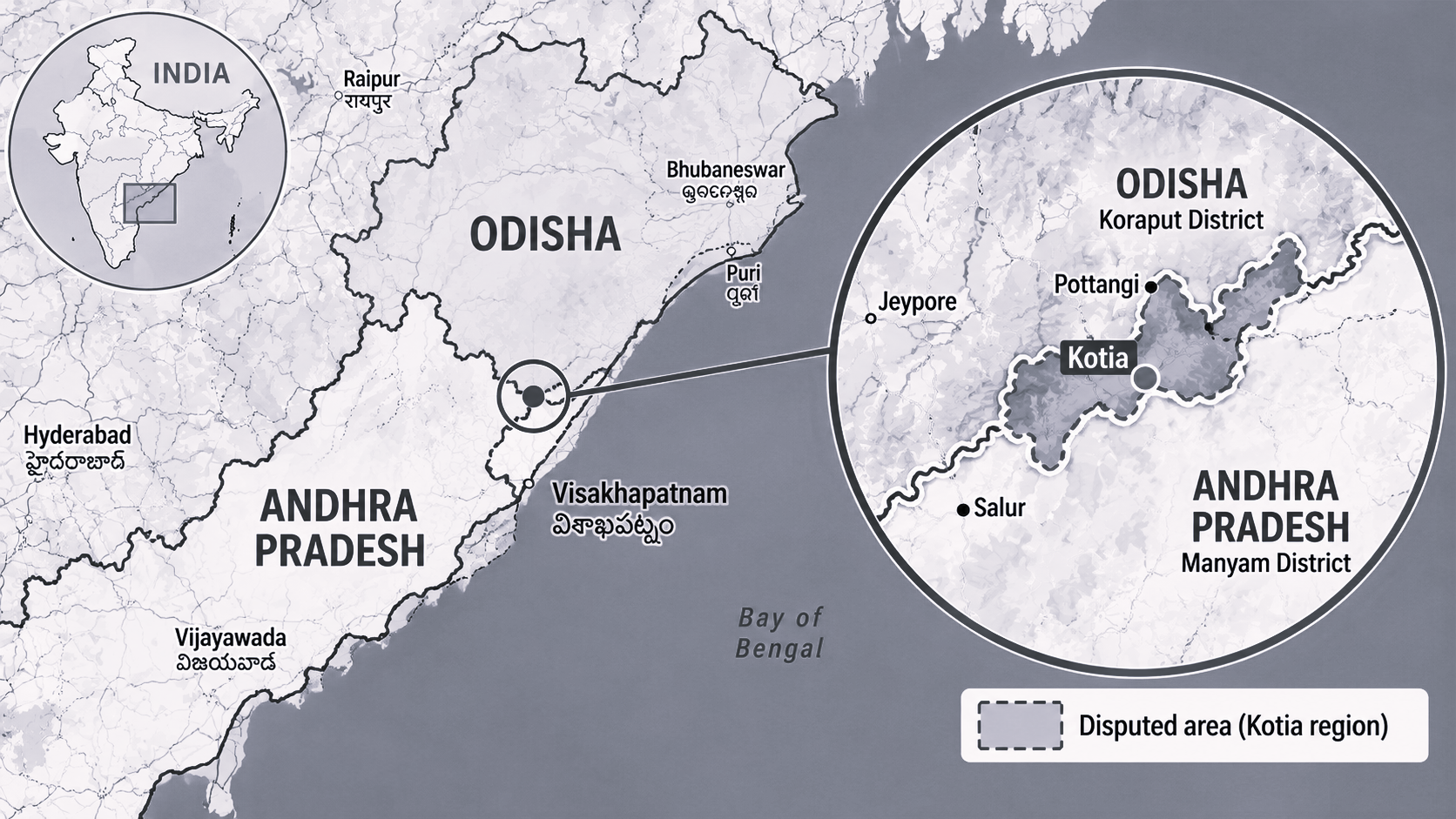
The Odisha government has filed a contempt petition in the Supreme Court against Andhra Pradesh over its decision to conduct local body elections in the disputed Kotia region of Koraput district, intensifying a territorial dispute that has persisted for decades. Odisha alleges that the latest election notification violates the status quo arrangement associated with the Supreme Court proceedings and could undermine its administrative authority over the contested villages.
Odisha Revenue and Disaster Management Minister Suresh Pujari said the petition was filed through the Koraput district collector after approval from Chief Minister Mohan Charan Majhi. The petition names the Andhra Pradesh government’s senior officials, including the state election commissioner, chief secretary, concerned district collector and other officials involved in the electoral process.
The dispute concerns 28 villages under Kotia Gram Panchayat, located in Pottangi block of Koraput district. Odisha maintains that all 28 villages belong to it, while Andhra Pradesh claims jurisdiction over 21. The remaining seven villages - Turia, Barabandha, Talakanti, Gumelpadara, Mathalamba, Suliamari and Katraguda - were recorded as Odisha revenue villages during a joint survey in 1942. The other 21 villages were not surveyed at the time, contributing to the continuing boundary dispute.
The electoral confrontation is not new. Andhra Pradesh conducted panchayat elections in three disputed villages in February 2021 and proceeded with further local-body elections in April that year. Odisha challenged the moves legally and announced plans to conduct its own rural elections in Kotia. In 2022, Odisha held its own panchayat elections in the region, recording around 76 per cent polling, although some villages boycotted the process. Both states have continued to assert administrative authority over the contested settlements.
The latest controversy followed Andhra Pradesh’s October 10 notification for rural local-body elections. The three villages specifically identified were Phagunasineri, Ganjeipadar and Phatusineri. Andhra Pradesh’s election process has advanced, with three candidates reported to have filed nominations for Mandal Parishad Territorial Constituency seats. Polling for the relevant MPTC seats is scheduled for November 3, while a broader three-phase panchayat schedule has been announced for November 26, 29 and December 2. Specific polling dates for the disputed villages have not been clearly confirmed.
The region’s linguistic profile adds another dimension to the dispute. Kui/Kuvi, a tribal language, is widely spoken among residents, and many people have limited familiarity with Telugu or Odia. Both states have pursued development, education and welfare initiatives in the region.
The dispute dates back to 1968, when Odisha approached the Supreme Court. The proceedings subsequently included a status quo arrangement, which Odisha says Andhra Pradesh has violated through its latest election notification. Odisha has asked the court to direct Andhra Pradesh to refrain from similar actions in the future.
The filing of the contempt petition does not itself establish a violation, and the latest legal challenge remains unresolved. The dispute continues to raise questions over territorial jurisdiction, electoral administration and the rights of residents across the border region.